
Mixing is not a solo sport. The best engineers I know will tell you that a technically pristine mix that misses the artist's emotional vision is simply a well-polished failure. Yet so many producers still treat client feedback as a nuisance, something to be managed and minimised rather than actively sought and embraced. That mindset is costing you better mixes, stronger client relationships, and ultimately, a more satisfying career. In this guide, we will walk through exactly how to gather, interpret, and act on client feedback so that every mix you deliver hits harder, feels right, and earns that genuinely enthusiastic sign-off.
Table of Contents
- Why client feedback is essential in mixing
- How to capture actionable client feedback
- Best practises for managing revisions and expectations
- Tools and techniques to streamline client feedback
- Dealing with common feedback challenges
- Why emotional connection and communication beat technical perfection
- Take your mixes further with structured client feedback
- Frequently asked questions
Key Takeaways
| Point | Details |
|---|---|
| Feedback drives emotion | Client feedback ensures your mixes meet the artistic vision and emotional intent of each project. |
| Structure improves results | Clear, organised feedback with timestamps and priorities shortens revision cycles and saves time. |
| Boundaries prevent endless tweaks | Setting revision limits up front builds trust and protects everyone from scope creep. |
| Tools boost efficiency | Modern feedback platforms and communication methods make collaboration smoother and more productive. |
| Emotional skills matter most | Interpreting client intent and building a trusting relationship matters more than technical perfection. |
Why client feedback is essential in mixing
Let's get something straight: client feedback aligns your mix with the artist's emotional and creative vision in a way that no amount of solo listening can replicate. You might have perfect ears and a world-class monitoring setup, but you were not there when that chorus was written at 2am, and you did not feel what the vocalist felt when they nailed that take. The artist carries all of that context, and feedback is how they share it with you.
"Leaving ego aside and interpreting what a client feels matters more than delivering what you think is technically correct. The emotional truth of a song should always lead the conversation." This is something top mix engineers consistently emphasise when discussing their communication approach.
Think of feedback as a creative dialogue rather than a list of complaints. When it functions well, it does several important things at once:
- Emotional alignment: The client tells you whether the energy, warmth, and mood of the mix match the feeling they set out to capture.
- Technical reference: Clients often bring commercial references (songs they love the sound of) that give you a sonic target to aim for, not just an emotional one.
- Trust building: When a client sees that you genuinely absorb their notes and act on them thoughtfully, they relax. That relaxation produces better, more honest feedback in subsequent rounds.
- Workflow refinement: Patterns in feedback across multiple projects teach you where your default mixing tendencies diverge from what clients actually want.
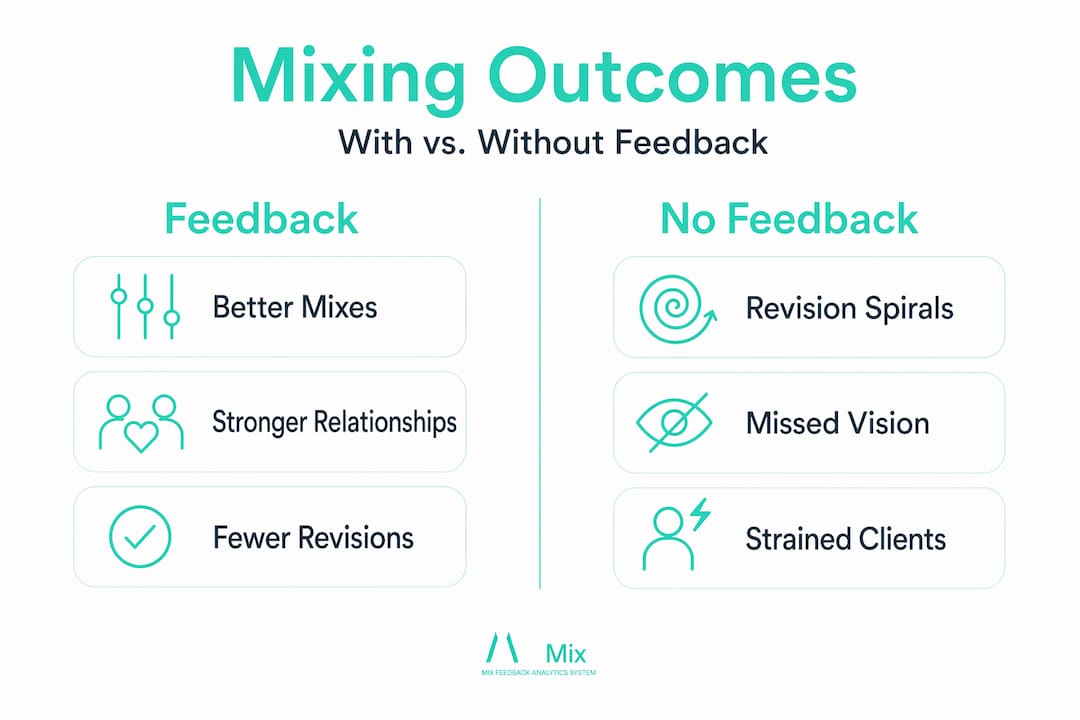
What happens when feedback is overlooked? Revision spirals. Strained relationships. Mixes that technically impress other engineers but leave the artist feeling unheard. If you want to explore how professional feedback frameworks handle this in practice, AubioMix offers a great overview of what structured mix feedback actually looks like.
How to capture actionable client feedback
Good feedback does not appear by magic. You have to create the conditions for it. Here is a step-by-step methodology that consistently produces clear, useful input rather than vague frustration:
- Pre-mix conversation: Before you touch a single fader, have a short conversation or send a brief questionnaire. Ask the client how attached they are to the sound of their rough mix. Ask what three commercial songs feel closest to their vision, and what they like specifically about each one.
- Import rough mixes and references into your DAW: Loudness-match everything so you are comparing on equal footing. This way, your first mix revision call is grounded in direct sonic comparison rather than memory.
- Deliver a first mix with notes: Reference the client's inputs in your delivery message. "I aimed for the low-end weight of Track X and the vocal clarity of Track Y." This builds trust immediately and shows the client you listened before you touched anything.
- Request structured feedback: Ask the client to listen to the mix three times in full before writing any notes. This prevents knee-jerk reactions to elements that might grow on them.
- Compile feedback into one message: Batching notes avoids the drip-drip of single observations that interrupt your workflow and can create contradictions.
Pro Tip: Ask clients to use timestamps when describing an issue. "The snare feels thin at 1:42 and throughout the chorus" is infinitely more useful than "the snare sounds off somehow." Specific, timestamped feedback with a clear description of the desired outcome (not just the problem) is the gold standard every engineer should encourage.
Here is a simple framework for organising the feedback you receive:
| Feedback category | Example note | Priority level |
|---|---|---|
| Tonal balance | "Vocals feel buried in the verse" | Must fix |
| Dynamic feel | "Chorus needs more energy and lift" | Must fix |
| Spatial placement | "Guitar feels too wide, unfocused" | Should address |
| Creative preference | "Could the intro feel a bit warmer?" | Nice to have |
| Reference comparison | "Snare closer to the ref track please" | Must fix |
Sorting feedback this way keeps your revision session focused and prevents you from spending an hour on a "nice to have" while a "must fix" sits unresolved. For a deeper look at how reference tracks fit into this process, there is a useful discussion on stereo widening techniques that shows how spatial decisions often spark client feedback. You can also browse a sample feedback report to see how actionable, well-structured notes look in practice.
Best practises for managing revisions and expectations
Revision management is one of the most misunderstood skills in the mixing business. Most new engineers either offer unlimited revisions (and burn out) or offer none (and lose clients). The sweet spot is clear boundaries set upfront with professional warmth.
Industry standard practice is two to three revision rounds included in the project fee, with additional rounds available at a clearly communicated rate. This is not about being stingy. It is about protecting the quality of your work and ensuring both parties stay motivated and energised throughout the process.
| Approach | Outcome |
|---|---|
| Unlimited revisions | Scope creep, diminishing returns, exhausted engineer |
| Zero revisions included | Client anxiety, damaged trust, poor word of mouth |
| Two to three structured rounds | Clear expectations, focused feedback, professional relationship |
Scope creep is the silent killer of client projects. It typically starts small: "Just one more tweak on the bass," which leads to "and while you are in there, can you adjust the overhead levels?" Suddenly you are on round seven of what should have been a final mix. Setting revision expectations upfront with defined rounds and deadlines is the single most effective way to prevent this.
When working with perfectionist clients, I like to add a psychological anchor early in the process. Something like: "We have two rounds of revisions to really fine-tune this together, so let us make sure each round counts." This frames revisions as a finite, valuable resource rather than an infinite buffer, and most clients respond to that framing positively.
Pro Tip: Put your revision policy in writing before the project starts, even if it is just a short paragraph in your email agreement. Use clear language: "This project includes three revision rounds. A revision round is defined as one batch of consolidated notes per mix." Review the AubioMix evaluation framework for a sense of how a structured, clearly defined review process looks from the client's perspective.
Tools and techniques to streamline client feedback
The right tools can cut your revision rounds almost in half, simply by making it easier for clients to give you precise, organised notes in the first place. Here are the most effective options available right now:
- Waveform commenting tools: Platforms that let clients click directly on a waveform and leave a time-stamped comment are a genuine game-changer. The client no longer has to guess at timestamps or describe a location vaguely.
- A/B testing platforms: Tools that allow side-by-side playback of two mix versions make it much easier for clients to express a clear preference rather than trying to describe abstract differences in words.
- Single communication channels: Consolidate all feedback into one channel, whether that is a dedicated project management thread, a shared document, or a purpose-built platform. Scattered feedback across text, email, voice notes, and social media DMs is a recipe for missed notes and repeated work.
- Loudness-matched listening environments: When you send stems or alternative versions for client review, ensure they are loudness-matched. Streamlined feedback workflows that include A/B comparison and organised commenting consistently reduce revision rounds and keep clients happier throughout the process.
- Shared reference playlists: Maintain a shared playlist with the client's reference tracks so both of you are always looking at the same sonic target. This dramatically reduces the "it needs to feel more like that song" conversations that can otherwise be maddeningly vague.
The bottom line is that anything which makes it easier for a non-technical client to give you a specific, located, outcome-focused note will pay dividends across every project you take on.
Dealing with common feedback challenges
Even with the best systems in place, challenging feedback situations will arise. Here is how to handle the most common ones with confidence and professionalism.
Vague notes like "make it pop" or "add more energy" are incredibly common, and they are not the client's fault. Most artists simply do not have the technical vocabulary to describe what they are hearing. Your job is to translate. Ask: "When you say more energy, do you mean louder overall, or is it more about the attack and punch of the drums? Is there a specific section that feels flat, or is it throughout?"
- Always respond to vague notes with two or three concrete options to choose from.
- Mirror the client's emotional language back to them: "So you want the chorus to feel more explosive and immediate, is that right?"
- Resist the urge to immediately dive back into the session. Clarifying first saves you from fixing the wrong thing.
Clients who keep changing direction are genuinely difficult, and it usually signals that the pre-mix conversation was not thorough enough. If this happens mid-project, call a brief reset: "It sounds like the creative direction has evolved since we started. Let us take a moment to realign on the vision before I continue." This acknowledges the change without making the client feel criticised.
Perfectionist clients who approve each revision and then come back with new notes a day later need a gentle but firm boundary. Vague feedback and perfectionist tendencies are among the most common edge cases engineers face, and the solution is always clarity, not confrontation. Remind them warmly of the revision structure, and if needed, frame the next round as a formal "sign-off session" to give it the weight it deserves.
Pro Tip: Keep all communication positive and solution-focused. Sentences like "let me see what we can do with that" feel collaborative and supportive, while "that is outside the scope of this project" can feel cold even when it is accurate. Warmth keeps the relationship intact while the boundary still holds.
Why emotional connection and communication beat technical perfection
I will be honest with you: technical skill gets you in the room, but emotional intelligence keeps you there. I have heard mixes with flawless frequency curves and perfect dynamic control that felt completely lifeless, and I have heard rough, imperfect mixes that made the hair stand up on the back of your neck. The difference almost always came down to whether the engineer truly understood what the artist was trying to feel.
Top engineers consistently say that the ability to interpret a client's emotional intent, sometimes despite technically contradictory feedback, is what separates good engineers from great ones. That is not a skill you can learn from a plugin manual. It comes from listening deeply, asking good questions, and genuinely caring about the story the song is trying to tell.
Here is the part that surprises people: AI tools are getting genuinely impressive at the technical side. AI mixes now score within 7% of human engineers in blind listening tests, which is a remarkable achievement. But the same tests reveal that humans still lead decisively on acoustic nuance and emotional interpretation, the very qualities that make a listener feel something. That gap is where your career lives.
The engineers who will thrive over the next decade are not the ones who can automate the fastest or who have the most plugins. They are the ones who can make an artist feel genuinely heard, translate that feeling into sonic decisions, and build the kind of trust that generates loyal, long-term clients. Communication is not a soft skill in this industry. It is a core competency.
Take your mixes further with structured client feedback
If you have been nodding along to this guide and thinking "I need a better system for this," then you are already halfway there. The next step is putting a structured, reliable feedback process into practice on your actual projects.
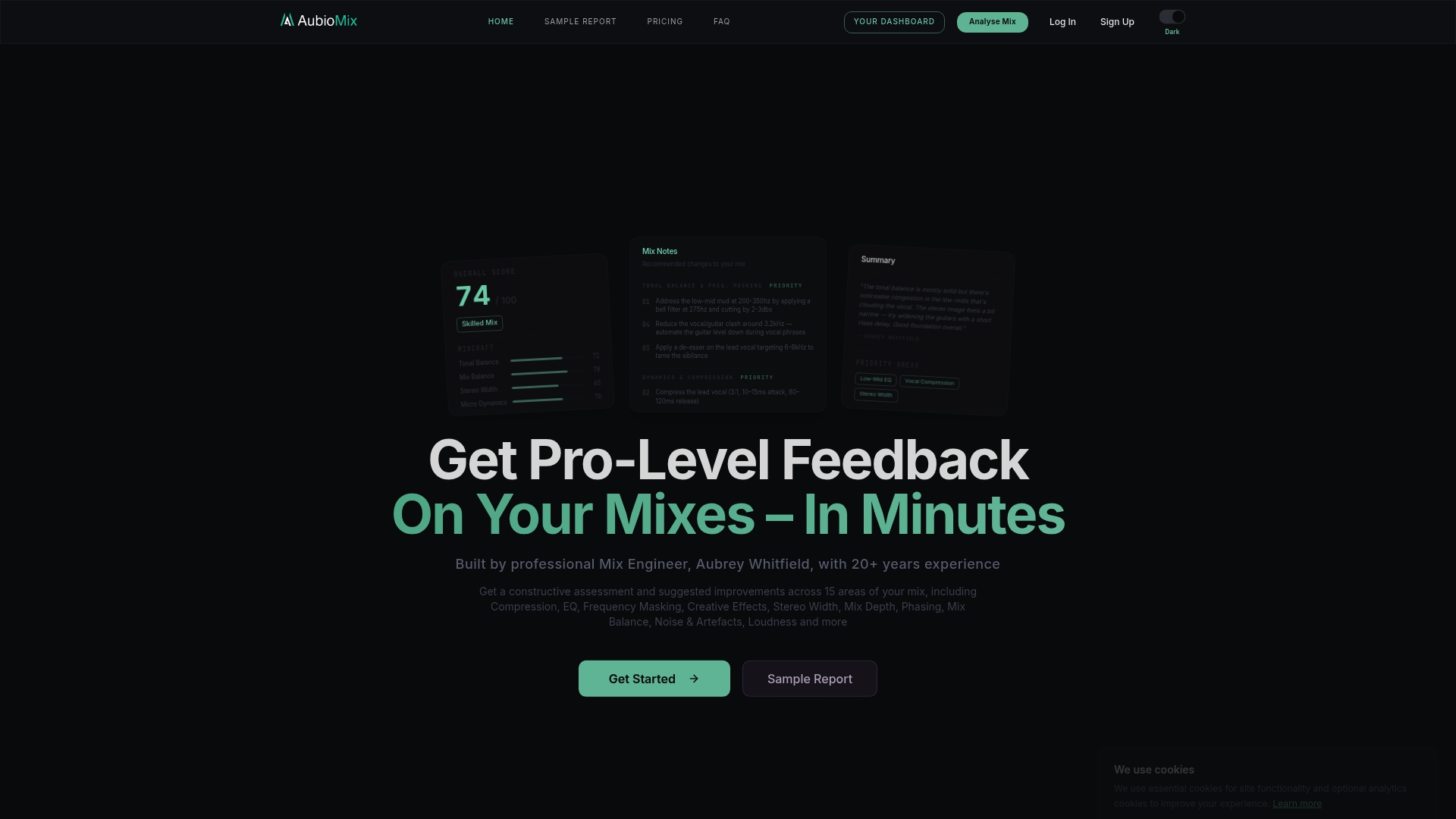
AubioMix is built specifically for producers and mix engineers who want professional, actionable feedback without the guesswork. Upload your track and receive a detailed, structured breakdown of your mix with specific, prioritised steps for improvement. You can get professional mix feedback on your next project right now, or explore the evaluation framework to see exactly how the review process is structured. Want to know what the feedback actually looks like before you commit? See a sample feedback report and judge for yourself. Your next great mix starts with knowing exactly what to fix.
Frequently asked questions
How many revision rounds are standard in mixing projects?
Most professional mixers include two to three revision rounds as standard before additional charges or a full new mix are required, giving clients meaningful input without opening the door to endless tweaks.
What is the best way to give specific mix feedback?
Use timestamps, prioritise must-fix issues, describe the outcome you want rather than the technical fix, and consolidate everything into one organised message after listening to the full mix at least twice.
How do you handle vague client feedback like "make it pop"?
Ask targeted clarifying questions and offer two or three concrete options so the client can point to what they mean, because vague notes like "more energy" almost always reflect a feeling the client cannot yet articulate technically.
Are AI mixing tools as good as human mixers?
AI mixes score within 7% of humans in blind listening tests, which is impressive, but humans still lead significantly on emotional interpretation and acoustic nuance, which is precisely where meaningful mixes are made.