
Blog
Discover our latest articles and blogs

Loudness vs Peak: What LUFS and dBFS Each Tell You
Loudness (LUFS) and peak level (dBFS, dBTP) measure different things. Learn how they differ, why true peak matters, and how to use both when you mix and master.

Mix Notes Template: Session Notes and a Self-Review Checklist
A copy-and-paste mix notes template for session notes, client revisions and self-critique, with worked examples and a checklist you can use on your next mix.
Pan Law in Mixing: What It Is and Which Setting to Use
Pan law explained for producers: why centred sounds change level, how -3 dB, -4.5 dB and -6 dB differ, and which setting suits your DAW and delivery format.

Why Your Mix Sounds Thin and How to Fix It
Mix sounds thin? Find the usual causes, from over-aggressive high-pass filters to phase problems and weak mids, and fix each one with clear steps.

Hiss in Your Mix: Find It, Fix It, Keep the Life
Hiss in a mix usually starts at the source. Learn how to tell hiss from sibilance, fix it with gain staging, expanders and denoising, and know when to stop.
How to Read a Loudness Meter: LUFS in Your Mix
Learn what momentary, short-term and integrated readings mean, which one to watch while you mix, and how to set up your meter so the numbers can be trusted.
Plugin Latency Compensation: How It Works and When It Fails
Learn how plugin delay compensation keeps your mix in time, why it sometimes fails, and how to check and fix latency problems in your DAW session.
Transient Loss in a Mix: Causes, Diagnosis and Fixes
Transient loss is when the attack of kicks, snares and vocals gets flattened or masked. Learn how to hear it, find the cause and restore punch without guesswork.
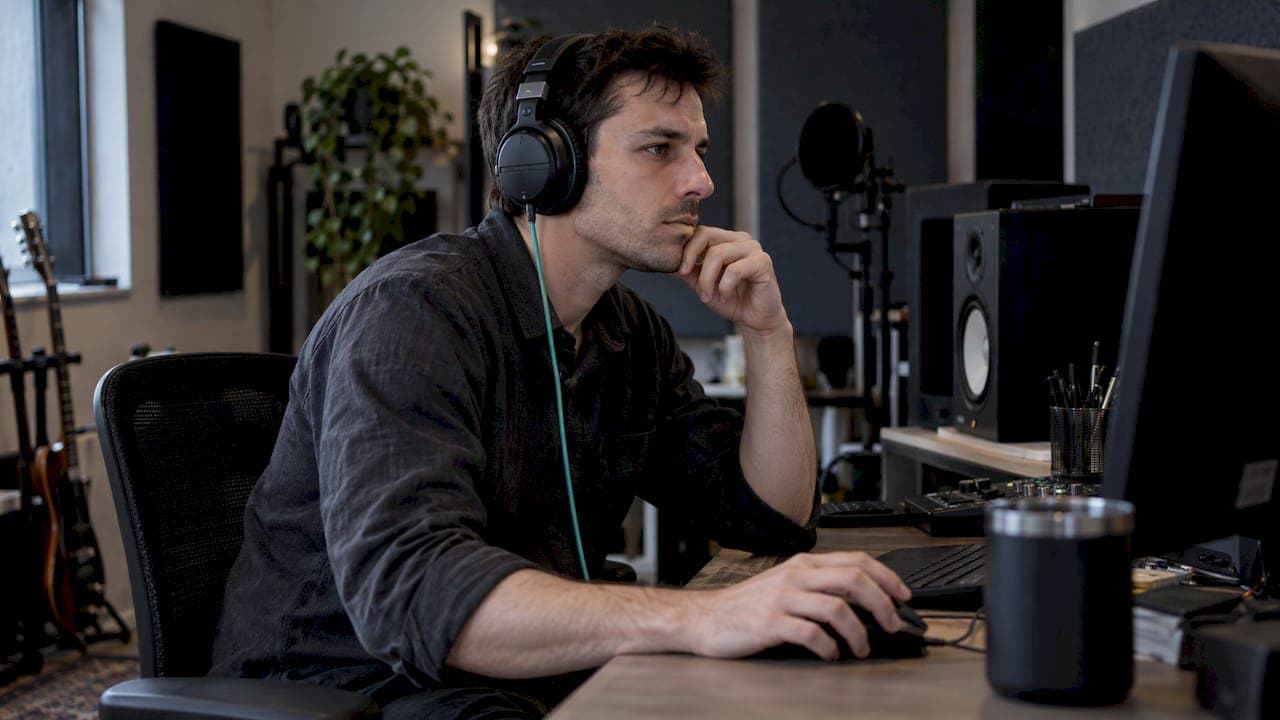
Deesser Settings: Audition Vocals, Then Aim for 3–6 dB
Find vocal sibilance by auditioning the detector, target 3–6 dB of reduction, and combine plugin control with clip gain or automation for tricky phrases.