
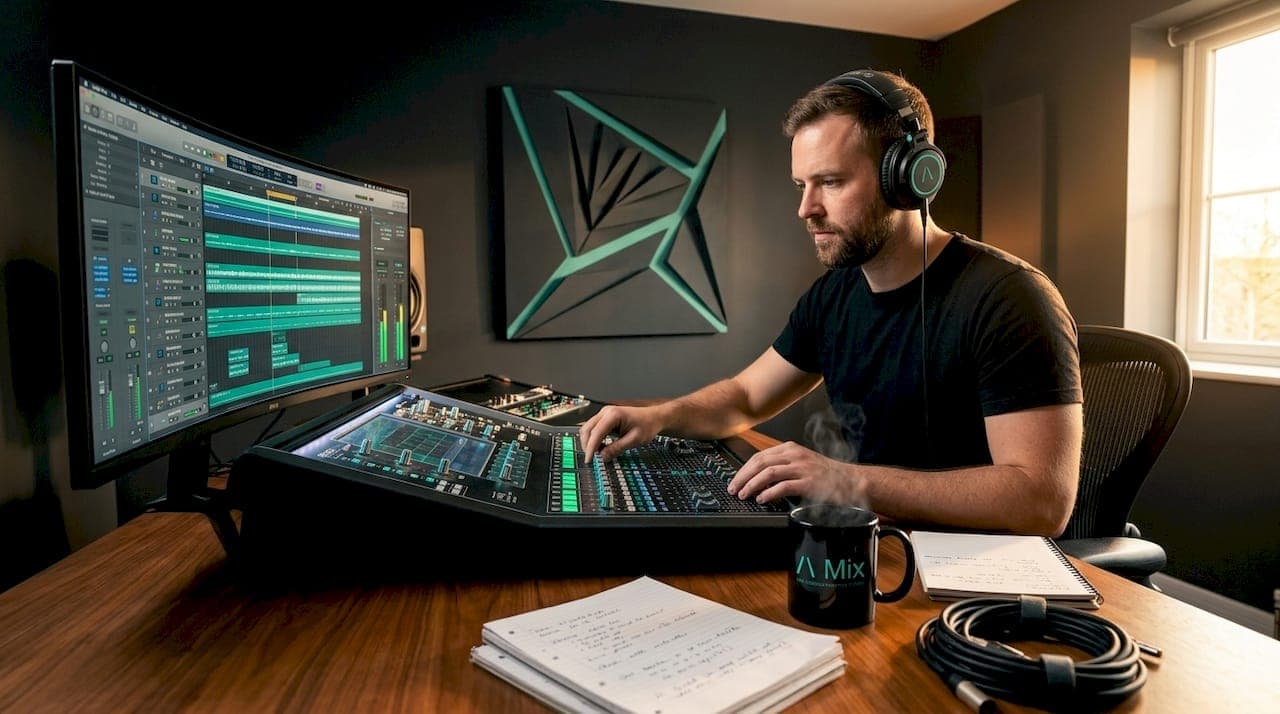
If you've ever handed a rough mix to a mastering engineer and expected them to fix the muddy low end or rescue buried vocals, you're not alone — but you're also setting yourself up for disappointment. The confusion around mixing vs mastering explained is one of the most common stumbling blocks for independent producers, and it genuinely costs people time, money, and quality releases. These are two distinct stages of music production, each with its own tools, mindset, and purpose. Understanding where one ends and the other begins is the difference between a track that sounds polished and one that sounds like it's almost there.
Table of Contents
- What is mixing and what does it involve
- Understanding mastering and its crucial role
- Mixing vs mastering: key differences and comparison
- Expert tips and common misconceptions about mixing and mastering
- Applying mixing and mastering knowledge for better music production
- Why mastering and mixing deserve distinct respect in your production
- How AubioMix supports your mixing and mastering process
- Frequently asked questions
Key Takeaways
| Point | Details |
|---|---|
| Distinct processes | Mixing balances individual tracks; mastering polishes the final stereo mix for release. |
| Mastering enhances, not fixes | Mastering cannot correct major mix problems and requires a quality mix foundation. |
| Use fresh ears | Separating mixing and mastering engineers improves objectivity and sound quality. |
| Proper headroom | Leave about -3 dBFS peak headroom in your mix to ensure effective mastering. |
| Match loudness standards | Mastering targets streaming platform norms like -14 LUFS to ensure consistent playback. |
What is mixing and what does it involve
What is music mixing, really? At its core, mixing involves blending individual multitrack recordings into a balanced stereo file. Think of it as sculpting a sonic landscape where every element, from the kick drum to the lead vocal, has its own space, character, and emotional weight. You're not just turning faders up and down. You're making creative decisions that define how the song feels.
The mixing process typically spans a wide range of tasks, all applied at the individual track level:
- Level balancing: Setting the relative volume of each track so nothing fights for dominance
- Panning: Placing elements across the stereo field to create width and separation
- EQ (equalisation): Carving frequencies so instruments sit in their own sonic space and don't clash
- Compression: Controlling dynamics to add punch, glue, or smoothness to individual elements
- Effects processing: Adding reverb, delay, chorus, or saturation to shape tone and texture
- Automation: Riding faders, panning positions, and effects in real time to serve the song's emotional arc
A great mix is one where you stop noticing the individual pieces and just feel the song. The kick sits in the chest, the vocal floats above the arrangement with clarity, and the whole thing breathes. Following best mixing practices makes this possible more consistently and efficiently.
One thing worth understanding is that mixing is inherently creative. Two mix engineers working from the same session files will produce noticeably different results, because they're making thousands of small decisions that reflect taste, intention, and experience. Getting pro-level mix feedback on your work is one of the fastest ways to calibrate your ear and tighten your decision-making.
With a clearer idea of mixing, let's explore how mastering builds on the mix to finalise your track.
Understanding mastering and its crucial role
What is audio mastering? Mastering is the final stage of the music production process, and it works on the finished stereo mixdown file, not the individual tracks. Once you've exported your mix as a stereo WAV or AIFF, the mastering engineer takes over. Their job is polish, consistency, and translation.
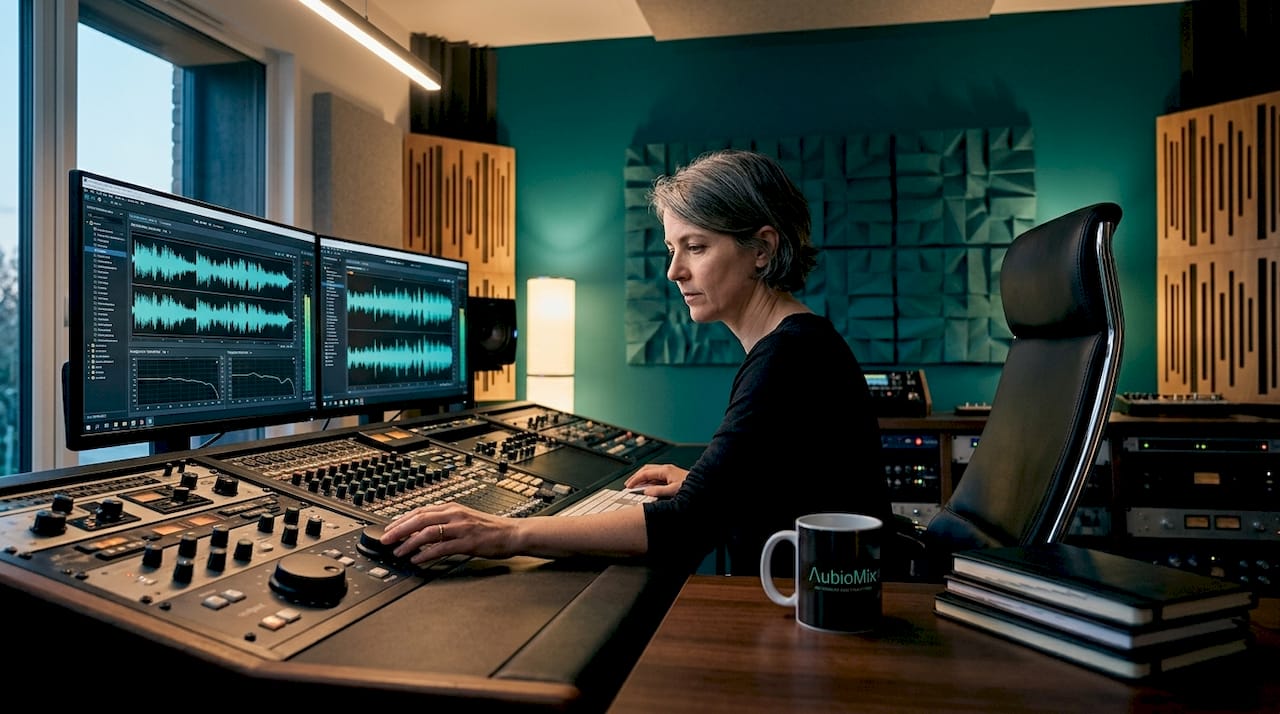
Mastering processes the final stereo mix to ensure commercial consistency, loudness standards, and good translation across playback systems. That last point is critical. Your mix might sound great on your studio monitors, but mastering ensures it also holds up on earbuds, a car stereo, a Bluetooth speaker, and a club sound system.
Here's what the mastering stage typically involves:
- Tonal balance correction: Subtle broadband or surgical EQ applied to the stereo buss to address any cumulative frequency imbalances
- Multiband compression: Gently managing dynamics across specific frequency bands without squashing the life out of the mix
- Limiting: Bringing the overall loudness up to a competitive level while catching any rogue peaks
- Stereo widening: Careful use of mid/side processing to add perceived width and space without creating phase issues (see our guide on stereo widening techniques)
- Dithering: Reducing word length (e.g., from 24-bit to 16-bit) by adding shaped noise that preserves perceived audio quality
- Sequencing and metadata: For albums, this means ordering tracks, setting gaps, and embedding ISRC codes
One standard worth knowing: mastering engineers aim for competitive loudness without sacrificing dynamics, referencing streaming standards like -14 LUFS on Spotify. LUFS stands for Loudness Units relative to Full Scale, and it's the standard measurement used across streaming platforms to normalise playback levels. Getting this right means your track doesn't sound thin compared to everything around it.
Using a solid evaluation framework when assessing your mixes before mastering helps you enter that final stage with confidence rather than crossed fingers.
Now that mixing and mastering processes are defined, let's compare their key differences side-by-side for clearer perspective.
Mixing vs mastering: key differences and comparison
Here's where the mixing and mastering process explained really clicks into place. These two stages aren't just different in degree — they're different in kind.
Mixing and mastering use different tools, focus on different material, and require distinct mindsets. Mixing is micro-level work: you're shaping the relationship between dozens of individual elements. Mastering is macro-level work: you're treating the whole mix as a single object.
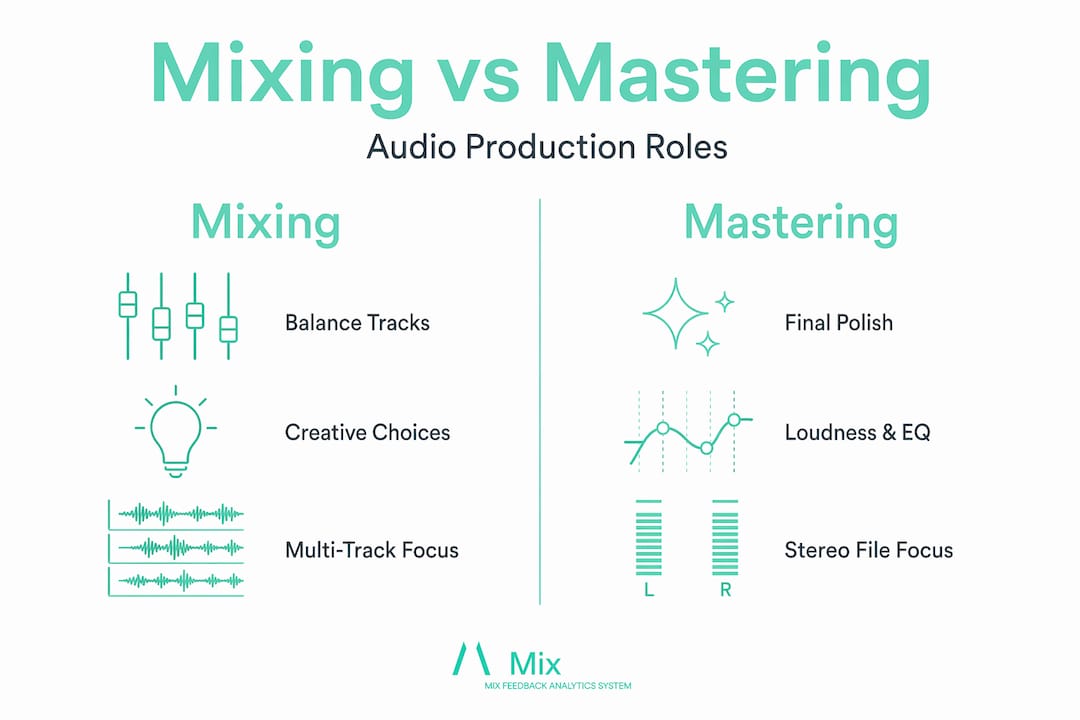
| Aspect | Mixing | Mastering |
|---|---|---|
| Source material | Individual tracks and stems | Single stereo mixdown |
| Focus | Micro-level, per-element decisions | Macro-level, full-mix adjustments |
| Creative role | Highly creative, interpretive | Subtle, corrective, quality control |
| Main tools | EQ, compression, panning, effects | Limiting, multiband compression, stereo imaging |
| Goal | Clarity, emotion, separation | Consistency, loudness, translation |
| Deliverable | Stereo mix file | Distribution-ready master |
A few things that often trip producers up:
- Mastering does not add width to a narrow mix. Stereo widening in mastering is subtle. If your mix sounds narrow, fix it during mixing.
- Loud masters don't mean good masters. A well-balanced mix will translate beautifully at -14 LUFS. Over-limiting destroys dynamics and sounds fatiguing.
- You can't un-bake a cake. Once elements are combined in a stereo file, mastering cannot separate them again. Muddiness, harshness, and imbalance are baked in.
Industry experts recommend using different engineers when possible to maintain objectivity and quality. A mastering engineer hearing your mix for the first time will catch things you've become deaf to after hours of listening. That fresh perspective is genuinely valuable.
Pro Tip: If you're self-mastering, take at least a 24-hour break between finishing your mix and starting mastering. Your ears need the reset. Getting AubioMix feedback on your mix before you master is another way to spot issues you might have missed.
Check out Vector DSP processing tools if you're looking to explore high-quality processing options for either stage.
Having dissected the difference between the two, let's explore common misconceptions and practical tips to avoid pitfalls in these stages.
Expert tips and common misconceptions about mixing and mastering
The biggest misconception in the whole mixing vs mastering for beginners conversation is this: mastering will fix it. It won't. Mastering cannot fix a bad mix; it is a polishing stage, not a rescue operation. A muddy kick and bass relationship, a vocal that disappears in the chorus, harsh 3kHz buildup on guitars — all of that needs to be resolved before the mix leaves your DAW.
Here are the most important practical insights we'd pass on to any independent producer:
- Mix at healthy levels, not loud ones. Aim for an average mix level around -18 to -23 LUFS during the mixing stage. Your meters shouldn't be pinned.
- Leave headroom. Keep your mix bus peaking around -3 dBFS to -6 dBFS. This gives mastering processors room to work without immediately clipping.
- Reference constantly. Compare your mix to commercial tracks throughout the process. Don't wait until mastering to discover your low end is 6dB heavier than everything else.
- Don't over-process at the mix stage. Heavy limiting or maximising on the mix buss before export constrains the mastering engineer and reduces dynamic range.
- Separate the stages mentally and practically. Mixing and mastering require different ears. Trying to do both in one session leads to fatigue, compromised decisions, and a final product that doesn't translate.
"Mastering compression is gentle and subtle compared to mixing compression, focusing on 'gluing' the mix without losing dynamics." — Home Studio Recordings
That quote captures something important. If you're applying 6dB of gain reduction across your master buss with a ratio of 4:1, you're not mastering — you're over-compressing. Mastering compression uses gentle ratios (often 1.5:1 to 2:1) with minimal gain reduction, just enough to add cohesion and feel. Exploring dynamic contrast techniques in your mixing will actually reduce the pressure you put on mastering to compensate.
Pro Tip: Print your mix at multiple loudness levels before sending it for mastering. Export one at your standard peak, one at -3dBFS lower, and keep both. If the mastering engineer asks for a different headroom, you'll already have options ready.
With these practical insights in hand, let's explore how you can apply this knowledge to improve your workflow and results.
Applying mixing and mastering knowledge for better music production
Understanding the importance of mixing and mastering is one thing. Putting it into a workflow that consistently produces better music is another. Here's how to build that into your process from the ground up:
- Start clean at the source. Noisy recordings, clipping during tracking, or poorly performed takes cannot be rescued at any later stage. A clean source makes everything downstream easier.
- Build your mix with intention. Every decision should serve the song. Use your evaluation framework to assess your mix systematically across frequency balance, dynamics, stereo image, and clarity before you call it done.
- Set targets before you export. Before bouncing your final mix, check that peaks sit between -3 and -6 dBFS, that your low end is controlled and not masking the midrange, and that your vocal sits clearly in the mix.
- Treat mastering as a separate session. Whether you're doing it yourself or hiring someone, mastering deserves its own dedicated time, headspace, and monitoring environment.
- Evaluate your master on multiple systems. Listen on studio monitors, earbuds, a Bluetooth speaker, and in a car if possible. Translation is the whole point.
One thing worth emphasising is that focus on recording and mixing quality first; mastering is an enhancement stage, not a fix. When producers internalise this, their whole approach to mixing changes. Suddenly the mix session becomes the priority it always should have been.
Pro Tip: If budget allows, hire separate engineers for mixing and mastering, even on smaller projects. The cost of a professional mastering engineer is modest relative to the improvement in translation and commercial competitiveness. If you're doing both yourself, use AubioMix to get objective feedback on your mix before you move to mastering. It's like having a second set of trained ears before you lock anything in.
Finally, let's share our perspective on why understanding these differences transforms your music production approach.
Why mastering and mixing deserve distinct respect in your production
Here's something we've noticed working with independent producers over a long period of time: the ones who treat mixing and mastering as interchangeable shortcuts almost always plateau. Their tracks sound decent in headphones and fall apart on anything else. And the frustrating thing is that more gear, more plugins, or more time rarely solves it. What actually solves it is changing how you think about each stage.
Mixing is surgery. You're inside the track, working with precision, making decisions that directly shape how the song communicates. Mastering is quality control and preparation for the world. You're stepping back, listening as a listener, and asking: does this hold up? Does it translate? Is it ready?
These two mindsets are genuinely incompatible in the same session. That's not an opinion; it's physics and psychology. Ear fatigue, decision fatigue, and over-familiarity with your own material all conspire against you when you try to mix and master in one sitting. Separating them, even by a day, trains your ears to switch modes and sharpens your critical listening in both directions.
There's also a deeper reason to respect both stages individually. Mastering is often dismissed as "just loudness" by producers who've never had a track mastered properly. But a skilled mastering engineer isn't just pushing a limiter. They're making the track sound like it belongs in the same room as the best commercial records in its genre. That's a skill built over years of listening, referencing, and refining. Treating it as an afterthought is what separates amateur releases from professional ones.
Following mixing chain best practices through every session builds the kind of discipline that makes mastering feel effortless rather than remedial.
How AubioMix supports your mixing and mastering process
If you've taken on board everything in this guide, the next natural question is: how do I know my mix is actually ready for mastering?

That's exactly what AubioMix is built for. You upload your audio file, and within moments you receive detailed, professional feedback covering frequency balance, dynamics, stereo image, clarity, and mix translation. Think of it as the honest, trained second opinion you'd get from a seasoned engineer, available whenever you need it. The AubioMix feedback service helps you identify and resolve issues before they become expensive mastering problems. Combined with our structured evaluation framework, you'll be sending mixes to mastering with genuine confidence that they're ready to shine.
Frequently asked questions
Can mastering fix problems in a bad mix?
No. As mastering cannot pull forward vocals or fix muddy low end, those are mixing issues that must be resolved before you export your final stereo file.
Is it better to use different engineers for mixing and mastering?
Yes. Industry experts recommend different people for mixing and mastering because a fresh set of ears brings objectivity, catches problems the mix engineer may have become accustomed to, and consistently improves the final result.
How much headroom should I leave in my mix for mastering?
Mixers should leave adequate headroom, ideally peaking at around -3 dBFS to -6 dBFS, so mastering processors have room to operate without clipping or unwanted distortion.
What loudness level should I aim for in mastering for streaming platforms?
Aim for around -14 LUFS integrated loudness, as streaming platforms like Spotify normalise loudness to approximately this target, meaning anything louder will simply be turned down on playback.