

What are the top MixPitch alternatives for UK music professionals?
If you're hunting for platforms like MixPitch to get professional mix and mastering feedback, the good news is there are several solid options available to UK producers right now. Each takes a different approach, from open marketplace bidding to curated playlist pitching, so the right pick depends on what you actually need from the process.
Here's a quick overview of the main contenders:
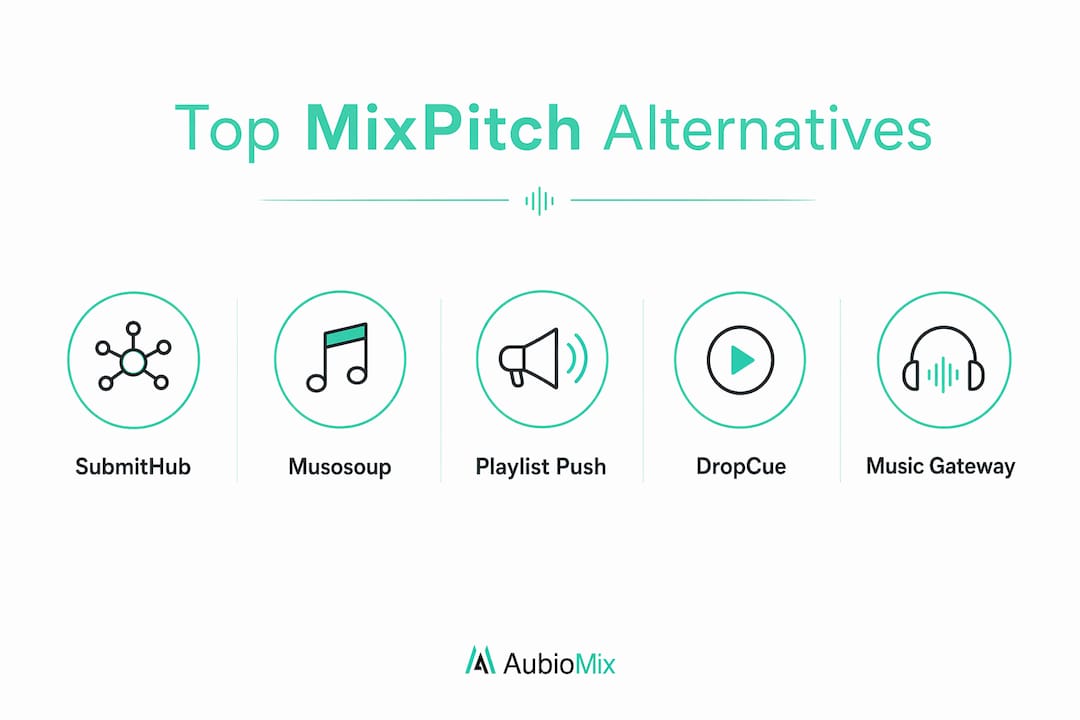
- SubmitHub — A large curator submission platform with rapid turnaround. Best for producers who want access to a wide pool of industry contacts and fast responses on their tracks.
- Musosoup — Combines music promotion with feedback and playlist placements. Suits artists who want critique alongside genuine exposure opportunities.
- Playlist Push — Specialises in pitching songs to playlist curators, with feedback from industry professionals included. Strong choice for engineers who want mix notes tied to real placement decisions.
- DropCue — A budget-friendly, all-in-one pitching and promotion tool. Ideal for producers who want a straightforward workflow without spending heavily.
- Music Gateway — A marketplace and workflow platform with integrated project and payment management. Built for professionals who need client management alongside submission tools.
- DropTrack — Simplified music tracking and promotion with feedback options. Good for producers who want a clean, easy-to-use interface without a steep learning curve.
- Audiio — Primarily a licensing platform, but offers submission and feedback opportunities. Works well for producers focused on sync licensing who also want critique.
- NotNoise — Feedback-driven model that avoids competitive bidding. Best for producers who want qualitative, considered critique rather than a marketplace contest.
Most of these platforms operate on tiered subscription models, with free registration typically available and paid tiers unlocking more submissions or advanced features. Pricing across the group ranges from free entry-level access up to monthly subscriptions, though exact figures vary by plan and are best confirmed directly with each platform.
Detailed profiles of the best MixPitch alternatives
Understanding what each platform actually does, and who it suits, matters far more than a star rating. Here's a closer look at each option, with the key features, feedback quality, and trade-offs you need to know.

| Platform | Business Model | Pricing Structure | Feedback Speed | Best For | UK Available |
|---|---|---|---|---|---|
| SubmitHub | Marketplace | Free + paid credits | Fast (24–48 hrs) | Large curator pools | Yes |
| Musosoup | Marketplace/Promotion | Subscription tiers | Moderate | Playlist placement + feedback | Yes |
| Playlist Push | Curator pitching | Campaign-based pricing | Moderate | Playlist access + mix notes | Yes |
| DropCue | All-in-one pitching | Budget-friendly tiers | Fast | Budget-conscious producers | Yes |
| Music Gateway | Marketplace + CRM | Subscription tiers | Varies | Project and payment management | Yes |
| DropTrack | Promotion + tracking | Tiered plans | Moderate | Simple promotion + feedback | Yes |
| Audiio | Licensing + submission | Subscription | Varies | Sync licensing + feedback | Yes |
| NotNoise | Feedback-focused | Tiered plans | Moderate | Qualitative critique | Yes |
SubmitHub
SubmitHub is the most widely used submission platform in this group, and for good reason. You upload your track, select curators from a searchable database, and receive written feedback within a defined window, typically 24–48 hours. The credit system means you pay per submission rather than committing to a monthly fee upfront, which suits producers who want to test the waters before scaling up.
The feedback quality varies depending on which curators you target. Some provide genuinely detailed notes on arrangement, mix balance, and sonic character; others offer brief, subjective comments. Targeting curators who have a track record of detailed responses is the key skill here, and SubmitHub's filtering tools help with that.
- Pros: Huge curator database, fast turnaround, transparent credit system, detailed curator profiles
- Cons: Feedback depth is inconsistent, competitive environment, no client management tools
Musosoup
Musosoup sits at the intersection of promotion and feedback, which makes it genuinely different from a pure critique platform. Campaigns connect your music to blogs, playlist curators, and press contacts simultaneously, so you're getting exposure alongside notes on your work. The subscription model means you pay a recurring fee rather than per submission.
For producers who want their mix feedback to come with real-world context, knowing whether a curator would actually place the track is a useful signal. That said, Musosoup is less focused on technical mixing critique and more on whether the song fits a particular audience or playlist.
- Pros: Promotion and feedback combined, broad media reach, good for building profile
- Cons: Less technically focused feedback, subscription commitment required
Playlist Push
Playlist Push runs campaign-based pitching, where your track goes out to a curated group of playlist managers who then provide written feedback alongside their placement decision. The feedback tends to be more considered than on open marketplaces because curators have a genuine stake in the outcome.
What sets it apart is the direct link between mix quality and placement decisions. If your low-end is muddy or your vocal sits too far back in the mix, curators will tell you, because it affects whether they add the track. That kind of feedback has real teeth.
- Pros: Feedback tied to real placement decisions, curated curator pool, quality control
- Cons: Campaign costs can be significant, not purely a mixing feedback service
DropCue
DropCue keeps things simple and affordable. The platform focuses on pitching and promotion without the complexity of a full marketplace, making it a practical choice for producers who want to get music in front of people without a steep learning curve or a large budget.
Feedback options exist, though the platform's primary strength is its pitching workflow rather than deep technical critique. If you're budget-conscious and want a clean submission process, DropCue delivers that without unnecessary friction.
- Pros: Affordable, straightforward workflow, good for beginners
- Cons: Feedback depth is limited compared to specialist critique platforms
Music Gateway
Music Gateway operates as both a marketplace and a client management tool, which puts it closest to MixPitch in terms of overall functionality. You can find work through the marketplace, manage existing client projects with milestone payments, and handle file delivery through a single platform. Branded client portals reduce admin burden and improve the professional experience for both engineer and client.
For independent engineers managing multiple clients, the integrated payment and revision tracking features are genuinely useful. The marketplace side means you can also pick up new work, though the competitive bidding environment is a trade-off some engineers prefer to avoid.
- Pros: Marketplace plus client management, milestone payments, branded portals, UK-friendly
- Cons: Marketplace bidding can be competitive, subscription required for full features
DropTrack
DropTrack focuses on music tracking and promotion, with feedback options layered in. The interface is clean and the workflow is straightforward, which makes it appealing for producers who find more complex platforms overwhelming. It's not the deepest feedback tool in this list, but it does the job for producers who want a simple, reliable submission and tracking process.
- Pros: User-friendly, good tracking features, solid for promotion
- Cons: Feedback is not the primary focus, limited technical depth
Audiio
Audiio's core business is sync licensing, connecting producers with TV, film, and advertising opportunities. The submission and feedback elements are secondary to that licensing function, which means the platform suits producers who are primarily chasing sync placements and want critique as a bonus rather than the main event.
If licensing is your goal and you want feedback that reflects commercial viability, Audiio makes sense. For producers whose primary need is detailed mix and mastering critique, it's a less natural fit.
- Pros: Strong sync licensing focus, exposure to commercial opportunities, feedback included
- Cons: Feedback is secondary to licensing, less suited to pure mix critique needs
NotNoise
NotNoise takes a deliberately different approach by removing the competitive bidding element entirely. The platform is built around qualitative feedback, where professionals review your work and provide considered critique without the pressure of a marketplace contest. Actionable, technical feedback on specific elements like EQ decisions or dynamic processing is what separates genuinely useful critique from vague subjective comments, and NotNoise leans into that philosophy.
For producers who find marketplace environments stressful or counterproductive, NotNoise offers a calmer, more focused alternative. The trade-off is that you're not getting the promotional exposure that platforms like Musosoup or Playlist Push provide.
- Pros: No competitive bidding, qualitative focus, considered feedback
- Cons: Less promotional reach, smaller platform presence
How do these platforms compare on price, features, and fit?
Choosing between these MixPitch competitors comes down to a few key axes: what kind of feedback you actually need, how much you want to spend, and whether client management matters to your workflow.
The platforms split broadly into two camps. Marketplace-style platforms (SubmitHub, Musosoup, Music Gateway) put your music in front of a pool of curators or engineers who compete or respond, giving you volume and variety. Client management platforms (Music Gateway's CRM side, MixPitch itself) let you work with specific professionals in a controlled, private environment with revision tracking and milestone payments.
Cost versus feature depth is the central trade-off. SubmitHub's credit system is flexible and low-commitment, but deep technical feedback costs more credits and isn't guaranteed. Music Gateway's subscription unlocks more tools but requires a recurring investment. DropCue sits at the affordable end, while Playlist Push's campaign model can add up quickly for producers submitting regularly.
Feedback speed versus feedback quality is the other key tension. Fast platforms like SubmitHub deliver responses within 24–48 hours, but the depth varies. Slower, more curated platforms like NotNoise and Playlist Push tend to produce more considered notes, because the reviewer has a genuine reason to engage carefully with your track.
For UK producers specifically, all eight platforms accept UK registrations and process payments in GBP or internationally. Music Gateway has a particularly strong UK presence and suits engineers who want a professional client portal alongside marketplace access.
How to choose the right MixPitch alternative for your needs
The right platform depends on what you're actually trying to solve. Here's a practical set of questions to work through before committing:
- What kind of feedback do you need? If you want specific notes on your low-end, compression decisions, or stereo width, look for platforms that emphasise technical critique (NotNoise, Playlist Push). If you want broader exposure alongside feedback, Musosoup or SubmitHub suit that better.
- What's your budget? DropCue and SubmitHub's credit system offer low-cost entry points. Music Gateway and Musosoup require subscription commitments that make more sense if you're submitting regularly.
- Do you need client management tools? If you're managing existing clients and want revision tracking, milestone payments, and branded portals, Music Gateway is the strongest option in this group. Professional client portals are increasingly standard among independent studios, and platforms that offer them save significant admin time.
- How quickly do you need a response? SubmitHub's 24–48 hour window is the fastest in this group. If turnaround time is critical, that's your best bet.
- Is promotion part of the goal? Musosoup and Playlist Push combine feedback with genuine placement opportunities. If you only want critique, NotNoise or a dedicated feedback tool is a cleaner choice.
- How important is security for your music files? Check each platform's privacy policy before uploading unreleased material. Platforms with private client portals, like Music Gateway, offer more control over who accesses your files.
Pro Tip: When submitting for feedback, describe specific problem areas rather than asking for general notes. "The kick feels thin below 80Hz" gets you far more useful advice than "what do you think of the mix?" Reviewers engage more deeply when you give them a concrete starting point.
Avoid platforms that only offer vague, subjective responses ("sounds great, not quite right for us"). The most useful feedback names specific frequency ranges, processing decisions, or arrangement choices. Automated AI mastering tools lack this kind of nuanced, human-driven analysis, which is why human feedback platforms remain valuable even as AI tools improve.
What are the latest trends in music submission platforms for UK audio professionals?
The industry is moving away from open marketplace bidding and towards private, professional client portals. Independent engineers increasingly prefer controlled client management tools over open marketplaces, primarily because they offer better version control, clearer communication, and less transactional friction. The revision loop problem, where clients and engineers lose track of file versions across email chains and chat threads, is one of the most preventable frustrations in audio production, and private portals solve it cleanly.
Branded client portals are becoming a standard expectation among professional studios. Rather than sending clients to a generic platform, engineers are building workflows where clients access a personalised portal, review files, approve milestones, and request revisions in one place. This reduces admin time and raises the perceived professionalism of the service.
Best practices emerging across the professional community include:
- Prioritise platforms that offer technically specific feedback over generic subjective comments
- Use client portals with milestone payment structures to protect both parties on longer projects
- Submit specific technical questions alongside your track to get more useful critique
- Verify platform privacy policies before uploading unreleased material
- Choose platforms whose feedback providers have verifiable mixing or mastering credentials
The demand for actionable, technical feedback is growing among professional producers who have outgrown generic critique. Feedback that names specific EQ decisions, compression ratios, or stereo imaging choices is rated far higher by working engineers than broad impressionistic comments. Platforms that enforce this standard, either through curator guidelines or structured feedback templates, consistently produce more useful outcomes for producers.
The shift towards private portals also reflects a broader preference for security. Uploading unreleased music to open marketplaces carries inherent risk, and engineers managing high-value client projects are understandably cautious. Platforms that offer encrypted file delivery and access-controlled portals are gaining ground as a result.
Final verdict: which MixPitch alternative suits you best?
There's no single winner here because the right platform depends entirely on your priorities. Here's a clear breakdown by use case:
- Best for fast feedback from a large curator pool: SubmitHub. The credit system is flexible, the turnaround is quick, and the curator database is the largest in this group.
- Best for feedback combined with playlist promotion: Playlist Push. The link between mix quality and placement decisions makes the feedback genuinely useful rather than academic.
- Best for budget-conscious producers: DropCue. Affordable, straightforward, and low-commitment.
- Best for professional client management: Music Gateway. The combination of marketplace access, branded portals, and milestone payments makes it the closest full-service alternative to MixPitch for working engineers.
- Best for qualitative, non-competitive feedback: NotNoise. If you want considered critique without marketplace pressure, this is the cleanest option.
- Best for sync licensing with feedback included: Audiio. Producers chasing commercial placements get both exposure and critique in one platform.
- Best for promotion alongside feedback: Musosoup. Broad media reach combined with feedback suits artists building their profile.
- Best for simple tracking and promotion: DropTrack. Clean interface, reliable workflow, good for producers who want to keep things uncomplicated.
If professional client management and technically specific feedback are your top priorities, Music Gateway is the strongest like-for-like MixPitch replacement in this group. For producers who want pure mix critique without marketplace complexity, NotNoise and Playlist Push both deliver more focused, considered feedback than open submission platforms.
Aubiomix: professional mix feedback without the marketplace noise
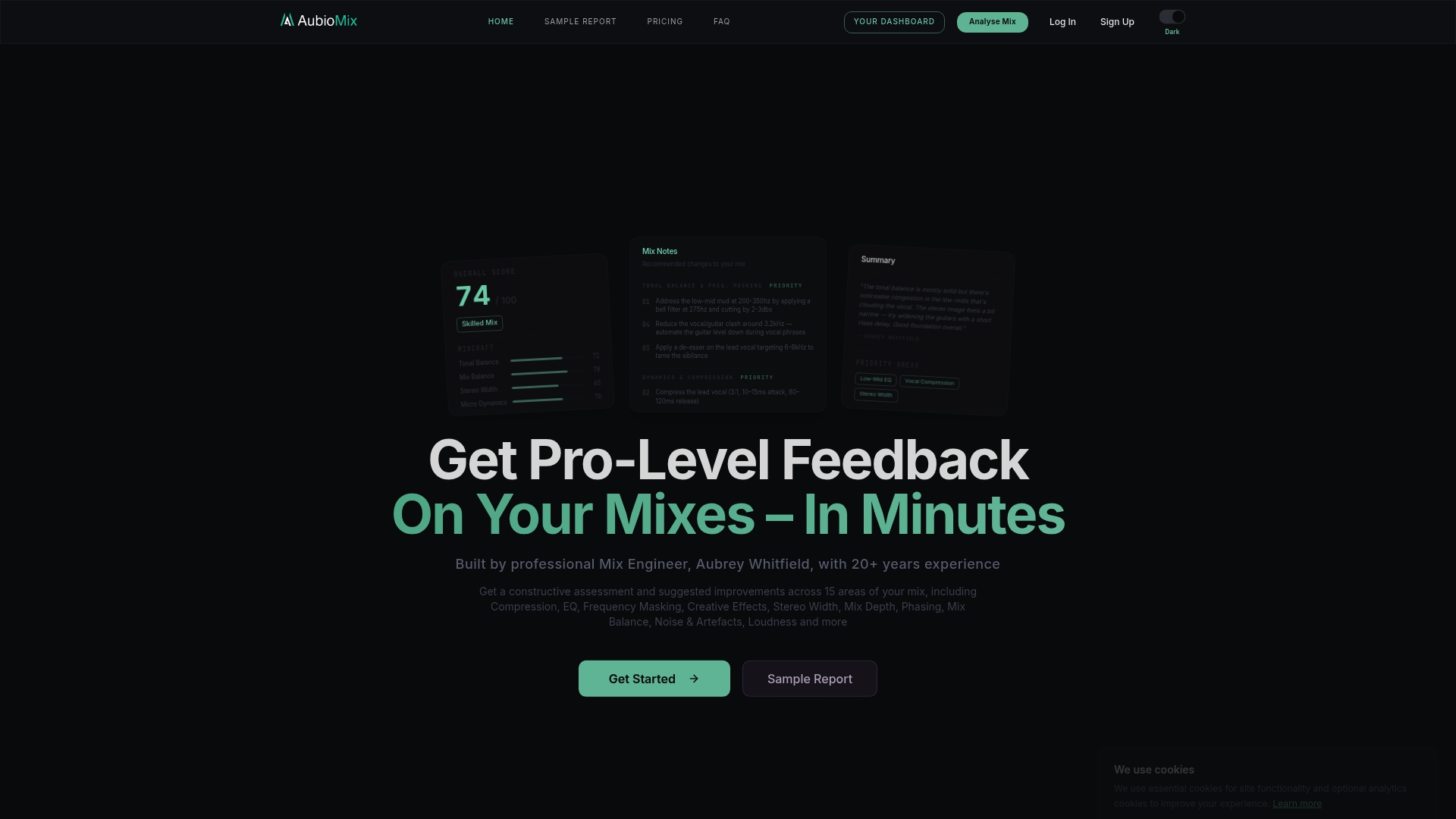
All eight platforms above are solid options for different needs, but most of them bundle feedback with promotion, licensing, or marketplace bidding. If what you actually want is detailed, technically specific feedback on your mix and mastering, without entering a contest or pitching to curators, Aubiomix takes a different approach entirely.
Aubiomix is built specifically for producers and engineers who want to upload a track and receive expert, step-by-step feedback on the actual mix: EQ decisions, compression, stereo width, low-end balance, and mastering headroom. No bidding, no curator pools, no promotional campaigns. Just clear, professional critique delivered rapidly, with concrete steps you can act on immediately.
The platform's evaluation framework is transparent, so you know exactly what's being assessed before you upload. For producers who want to understand how their mixes measure up against professional standards, the famous mixes analysis section offers a genuinely educational reference point. If you want pro-level mix feedback without the noise of a marketplace, Aubiomix is worth a look.
Key takeaways
The strongest MixPitch alternatives each serve a distinct need, so matching the platform to your actual workflow priorities is more important than chasing the highest-rated option.
| Point | Details |
|---|---|
| Match platform to feedback type | Technical critique needs differ from promotional exposure; choose accordingly before committing. |
| Client management matters | Platforms with branded portals and milestone payments reduce admin and protect file security. |
| Feedback specificity is the differentiator | Platforms that encourage or require technical, specific critique produce far more useful outcomes than open comment systems. |
| Budget shapes your options | Credit-based systems like SubmitHub suit occasional users; subscriptions suit producers submitting regularly. |
| Aubiomix for pure mix critique | Aubiomix delivers detailed, step-by-step mixing and mastering feedback without marketplace bidding or promotional bundling. |