
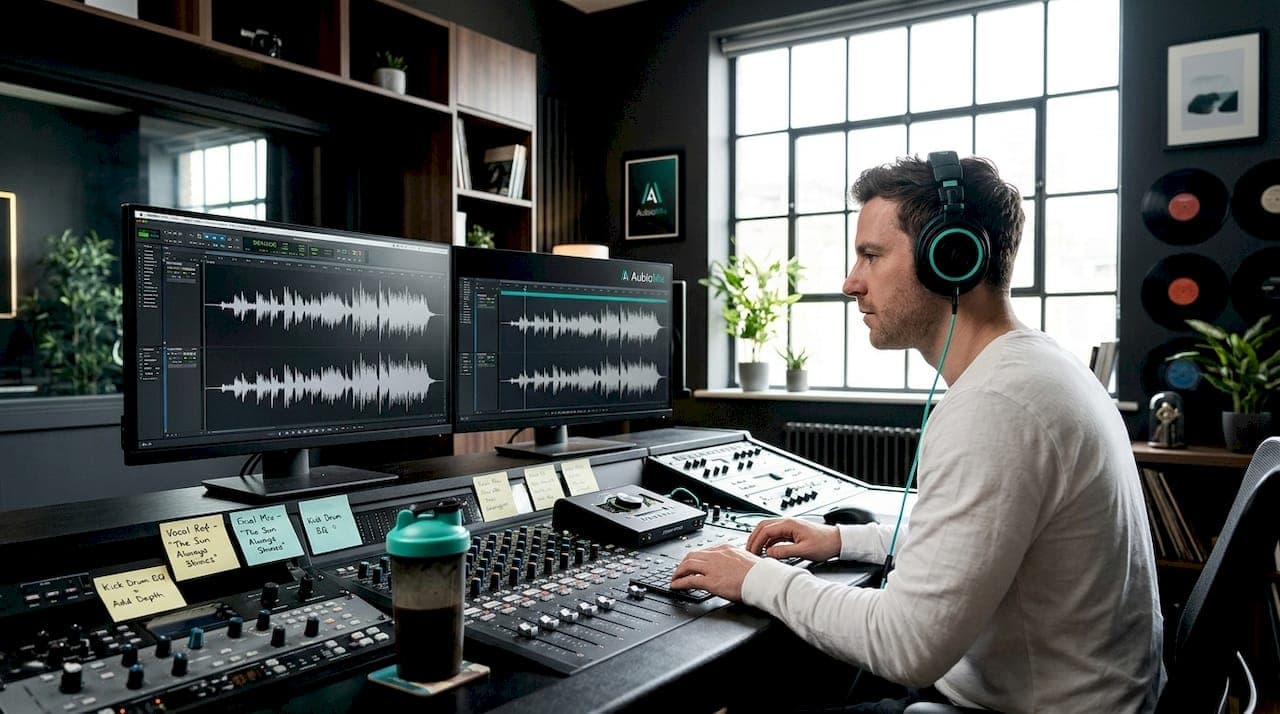
Knowing why reference mixes before delivering is something many producers treat as optional. It isn't. Your ears lie to you after a long session, your mix starts sounding "right" simply because it's become familiar, and before you know it you're sending off a track that sounds impressive on your studio monitors but falls apart on everything else. The professional term for this practice is mix referencing, and it's one of the most underused tools in the producer's workflow. Get it right and it changes how quickly you finish mixes, how competitive they sound, and how confident you feel hitting send.
Table of Contents
- Key takeaways
- Why reference mixes before delivering: the core case
- Common referencing mistakes to avoid
- Key benefits of referencing mixes before delivery
- A practical referencing workflow
- My honest take on referencing
- How Aubiomix helps you get mixes delivery-ready
- FAQ
Key takeaways
| Point | Details |
|---|---|
| Volume bias skews judgement | Always level match your reference before comparing, because louder always sounds better to the human ear. |
| Like-for-like comparisons only | Compare chorus to chorus and verse to verse for accurate tonal and dynamic assessments. |
| Bypass your processing chain | Route reference audio outside your master bus so it isn't coloured by your own processing. |
| Referencing speeds up finishing | Experienced mixers finish mixes faster with references, reducing second-guessing and indecision. |
| Periodic ear resets matter | Use short, focused referencing passes throughout the session to combat listener fatigue and drift. |
Why reference mixes before delivering: the core case
At its foundation, a reference mix is a professionally mixed and mastered commercial track that you use as a sonic benchmark while working on your own music. Think of it as a compass. It doesn't tell you where to go, but it keeps you oriented so you don't wander off into the weeds at 3am and wonder why your low end sounds like a washing machine.
The key distinction here is that referencing is not copying. You're not trying to clone someone else's mix. You're using a track you admire, one that translates beautifully on every system, to calibrate your own judgement. When your reference is a track by a producer whose low end you love, you're not asking "how do I sound like them?" You're asking "how does my low end compare to something I already know is correct?"
Selecting the right reference is where many people stumble. The importance of referencing mixes is amplified dramatically when your reference actually matches your genre, tempo feel, and production style. Referencing a dense pop mix when you're working on a sparse acoustic track will give you misleading conclusions about every single frequency range.
Here's what to look for when choosing a reference track:
- A commercially released track in the same genre or sub-genre as your mix
- Something you've heard on multiple systems and know translates well
- A track with similar instrumentation or energy level to yours
- Ideally a release from the last three to five years so it reflects current mastering trends
One strong reference is better than five mediocre ones. Pick it deliberately.
Common referencing mistakes to avoid
This is where most producers leave value on the table. Even people who do use references often do it in a way that actively misleads them. Let's walk through the biggest pitfalls.
The most damaging mistake is failing to level match. Commercially mastered tracks are louder by design, and your brain will interpret that extra volume as "better mix" every single time. It's not a flaw in your judgement. It's basic psychoacoustics. The fix is simple: match the loudness of your reference to your mix using a gain plugin or a metering tool before you make any comparisons. When they're at the same perceived loudness, suddenly the gap between them often looks very different.
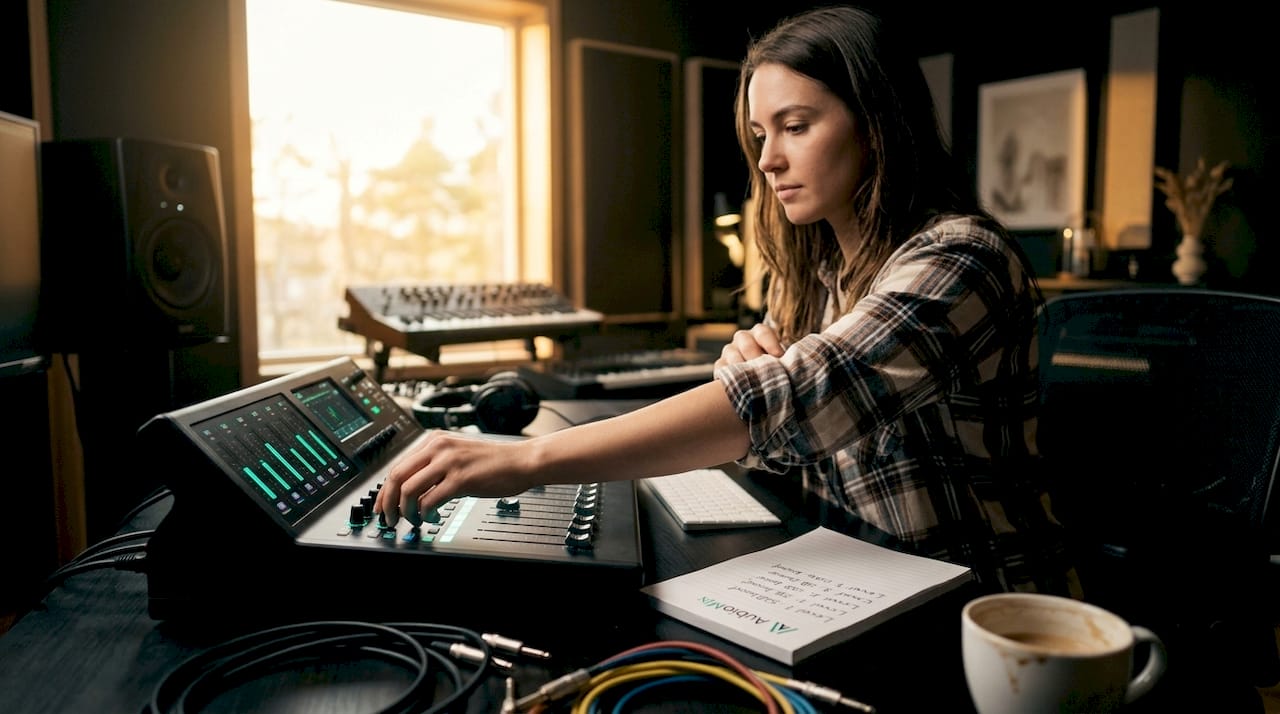
The second common error is comparing mismatched song sections. Chorus energy compared to a verse will always make the verse seem thin and underwhelming. Chorus-to-chorus comparisons give you accurate, like-for-like readings on tonal balance, density, and dynamics. Train yourself to be disciplined about this.
Here are the other mistakes worth flagging:
- Routing the reference through your master bus. If your reference audio is passing through your master bus compressor or limiter, you're hearing a processed version of it, not the original. References must bypass master bus processing entirely for the comparison to mean anything.
- Chasing the loudness of a mastered track. Your mix isn't mastered yet. Stabilising loudness early means avoiding excessive compression or limiting on your mix bus to match a mastered reference. You'll crush your headroom and make the mastering engineer's job miserable.
- Listening to everything at once. When you A/B your mix and your reference, your brain can only meaningfully evaluate one thing at a time. Comparing everything simultaneously leads to vague, unconvincing conclusions.
Pro Tip: Focus each referencing pass on one specific element. Listen once for low end balance, once for midrange clarity, once for stereo width. Short, focused passes improve accuracy and help you actually act on what you hear.
Key benefits of referencing mixes before delivery
Once you build referencing into your workflow properly, the mix referencing benefits become obvious fast. Here's what you actually gain.
-
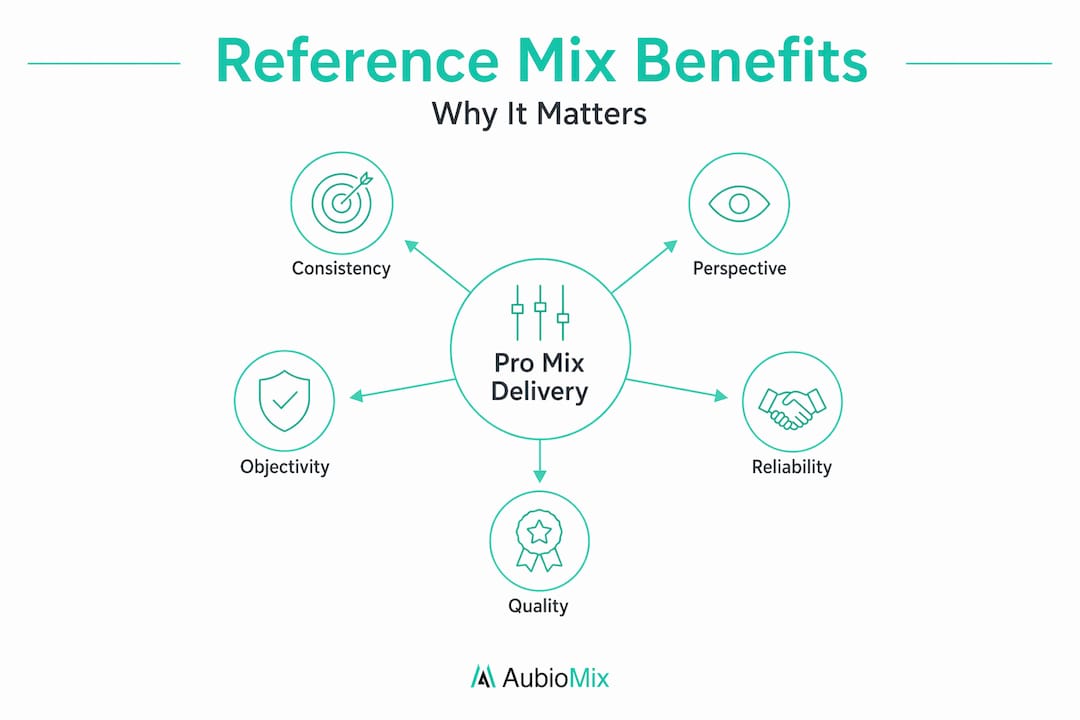
Ear recalibration. Long sessions cause something called ear drift, where your perception of tonal balance gradually shifts without you realising it. Reference tracks recalibrate your ears and restore objectivity, which means the decisions you make in hour four are as reliable as the ones you made in hour one.
-
Competitive tonal balance. One of the most underappreciated aspects of checking mixes before delivery is understanding where your mix sits relative to commercial releases. References benchmark your mix against top releases for tonal balance and translation across different playback systems, from earbuds to club speakers.
-
Early detection of mix problems. Stereo width issues, over-compressed dynamics, a low end that's muddy rather than full. These problems are genuinely hard to hear when you've been inside a mix for hours. A reference track makes them obvious in seconds because the contrast is immediate and concrete.
-
Faster, more confident decisions. Proper referencing can shave hours off the mixing process by giving you clear direction when you'd otherwise be second-guessing every EQ move. When you know your low end sits 3dB hotter than your reference, you have a specific problem with a specific fix. That's far more useful than a vague sense that something feels off.
-
Better translation across systems. A mix that sounds great on your monitors but falls apart on a phone speaker, a laptop, or a car stereo is not a finished mix. Referencing against a track you know translates well trains your ears to chase that same quality in your own work.
The cumulative effect of all five benefits is a mix that arrives at mastering in better shape, requires fewer revisions, and sounds genuinely professional on the day of delivery.
A practical referencing workflow
Building a referencing habit doesn't require expensive tools or a complicated setup. It requires a consistent process that you repeat from session start through to final delivery.
-
Import your reference at the session start. Bring the reference track into your DAW on a dedicated track before you've touched a single fader. Set it up while your ears are fresh so you're not importing it later when fatigue is already affecting your judgement.
-
Level match immediately. Set the gain on your reference track so it sits at the same perceived loudness as your mix. Use a loudness meter targeting around negative 14 LUFS integrated as a starting point. This gives you a stable loudness baseline from which all comparisons are reliable.
-
Route it to bypass your master bus. Send the reference track directly to your audio interface output, outside of any mix bus processing you have running. This is non-negotiable for accurate comparisons.
-
Set up a quick A/B toggle. Whether you use a keyboard shortcut, a mute button, or a dedicated plugin, you want to switch between your mix and the reference in under a second. Slow switching kills the comparison because your short-term audio memory fades fast.
-
Reference periodically throughout the session. Don't wait until the end to compare. Take a referencing break every 45 minutes or so. Switch to the reference, listen to a chorus, then flip back to the equivalent section of your mix. These periodic resets are what prevent ear drift from quietly derailing your decisions.
Pro Tip: When using the reference near the end of your session, compare your mix at the same point in the song structure where the reference feels most energetic and defined. If your mix matches that energy on those sections, you're in excellent shape for delivery.
My honest take on referencing
I've worked with enough mixes to have a strong opinion here: the engineers who resist referencing are almost always the ones who send back mixes that need the most revision. There's a mindset thing at play. Using a reference can feel like admitting you don't fully trust your ears. But trusting your ears is exactly why you need a reference. Your ears are brilliant but they're also easily fooled by context, fatigue, and familiarity.
What I've found is that referencing doesn't limit creativity. It actually frees you up. When you have a clear benchmark, you stop endlessly second-guessing whether the mix sounds "right" and start making intentional creative choices instead. The reference handles the objective calibration so your instincts can focus on the artistic decisions.
The subtlest benefit is what referencing does to your sense of energy and dynamics. Producers often over-compress mixes because the mix sounds full and loud in isolation. Put a well-mastered commercial track next to it and you'll immediately hear how much of the life you've been squeezing out. That contrast is the fastest teacher you'll ever have.
One word of caution: don't become so attached to your reference that you stop listening to your own track as its own creative work. The best mixers I know use references as a floor, not a ceiling.
— AubioMix
How Aubiomix helps you get mixes delivery-ready
You've done the work. You've referenced carefully, corrected the issues, and you're almost ready to deliver. But there's one more step that separates good mixes from great ones: getting objective, professional feedback before you send anything off.

Aubiomix is an online tool built specifically for music producers and mix engineers who want pro-level mix feedback without the wait. Upload your audio file and receive detailed, structured mix evaluation covering everything from tonal balance and dynamics to stereo width and translation, with specific, actionable steps to fix what needs fixing. It's the external perspective that makes manual referencing even more powerful. Try Aubiomix before your next delivery and hear the difference.
FAQ
What is a reference mix in music production?
A reference mix is a commercially released, professionally mixed and mastered track used as a sonic benchmark during your own mixing sessions. It helps calibrate your ears and gives you an objective standard to compare your work against.
Why does volume matching matter when referencing?
Louder audio always sounds better to the human ear, so without level matching, you'll mistake loudness for quality. Matching the perceived loudness of your reference to your mix before comparing removes this bias and gives you an honest comparison.
How often should you reference during a mix session?
Experienced mixers reference periodically throughout the session, roughly every 45 minutes, to reset their ears and prevent listener fatigue from skewing their decisions. Waiting until the end of a session to compare is one of the most common workflow mistakes.
Should the reference track go through your master bus?
No. Routing a reference track through your master bus means it passes through your compressors, limiters, and EQ, which colours the sound and makes the comparison unreliable. The reference should bypass all master bus processing and go directly to your output.
How does referencing help with mix delivery?
Referencing before final delivery catches tonal imbalances, dynamic issues, and translation problems that are hard to hear after long sessions. It also reduces revision requests and gives you the confidence that your mix holds up against commercial releases on any playback system.