

Effective client communication is the defining skill that separates a good mix engineer from a great one. Most engineers focus obsessively on their technical craft, yet client communication determines whether a project finishes on time, within scope, and with a satisfied client who comes back. The best mix engineer client communication tips share one thing in common: they replace vague, informal exchanges with clear, repeatable processes. When you build those processes into every project, you spend less time chasing feedback and more time doing what you love.
1. Set clear expectations before you touch a single fader
The single most effective thing you can do for any project is define the rules before the work begins. Clients who understand revision limits, delivery formats, and feedback timelines cause far fewer problems than those left to assume. A brief onboarding call or a well-designed intake form covers all of this in under 30 minutes.

The industry standard for revisions is 2–3 rounds, with a 10-business-day feedback window per round. Missing that window triggers automatic approval, which protects your schedule and keeps projects moving. Spell this out in writing before you start, not after the first mix lands in their inbox.
Clarify deliverables at the same time. Clients often assume they will receive stems, instrumentals, and a cappella versions as standard, when your quote only covers a stereo mix. List exactly what is included: stereo mix, stems, instrumental, and any other formats, with separate fees for additions.
- Define the number of revision rounds and the feedback window per round
- List all deliverables explicitly: stereo mix, stems, instrumental, and so on
- Specify the single communication channel for all official feedback
- Collect reference tracks and a rough mix during onboarding to align on direction
- Ask about the emotional intent and energy of the track, not just technical specs
Pro Tip: Send a one-page project summary after your onboarding call. It confirms what was discussed, sets expectations in writing, and gives both parties a document to refer back to if disagreements arise.
2. Mandate a single communication channel
Scattered feedback is the enemy of an efficient mix. When a client sends notes via text message, voice note, Instagram DM, and email across the same revision round, you end up piecing together a patchwork of requests that often contradict each other.
Redirecting all feedback to one consolidated channel, typically email or a dedicated audio feedback platform, eliminates this problem entirely. Every note lives in one place, nothing gets lost, and you have a clear paper trail if a dispute arises later.
Choose your channel and communicate it clearly at the start of every project. If a client sends feedback through an unofficial route, acknowledge it warmly and ask them to resend it through the agreed channel. Do this consistently and clients adapt quickly.
3. Use timestamped feedback to eliminate vague notes
Vague feedback is the biggest time thief in mixing. "The vocals feel a bit off" or "the low end is weird" tells you almost nothing. You end up guessing, applying changes, and sending another revision that may miss the mark entirely.
Timestamped annotation tools solve this directly. A note that reads "lead vocal at 1:23 needs more presence" is specific, testable, and actionable. You know exactly where to look and what to address.
Ask clients to include timestamps in every note, even if they are writing feedback in a plain email. Pair this with a structured feedback framework that guides them to comment on specific categories: vocals, low end, brightness, effects, and overall balance. This approach transforms a client's instinctive reactions into precise, useful instructions.
- Share a timestamped feedback guide with every new client before the first mix delivery
- Ask clients to group notes by category: vocals, low end, brightness, effects, and overall feel
- Provide a simple template they can copy and fill in for each revision round
- Redirect any vague notes back with a polite clarifying question before making changes
- Use a dedicated audio feedback platform if your workflow allows, as these tools prompt clients to timestamp automatically
Pro Tip: When a client sends a vague note, reply with a specific question rather than guessing. "When you say the low end feels heavy, are you hearing it most in the verse, the chorus, or throughout?" This trains clients to think more precisely over time.
4. Designate a single point of contact for bands and teams
Working with a band or a production team introduces a new layer of complexity. Five people with five opinions will send five sets of conflicting notes, and you will spend more time mediating than mixing.
Designating one person to collect, consolidate, and deliver all feedback on behalf of the group solves this immediately. That person filters internal disagreements before they reach you, so you receive one unified set of notes per revision round rather than a flood of contradictions.
Establish this expectation during onboarding. Ask the group to nominate their feedback lead and copy only that person on all official correspondence. This single change can cut your revision cycles significantly on group projects.
5. Acknowledge feedback immediately and set a clear next step
Proactive communication builds client trust as reliably as technical quality does. Clients rate reliable, timely responses as equally important as the quality of the mix itself. A client who hears nothing for three days after sending feedback starts to worry, and a worried client becomes a difficult client.
Acknowledge every batch of feedback within a few hours of receiving it. You do not need to have started the revisions. A short message confirming receipt, summarising the key notes you will address, and giving a realistic turnaround time is enough. This one habit alone transforms the client experience.
Set a realistic revision turnaround and stick to it. If you say 48 hours, deliver in 48 hours. If something comes up, communicate early rather than going silent. Clients forgive delays far more readily when they are kept informed.
- Acknowledge feedback within a few hours, even if revisions have not started
- Summarise the key notes you will address so the client knows you have understood them
- Give a specific turnaround time rather than a vague "soon"
- Send a gentle reminder if the client's feedback window is closing without a response
- Confirm approval in writing before archiving a project
6. Send listening prompts with every mix delivery
Most clients do not know how to listen critically to a mix. They play it back on their phone speaker, react emotionally, and send notes based on their first impression rather than a considered evaluation. You can change this with a few lines of guidance.
Experienced engineers use listening prompts to focus client attention on specific aspects of the mix before they start writing notes. A simple message alongside the delivery file might say: "Please check the vocal balance in the chorus, the low end on your reference speakers, and the overall energy compared to your reference track."
This approach narrows the feedback to areas that matter and reduces the chance of a client fixating on something irrelevant. It also signals that you are in control of the process, which builds confidence.
7. Use clear version naming to prevent phantom revisions
File naming sounds trivial. It is not. A client who receives three files named "mix final," "mix final 2," and "mix final FINAL" will inevitably reference the wrong one, leading to revision requests that address changes you already made.
Consistent version naming eliminates this confusion. A format like Artist_Song_Mix_v1.wav, Artist_Song_Mix_v2.wav, and so on creates a clear, unambiguous history. Both you and the client always know which version is current.
Include the version number in your delivery email subject line as well. "Mix delivery: Artist Song Mix v2" makes it impossible to confuse with previous rounds. This small discipline saves real time across a project.
8. Handle difficult feedback with clarifying questions
What a client says is not always the precise issue. A request to "make the mix bigger" might mean they want more low end, more width, more energy in the arrangement, or simply more volume on playback. Acting on the literal request without clarifying often produces another revision that misses the point.
Skilled engineers dig deeper before touching the session. A quick reply asking "When you say bigger, are you thinking more low end, more width, or more overall energy?" takes 30 seconds and saves hours. This habit also shows the client that you are genuinely engaged with their vision rather than just processing requests mechanically.
When feedback is genuinely conflicting or unclear, offer two alternative mix versions addressing different interpretations. Clients often find it easier to choose between two options than to articulate what they want from scratch.
9. Set boundaries around revisions and communicate consequences clearly
Revision creep is one of the most common and costly problems in mixing. A project quoted for two revision rounds quietly becomes six, and the engineer absorbs the extra time without compensation or a clear endpoint.
"After the agreed revision rounds are complete, the right move is not to keep applying changes blindly. Stop, hold a realignment call, and uncover the creative misalignment before it becomes a permanent pattern."
Pausing revisions after the standard rounds and suggesting a check-in call is the professional response to this situation. The call often reveals that the client's real concern is something entirely different from what their notes suggest, and a 20-minute conversation resolves what three more revision rounds would not.
Communicate your revision policy clearly in your contract and again in your onboarding summary. When a project approaches its limit, remind the client proactively rather than waiting for them to push past it.
10. Document approvals in writing before closing a project
Verbal approvals are not approvals. A client who says "sounds great" on a phone call can return two weeks later asking for changes, and without written confirmation, you have no clear record of when the project was signed off.
Ask for written approval via email or your chosen platform before you archive any project. A simple "Please reply to confirm you are happy with Mix v3 and that the project is complete" takes seconds to send and creates a clear record. This protects both parties and closes the project cleanly.
The mix engineer workflow that includes written approvals at every stage is the one that generates repeat business, because clients feel the process is professional, fair, and transparent.
Key takeaways
Effective audio engineer client communication is built on clear protocols, consolidated feedback, and proactive dialogue, not technical skill alone.
| Point | Details |
|---|---|
| Set expectations upfront | Define revision rounds, deliverables, and feedback windows before work begins. |
| Consolidate all feedback | Mandate one channel and one point of contact to eliminate contradictory notes. |
| Use timestamps and prompts | Timestamped notes and listening prompts turn vague reactions into precise, usable feedback. |
| Acknowledge and update proactively | Confirm receipt of every feedback batch and give a specific turnaround time. |
| Document approvals in writing | Written sign-off protects both parties and closes projects cleanly. |
Why communication is the real craft in mixing
Mixing is predominantly project management. I have seen technically brilliant engineers lose clients to engineers with half their skill, simply because the communication process felt chaotic and unreliable. The mix itself is only part of what a client is paying for. They are also paying for certainty: the certainty that their project will be delivered on time, that their notes will be heard, and that the process will not spiral into an endless loop of revisions.
The engineers I respect most treat their client-facing process with the same rigour they apply to their session. They have intake forms, revision policies, delivery templates, and approval workflows, all built and refined over years of real projects. That structure does not make the work feel corporate or cold. It actually creates the freedom to be more creative, because neither party is anxious about where the project stands.
The uncomfortable truth is that most revision spirals are communication failures, not creative ones. When a client keeps asking for changes they cannot quite articulate, the problem is almost never the mix. It is a misalignment in expectations that was never resolved at the start. Build the process, have the conversations early, and you will find that clients become collaborators rather than obstacles.
— Aubiomix
Getting better feedback starts with better tools
Clear communication frameworks are only as strong as the tools you use to support them. Aubiomix gives mix engineers and producers a platform to upload their audio and receive detailed, pro-level feedback on the mixing and mastering of their tracks in minutes.
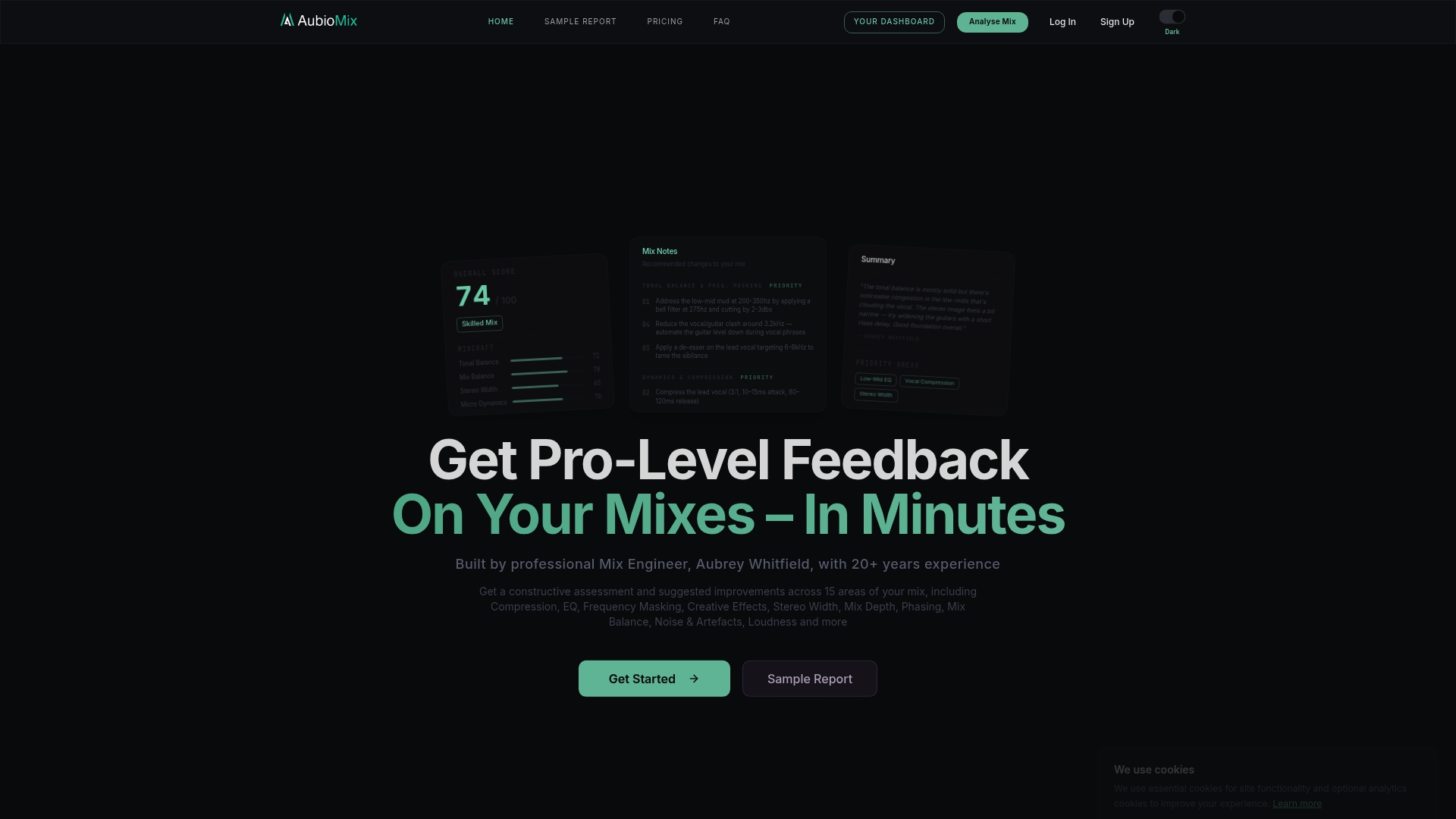
The feedback you get through Aubiomix is specific, timestamped, and structured around the same categories that professional engineers use: low end, vocal balance, brightness, dynamics, and overall translation. That means you can share Aubiomix reports with clients as a reference point, grounding subjective conversations in objective analysis. If you want to see how professional mixes are built and scored, the famous mixes analysed section shows exactly how hit records measure up across every key parameter.
FAQ
How many revision rounds should a mix engineer offer?
The industry standard is 2–3 revision rounds per project. A 10-business-day feedback window per round, with automatic approval if the window closes without a response, keeps projects on schedule.
What is the best channel for client feedback on mixes?
A single dedicated channel, either email or a purpose-built audio feedback platform, is the most effective approach. Consolidating all notes in one place eliminates confusion and creates a clear record of every revision request.
How do I stop clients from sending vague feedback?
Provide a structured feedback framework at the start of every project. Ask clients to use timestamps and comment on specific categories such as vocals, low end, and brightness. A short listening prompt sent alongside each mix delivery also focuses their attention before they write their notes.
What should I do when a client keeps requesting revisions beyond the agreed limit?
Stop applying changes and schedule a realignment call instead. The goal is to uncover the creative misalignment behind the requests rather than continuing to guess. This approach resolves most revision spirals faster than additional mix tweaks.
How do I get written approval from a client at the end of a project?
Send a direct email asking the client to confirm in writing that they are satisfied with the final mix and that the project is complete. A simple reply from the client serves as your written record and protects both parties if questions arise later.