
For 2026, master your release near −11 LUFS integrated with a −1 dBTP ceiling, and keep a −14 LUFS version on hand as your streaming-safe, zero-trim option. Most platforms still normalise to roughly −14 LUFS, with Apple Music sitting nearer −16 LUFS, so nothing has moved dramatically since last year. The real work now is protecting dynamics and true peak, not chasing a single "correct" number.
TL;DR:
- Most platforms will normalize tracks to around −14 LUFS, with Apple Music closer to −16 LUFS, so mastering near −11 LUFS with a −1 dBTP ceiling is recommended for clear headroom.
- Streaming environments prioritize protecting true peak and dynamics over chasing a specific loudness number, making loose limiting or over-compression detrimental.
- Platform true-peak enforcement varies, with some like Amazon applying tighter margins; drop to −2 dBTP if encoding environment is encoder-sensitive.
- Album sequencing should involve mastering the loudest track first and referencing others to maintain intended dynamic contrasts, especially important for concept albums.
- Use precise true-peak and LUFS measurements before release and re-measure after encoding to ensure compliance and avoid distortion or unwanted loudness differences.
Table of Contents
- Streaming loudness targets 2026: the quick reference table
- What is loudness normalisation and how does it actually work?
- What happens if your master doesn't hit the target?
- Practical mastering guidance for streaming in 2026
- Why true peak matters more than your LUFS reading
- Release checklist: what to test before you upload
- How AubioMix checks your loudness before you release
- Will 2026 bring new streaming loudness regulations?
- How are evolving loudness standards changing mastering workflows?
- What does 2026 compliance mean for artists and distributors?
- How do you update older masters for 2026 loudness targets?
- Why the loudness fight largely ended and what that means now
- Check your master's loudness before you upload anywhere
- Sources
- FAQ
Streaming loudness targets 2026: the quick reference table
Here's the part you'll bookmark. These are the integrated LUFS targets and true-peak ceilings you should be checking against before you export anything for release, based on measured 2026 platform data from TrackGleam.
A few platforms don't fit neatly into that table. Bandcamp doesn't apply loudness normalisation at all, so what you upload is what fans hear, warts and all. TikTok tends to run hotter and more compressed than music DACs, which is why some engineers cut a separate, louder file for short-form video. Vinyl mastering follows entirely different rules driven by groove physics rather than LUFS. Broadcast and cinematic delivery via Netflix sits far quieter, typically −23 to −27 LKFS/LUFS, because those environments assume calibrated playback rather than a phone speaker on a bus, as Forasoft's 2026 platform breakdown explains.
Treat this table as a snapshot, not gospel. Platforms revise normalisation algorithms without much fanfare, so it's worth re-checking targets every few months rather than mastering from memory a year later.
What is loudness normalisation and how does it actually work?
Loudness normalisation is the process streaming platforms use to turn every track down (or occasionally up) to a consistent perceived volume, so listeners don't have to reach for the volume knob between a whispery ballad and a brickwalled pop single. The measurement behind it is LUFS, or Loudness Units Full Scale, defined by ITU-R BS.1770. The algorithm applies K-weighting, a filter that mimics how human hearing perceives frequency balance, then gates out silence and very quiet passages so a track's loud sections dominate the reading.
Meters report three flavours of LUFS, and mixing them up causes most of the confusion producers run into. Momentary LUFS reacts in real time, roughly every 400 milliseconds, useful for watching transients as they happen. Short-term LUFS averages over three seconds, handy for judging a chorus versus a verse. Integrated LUFS averages the entire programme from start to stop, and that's the figure every platform actually normalises against. If you've been eyeballing momentary readings and wondering why your "loud" master still gets turned down, this is why.

Metadata complicates things further. Some platforms read embedded loudness metadata rather than remeasuring the file, so an incorrect tag can cause mismatched playback gain. Album-aware normalisation is another wrinkle: several services offer a mode that measures loudness across an entire album rather than track by track, preserving the intended contrast between a quiet intro and a loud closer. Device and app settings add one more layer, since users can often toggle normalisation off entirely, which is worth remembering the next time someone tells you their unmastered demo "sounded fine" on their phone.
What happens if your master doesn't hit the target?
A master that's louder than the platform target gets turned down, full stop, and this is where a lot of otherwise excellent mixes lose their shine. Streaming attenuation removes level, but it can't undo the limiting artefacts already baked into the file. If you've squashed every transient chasing a hotter loudness reading, that squashed, breathless quality plays back at a lower volume but keeps every flaw intact. A track that was already dynamic simply gets quieter with none of the audible damage, which is the outcome you actually want.
Quiet masters behave differently, and this catches acoustic and classical engineers out more than anyone. Platforms boost quiet tracks up towards the target, but only within the available headroom before hitting the true-peak ceiling. A recording mastered at −20 LUFS with peaks close to 0 dBTP can't be boosted the full six or so decibels needed to reach −14 LUFS, because doing so would push peaks past the limit. The result is a track that still plays back quieter than its neighbours in a playlist, undermining the entire point of mastering for a consistent listening experience.
Platform quirks add more nuance. Some services only ever turn tracks down and never boost, so a conservatively quiet master simply stays quiet on those platforms. Album-aware modes preserve relative loudness across a record rather than normalising every track identically, which matters if you've mastered a concept album with intentional dynamic arcs. True-peak enforcement also varies in strictness, with Amazon generally applying tighter margins than Spotify or YouTube.
Practical mastering guidance for streaming in 2026
The practitioner consensus for 2026 hasn't shifted much from recent years, and that stability is useful. A release master near -11 LUFS integrated with a -1 dBTP ceiling remains a commonly recommended default, since most platforms will trim that down cleanly without introducing artefacts, according to Veniamastering's 2026 mastering guidance. If you'd rather sidestep platform gain changes altogether, a −14 LUFS master is the zero-trim option that plays back essentially as delivered on most services.
Genre changes the calculation considerably:
- Modern pop and hip-hop: dense, compressed productions often sit comfortably at −9 to −11 LUFS pre-normalisation, since the arrangement is already built around sustained energy rather than wide dynamic swings.
- Indie and rock: aim closer to −11 to −13 LUFS, preserving enough crest factor that drum hits and guitar transients still punch through after platform attenuation.
- Classical and acoustic: master quieter, often −16 to −20 LUFS, because dynamic range is the entire point and aggressive limiting destroys the performance you're trying to capture.
TikTok-first content is worth treating separately if that platform is a meaningful part of your release strategy. Short-form platforms tend to run hotter, so a dedicated louder export can outperform a music-streaming master in that specific context, though it shouldn't be your only master.
Album sequencing deserves particular care. Master your loudest track first, since that's the one most likely to hit the true-peak ceiling, then reference every other track against it to preserve the emotional dynamics you intended across the record, a principle grounded in the EBU R128 supplement on album normalisation.
Pro Tip: Run your quietest and loudest album tracks back to back through a loudness meter before final delivery. If the LUFS gap between them is more than about 4 to 5 units, album-aware normalisation may flatten the contrast you worked hard to create.
Why true peak matters more than your LUFS reading
True peak measures the actual analogue waveform after digital-to-analogue reconstruction, not just the sample values you see in your DAW. Inter-sample peaks occur between samples, when the reconstructed waveform overshoots the highest sample value, and standard sample-peak meters miss them entirely. ITU-R BS.1770 defines the oversampling method true-peak meters use to catch these overshoots before they cause distortion.

The widely recommended headroom rule is −1 dBTP, and it exists because lossy encoding, whether Ogg Vorbis, AAC, or the codec a platform runs behind the scenes, tends to raise inter-sample peaks slightly during compression. A file that measures −0.3 dBTP pre-encode can clip audibly once it's been through a platform's encoder, according to findings on streaming loudness normalisation. For encoder-sensitive workflows, particularly anything destined for Amazon Music's hi-res tier, dropping to −2 dBTP gives you a wider safety margin.
Practically, measure true peak both before and after any lossy export, not just on the WAV master. Most modern true-peak meters, including built-in DAW limiters with oversampling modes, will flag this for you. Document the reading in your session notes alongside integrated LUFS and loudness range, so you're not re-measuring blind every time a platform tweaks its encoder. AubioMix's true peak explained guide walks through the mechanics in more depth if you want the full technical picture.
Release checklist: what to test before you upload
Before any file leaves your session, run through this:
- Measure integrated LUFS, true peak, and loudness range (LRA) on the final master and log all three in your session notes.
- Confirm your true-peak ceiling sits at −1 dBTP or lower, dropping to −2 dBTP for encoder-sensitive platforms.
- Export at the correct bit depth with proper dithering applied if you're reducing from 24-bit to 16-bit.
- Check metadata tags for loudness values, and label alternate masters clearly (release master, streaming-safe, TikTok export) so nothing gets uploaded by mistake.
- Audition the exported file on at least one platform client, desktop or mobile, rather than trusting the raw export alone.
- Use a platform's built-in playback statistics where available to confirm the loudness gain being applied in real time.
This kind of operator discipline, measuring and logging rather than trusting last year's template, is exactly what separates consistent release quality from guesswork, a point echoed in industry loudness checklist guidance.
How AubioMix checks your loudness before you release
AubioMix analyses your uploaded mix or master and reports integrated LUFS, true peak, and loudness range alongside more than a dozen other mix and mastering checks, from frequency masking to stereo width. You get genre-specific benchmarks pulled from measured reference tracks, so you're comparing your master against realistic targets for your style rather than a single generic number.
The workflow is straightforward: upload your file, read through the loudness and true-peak findings in the report, apply the fixes flagged against the checklist above, and re-run the analysis to confirm the changes have landed. It's a fast way to catch a true-peak overshoot or an underboosted quiet passage before a platform's normalisation does something unflattering to your track.
Worth being upfront about: AubioMix automates the measurement and flags issues with clear next steps, but it isn't a replacement for a mastering engineer's ear on genuinely tricky material. Think of it as the fast, objective check that happens before or alongside that judgement call, not instead of it. You can see genre benchmarks in action on the pop mastering benchmarks page.
Will 2026 bring new streaming loudness regulations?
No major regulatory shake-up is on the table for 2026. What's changed is convergence, not disruption. Most platforms already sit within a couple of LUFS of each other, and the direction of travel over recent updates has been toward tighter true-peak enforcement rather than dramatically different integrated targets.
Where movement is happening, it's in the delivery-spec space rather than the streaming-target space itself. The ATSC A/85 broadcast delivery standard, which governs loudness for over-the-air and cable content in the United States, has continued refining its streaming annex, offering clearer guidance for internet delivery alongside its long-standing −24 LKFS broadcast target. That's a broadcast document rather than a music-streaming one, but it signals how standards bodies are thinking about consistency across delivery formats generally.
The more realistic expectation for producers is incremental tightening of true-peak margins as encoders evolve, rather than a wholesale shift in integrated LUFS targets. Amazon's stricter −2 dBTP stance may become the norm other platforms adopt rather than the exception. If anything changes meaningfully in 2026, it's likely to be quieter enforcement of existing rules rather than new numbers to memorise.
How are evolving loudness standards changing mastering workflows?
The biggest shift over the past few years isn't the target numbers themselves, it's what engineers now do before those numbers ever get typed into a limiter. Loudness metering has moved from an optional final check to a step built into the mix process itself, with producers watching integrated LUFS and true peak from rough mix onward rather than discovering problems at the mastering stage.
This has quietly changed gain-staging habits earlier in the signal chain. Engineers mixing with an eventual −11 or −14 LUFS target in mind tend to leave more headroom through the mix bus, which in turn reduces the temptation to over-compress individual tracks to compete for space. The loudness war, in other words, is being fought less at the limiter and more at the mix stage, where the real damage to dynamics historically happened anyway.
Session templates have adapted too. It's now common to see loudness metering plugins parked permanently on the master bus, logging LUFS and true peak continuously rather than being bounced in as an afterthought. For engineers working across genres, this has made switching between a dense trap master and a delicate acoustic session less jarring, because the target numbers are visible throughout rather than applied retroactively.
What does 2026 compliance mean for artists and distributors?
Independent artists and small studios feel these standards differently than major-label mastering houses do, mostly around workflow efficiency rather than creative compromise. A solo producer mastering their own release doesn't have a mastering engineer double-checking true peak, so the margin for a missed inter-sample peak or a metadata mismatch is higher, and the consequences, a track playing noticeably quieter than a playlist neighbour, are more visible to fans than to the artist.
Distributors sit in an interesting position because most don't enforce loudness targets on upload, they simply pass files through to platforms that apply their own normalisation regardless. That means a poorly metered master won't get rejected, it'll just underperform sonically once it's live, which is a much harder problem to notice and fix after release.
For producers building a catalogue rather than a single, consistency matters more than hitting one perfect number. An artist with fifteen tracks mastered across three years at wildly different loudness levels creates a genuinely uneven listening experience across their own discography, even if every individual track technically complies with platform targets. Standardising an internal mastering chain, even a simple one, pays off more than chasing the exact current target on any single release.
How do you update older masters for 2026 loudness targets?
Start by measuring before you touch anything. Run your back catalogue through a true-peak and integrated LUFS check to find out which tracks are sitting well outside the −11 to −16 LUFS range that covers most streaming use cases, since some may already be closer than you think.
For masters that are significantly hotter than modern targets, a full remaster from stems, if you still have them, will always sound better than reversing limiting on a finished file. If stems are gone, a gentler approach works reasonably well: apply mild downward compression or a transparent limiter reduction rather than trying to recover dynamics that were genuinely squashed out during the original master.
Quiet older masters are usually the easier fix, since boosting overall level rarely introduces new artefacts, provided you check the resulting true peak doesn't creep past −1 dBTP in the process. AubioMix's true peak explained guide covers the specific gain-staging steps for this kind of touch-up work in more detail. Whichever route you take, remeasure the finished file rather than assuming the adjustment landed exactly where you expected.
Why the loudness fight largely ended and what that means now
Chasing a louder master stopped paying off once every major platform converged on roughly the same normalisation ballpark. A track squashed to compete on a phone speaker in 2014 just gets turned down today, artefacts and all, while a dynamic mix sails through unaffected. That convergence, visible clearly across the platform data measured in 2026, rewrote the incentive structure entirely: there's simply nothing left to win by being the loudest track in someone's playlist.
That doesn't mean loudness has no creative role. A hardcore techno track built around sustained intensity genuinely benefits from sitting hotter than a folk ballad, and that's a legitimate artistic choice rather than a mistake to correct. The line worth holding is between loudness as intention and loudness as habit. If you're limiting hard because the genre demands it, that's craft. If you're doing it because a template says so, it's costing you dynamics for no audible benefit once normalisation kicks in anyway.
The engineers getting the best results in 2026 aren't the ones with the most aggressive limiter settings. They're the ones who measure consistently, log what they find, and revisit their assumptions every few months rather than mastering on autopilot from a preset built years ago.
— AubioMix
Check your master's loudness before you upload anywhere
AubioMix is built for exactly the moment this article has been walking you through: the point where you've mastered a track and need to know, with numbers rather than guesswork, whether it's going to hold up against 2026's streaming targets. A single Mix Review for £4.99 gives you a full loudness, true-peak, and mix breakdown against genre benchmarks, so you're not relying on ear alone to catch an inter-sample peak or an underboosted quiet passage.
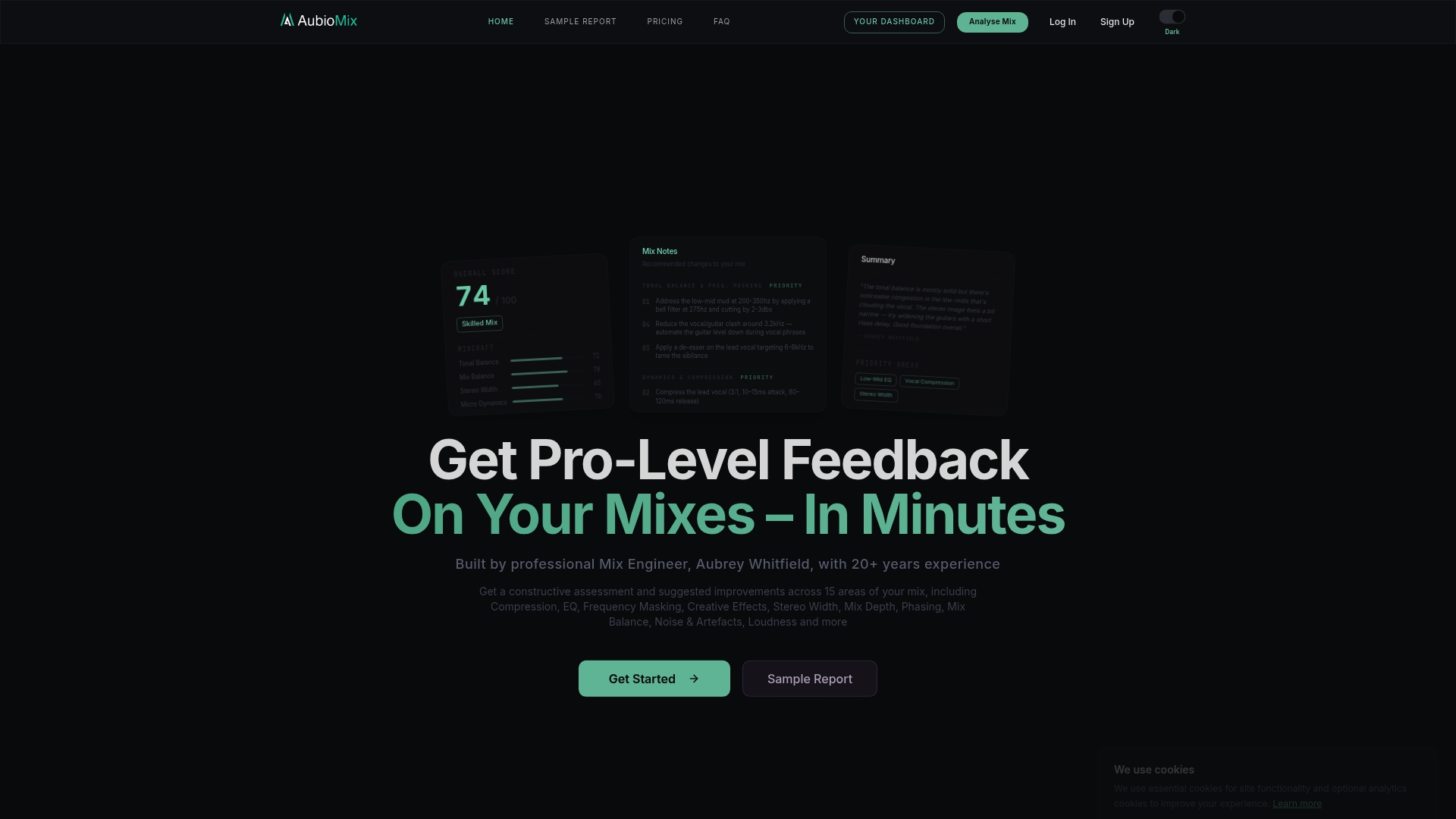
If you're mastering regularly rather than releasing one track a year, the Professional plan at £19.99 a month or Professional + at £34.99 a month builds this checking into your normal workflow instead of a one-off task. Add a Reference Pass for £2.99 if you want your master benchmarked directly against a track you admire. None of this replaces a skilled mastering ear on genuinely difficult material, but it does mean you'll know exactly where your loudness and true peak stand before a platform's normalisation makes that decision for you. Head to the pricing page and run your next master through before you hit upload.
Sources
- Recommendation ITU‑R BS.1770‑5 (loudness and true‑peak measurement)
- LUFS targets for Spotify, Apple Music & YouTube (2026) | TrackGleam
- LUFS targets per platform in 2026: Spotify, Apple Music, YouTube, Netflix, broadcast — Forasoft
- How loud should your master be in 2026? Spotify, Apple, YouTube, Tidal — Veniamastering
- Streaming Loudness in 2026: Why -14 LUFS Does Not Mean What You Think | Tonalux Blog
FAQ
What is the best LUFS target for streaming in 2026?
Most streaming platforms normalise to around −14 LUFS integrated, with Apple Music closer to −16 LUFS, based on measured 2026 platform data. A practical release master around −11 LUFS with −1 dBTP works well as a default, since platforms will trim it down cleanly.
Is a louder LUFS reading bad for streaming?
A louder master isn't penalised outright, but platforms will attenuate it down to their target, which only preserves your dynamics if the track wasn't over-limited to begin with. If heavy limiting already flattened your transients, that damage stays audible even after the platform turns the level down.
How many Spotify streams do you need to make $1000?
Spotify's per-stream royalty varies by market, subscription type, and distribution deal, so there's no single fixed stream count that applies universally, and current rates are best confirmed directly through Spotify for Artists rather than a rough estimate. Loudness compliance itself doesn't affect royalty rates; it only affects how consistently your track plays back against others in a listener's queue.
Is music streaming declining?
Overall listening habits shift platform to platform, but the loudness normalisation practices covered here apply regardless of which service currently leads the market. What matters for your mastering workflow is that the major platforms have converged on similar LUFS targets, so building your release process around that consistency protects you against platform-share fluctuations.
Can AubioMix check my true peak and loudness before I release?
Yes, AubioMix's Mix Review measures integrated LUFS, true peak, and loudness range alongside genre benchmarks, flagging exactly where a master sits against 2026 streaming targets. It costs £4.99 per review, with subscription plans available for producers checking masters regularly.