
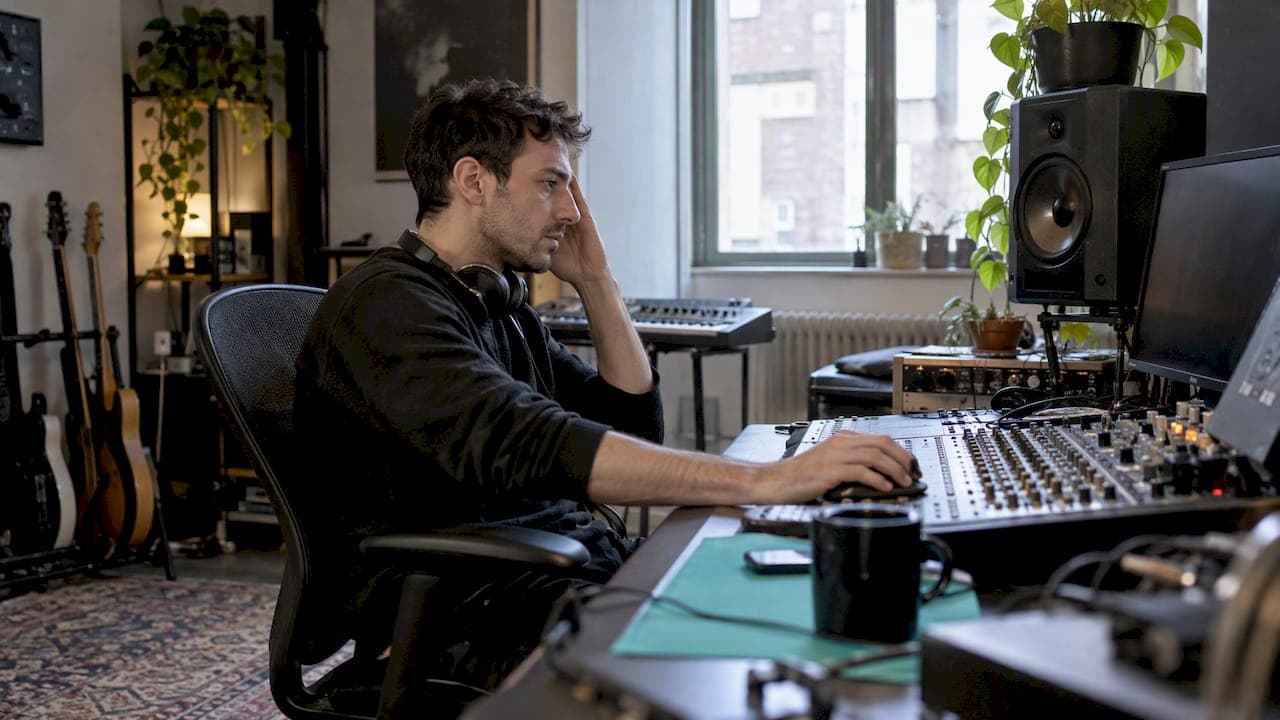
Right now, turn your monitors down to a moderate, conversational level, step away from the speakers for ten to fifteen minutes in a quiet space, then come back and listen to the full song once, calmly, at that same lower level. This single move protects your hearing and resets your perceptual baseline, so you stop chasing fixes that only sound right because your ears are tired, not because the mix is wrong.
TL;DR:
- Dense arrangements can cause greater listening fatigue than simple ones at identical levels, so treat requests for more treble or kick as a stop signal.
- Take five to ten minutes of quiet away from speakers each hour, and schedule a twenty minute rest after demanding equalization or loudness work.
- Keep routine monitoring moderate, reserve loud checks for brief, deliberate moments, and treat 85 decibels as an occasional ceiling rather than an all day target.
- Seek a hearing specialist if ringing continues well after a session or your hearing changes suddenly without explanation; workflow tweaks cannot address those symptoms.
- Archive approved versions and write notes before further edits; repeated corrective tweaks can reflect fatigue, so reassess the mix after a proper quiet rest.
Table of Contents
- What ear fatigue is and how it affects your hearing
- Why ear fatigue wrecks your mixing decisions
- Signs your ears are fatigued: clear stop signals
- Practical habits to prevent ear fatigue during a mix session
- Monitoring levels and safe-exposure guidance for mixers
- What 6,000+ mix reports tell us about fatigue-driven mixing
- Perspective: change one habit this week
- Translating fatigue management into better mixes, faster
- FAQ
- Sources
What ear fatigue is and how it affects your hearing
Ear fatigue is the gradual dulling of your hearing accuracy after prolonged exposure to sound, especially at higher levels. Part of what's happening is a temporary threshold shift: the tiny hair cells in your inner ear become less responsive after sustained stimulation, so quiet details blur and your sense of loudness drifts.
There's a second layer too: listening effort. Mixing asks your brain to track multiple instruments, judge balance, and make creative calls simultaneously, and that cognitive load builds its own kind of tiredness, separate from pure volume exposure. The WHO's safe listening guidance frames this as a dose problem: level and time together determine the risk to your sensory cells, which is why both loud sessions and long sessions deserve the same caution.
For mixers, the practical fallout includes a flattened sense of high-frequency detail, a muddier read on clarity, and in some cases, the first whisper of tinnitus. None of that shows up as "I feel tired". It shows up as "this mix needs more air", when really, your ears do.
Why ear fatigue wrecks your mixing decisions
Fatigue doesn't announce itself. It quietly nudges your monitoring level up because everything sounds a bit flatter than it did an hour ago, and a louder mix always feels more exciting in the moment. That creeping volume then convinces you the highs need boosting or the kick needs more weight, and you commit those changes before checking them against anything else.
The trouble is that those corrections were judged against a tired reference, not an accurate one. Export the mix, play it the next morning or on a different system, and the "fix" often sounds harsh, boomy, or simply wrong. You've spent an hour solving a problem that existed in your ears, not in the track.

This is where listening effort research becomes genuinely useful for mixers. A multi-day study on auditory demand found that higher demand on your listening system predicts fatigue independently of how loud things actually are, meaning a dense, busy arrangement can tire you out faster than a simple one, even at identical monitoring levels. If you notice yourself reaching for "a bit more top end" or pushing the kick louder for the third time in a session, treat that urge as a stop signal rather than a mixing instruction. It's very often fatigue talking, not your taste.
Signs your ears are fatigued: clear stop signals
Some signals are subjective, felt in the moment rather than measured. Others show up only when you compare your mix against something outside your own head, which is exactly why both types matter.
- You keep wanting to nudge the monitor level up, even slightly, every twenty minutes or so.
- Sounds feel fuzzy, slightly distant, or less distinct than they did at the start of the session.
- You notice ringing, buzzing, or a persistent tone after you stop playback.
- Vocals lose focus and you struggle to judge whether they sit correctly in the mix.
- A mix that sounded balanced on your main monitors falls apart in mono or on a phone speaker.
- Two A/B comparisons of the same section give you different answers within the same hour.
If tinnitus lingers well beyond the session, or you notice a sudden, unexplained change in how you hear, that's a matter for a hearing specialist, not a mixing workflow adjustment.
Practical habits to prevent ear fatigue during a mix session
Most of fatigue management comes down to five habits, and none of them require new gear.
- Set a moderate monitoring baseline. Pick a comfortable, conversational level for the bulk of your session and reserve louder checks for short, deliberate moments, never as your default listening volume.
- Take micro-breaks every hour. Step away from the speakers for five to ten minutes, ideally somewhere quiet, to let your ears properly reset rather than simply switching to a different source of sound.
- Schedule longer quiet rests after intense passes. After EQ-heavy or loudness-heavy work, a longer break, even twenty minutes, pays off far more than pushing through.
- Split tasks and cap revision rounds. Separate levels, EQ, and dynamics into distinct passes, and decide in advance how many revision rounds a track gets before you archive it as approved.
- Rotate your listening modes deliberately. Alternate between main monitors, headphone checks, small speakers, and a mono compatibility check, rather than staying on one monitoring path until your judgement wears thin.
Pro Tip: Keep a sticky note with your "default" monitor level marked on the dial or fader, so you always have a known, neutral starting point to return to after a break.
Session design matters just as much as the listening itself. The workflow guidance on mix revision practices recommends defined revision rounds with notes and archived versions, which stops the kind of open-ended corrective loop that fatigue thrives on. A session organisation checklist helps you batch similar tasks together instead of jumping between EQ, automation, and effects all session long, which keeps cognitive load lower for longer.
After any break, your first listen back should be the full song, at your baseline level, with no soloing and no adjusting, just listening. That one calm pass tells you more about whether yesterday's changes were correct than another hour of tweaking ever will.
Monitoring levels and safe-exposure guidance for mixers
Dose is level multiplied by time, and that single idea should shape how you treat loud checks. A quick blast at high volume to "feel" the low end costs more of your daily listening budget than an hour at a gentler level, which is why the WHO's safe listening guidance recommends staying below roughly 80 to 85 decibels where practical and taking frequent breaks to manage total weekly exposure.
There's no single studio number that suits everyone. Room size, speaker sensitivity, and how long you actually sit in the chair all change the picture, so treat 85 dB as a ceiling for occasional checks, not a target you dial in and leave running all day.
- Use a calibrated SPL meter or a reliable phone app, positioned at your actual listening position, not next to the speaker.
- Calibrate once with a known reference level and reuse that same setting every session, so your checks stay comparable over time.
- Keep loud reference checks brief and intentional, then return straight back to your moderate baseline.
What 6,000+ mix reports tell us about fatigue-driven mixing
Patterns across the mix reports we have analysed point to a familiar shape: tracks with unusually high revision counts tend to show repeated small corrective moves, often an EQ nudge here, a level bump there, stacked on top of each other rather than resolved in one deliberate pass. That stacking is a fingerprint of fatigue-driven mixing, not of a genuinely difficult track.
The fix that shows up consistently in better-translating mixes is structural: archive an approved version before further edits, take written notes during each pass instead of relying on memory, and check overall translation again after a proper rest. When you're unsure whether your last change was judgement or tiredness, running the mix through an objective analysis workflow gives you a second opinion that isn't affected by how many hours you've been sitting in the chair.
Perspective: change one habit this week
Ear fatigue isn't a flaw in your technique, it's a physical reality of the job, and pretending otherwise just means you keep making decisions you'll reverse tomorrow. Pick one procedural fix this week: a fixed monitoring default, or a break timer set to go off every hour, and stick to it without exception.
Then test yourself. After a proper rest, listen back to a change you made under fatigue and ask honestly whether it still holds up. That one comparison teaches you more about your own listening habits than any article, including this one, ever could.
— AubioMix
Translating fatigue management into better mixes, faster
Good habits reduce fatigue, but they don't tell you whether a mix is actually translating, and that's where an outside, rested set of ears or a measurement tool earns its keep. When a loud reference check or a tired late-night pass leaves you unsure whether a decision was right, we built AubioMix to give you that second opinion without needing another engineer on call.
Upload your track and we check it across more than fifteen areas, from EQ and compression to stereo width, phase, and loudness, and hand back a written report alongside visual breakdowns you can review once you're rested. A single Mix Review costs £4.99, and if you want a benchmark to compare against, a Reference Pass is £2.99. For ongoing work, our Professional plan runs £19.99 per month, and Professional+ runs £34.99 per month, both giving you a set number of reviews so you can check translation after every rest rather than guessing.
If you're also thinking about how a finished mix reaches listeners, playlist pitching from a partner like Intonality is worth a look once the mix itself is locked down. Start with a mix analysis the next time you're unsure whether a late-session change was the right call or just a tired one.
This article is general information, not a substitute for advice from a qualified doctor. Consult a qualified healthcare professional about your own circumstances before acting on anything here.

FAQ
How to avoid ear fatigue when mixing?
Keep your monitoring level at a moderate, consistent baseline rather than letting it creep up, and take a short break away from speakers at least once an hour. The WHO's safe listening guidance recommends staying below roughly 80 to 85 decibels where practical and limiting total exposure time, which applies directly to long studio sessions.
How to reverse ear fatigue?
Rest in a quiet environment is the most reliable way to let your hearing recover, since fatigue is largely driven by sustained exposure and listening effort rather than permanent damage. Removing sound entirely works better than switching to another source of audio, because a genuinely quiet break gives your ears time to reset.
How long does it take for ear fatigue to go away?
Recovery time varies with how loud and how long the exposure was, and in some cases can take as long as the exposure period, according to occupational research summarised by CDC and NIOSH. A short, moderate session might only need ten to fifteen minutes of quiet, while a long, loud one can warrant a much longer rest or even a break until the next day.
Can stress cause ear problems?
Acute stress can raise auditory sensitivity and induce hyperacusis in some people; stress management matters because emotional exhaustion amplifies listening sensitivity and fatigue, according to research on acute stress and hyperacusis. If you're mixing under deadline pressure, that added sensitivity can compound ordinary listening fatigue, so managing stress is part of protecting your ears too.
Sources
- Deafness and hearing loss: Safe listening
- The effects of daily life auditory demands on listening effort, affect, and fatigue as a function of hearing loss