

Reviewing your mix objectively is the process of critically evaluating the technical and artistic balance of a music mix using unbiased tools and structured listening methods. After hours in a session, your ears adapt and your judgement drifts. You stop hearing problems that are obvious to a fresh listener. A proper objective mix assessment combines technical measurement, referencing, and disciplined listening to catch what your fatigued ears miss and produce a mix that translates everywhere.
How to review your mix objectively: tools and prerequisites
The right tools make objective evaluation possible. Without them, you are relying entirely on ears that have been listening to the same track for hours, which is a losing battle.
AI-powered mix analysers are the most accessible starting point. These tools evaluate your mix against universal technical standards, measuring integrated LUFS, true peak, stereo width, phase correlation, and frequency balance across multiple bands. AI mix analysers score mixes on a scale from 0 to 100, with grades ranging from F (below 40) to A (85–100), and deliver results in under 60 seconds. That speed matters because it removes the temptation to keep tweaking before you have any real data.

Beyond software, your listening environment shapes every decision you make. Calibrated studio monitors, a pair of reliable closed-back headphones, and a treated room are the physical prerequisites for accurate assessment. Reference tracks are equally critical. Use well-known songs in the same genre to calibrate your expectations, but do not try to match them exactly. Use multiple references to identify specific targets: vocal level, stereo width, high-frequency brightness.
Here is a quick comparison of the main tool categories available to producers:
| Tool type | What it measures | Cost range |
|---|---|---|
| Free AI analysers | LUFS, stereo width, basic frequency balance | Free (limited analyses) |
| Paid AI analysis packs | Full diagnostics: dynamics, phase, multi-band EQ | From around £4 per track |
| Professional engineer feedback | Holistic creative and technical critique | £40–£160 per track |
The cost difference is significant. Automated AI feedback costs a fraction of manual engineer feedback, making regular objective checks affordable at any stage of a project.
Pro Tip: Take a 15-minute break before any critical listening session. Step outside, listen to something completely different, then return. Your ears reset faster than you think, and the difference in what you hear is remarkable.
What is the step-by-step process to evaluate your audio mix?
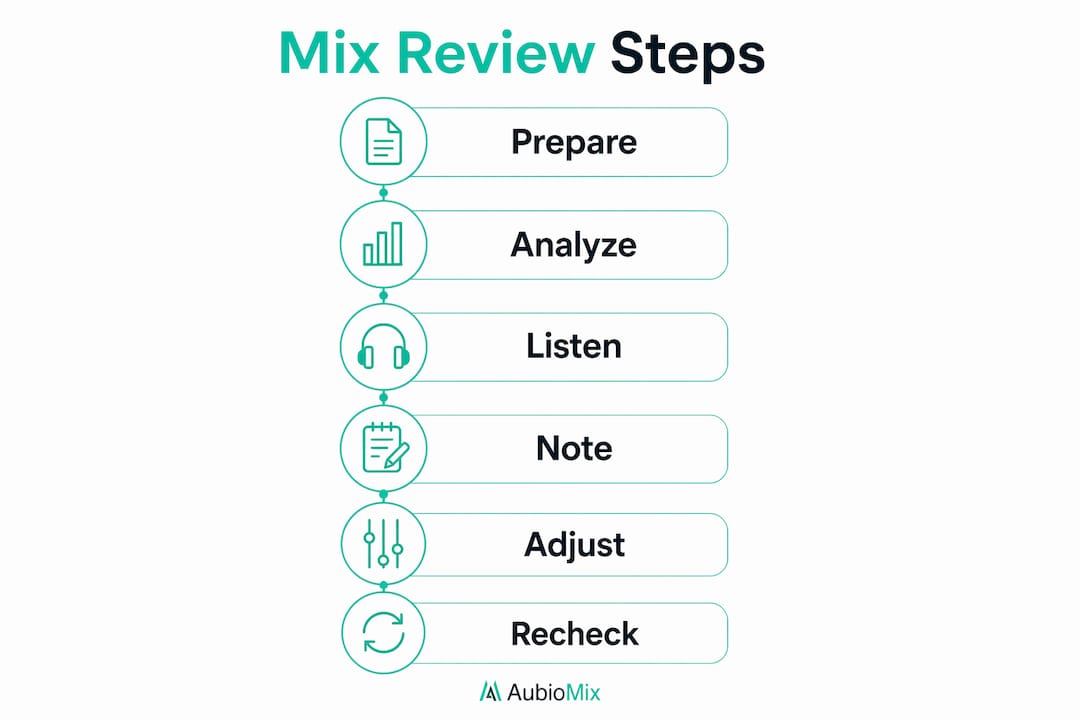
A structured workflow removes guesswork from mix quality evaluation. Follow these steps in order, and you will build a clear picture of where your mix stands.
- Upload your mix to an AI analyser. Get your Mix Score and read every diagnostic flag. Note which areas receive a pass, a warning, or a fail. Do not react yet. Just collect the data.
- Compare against reference tracks. Load a reference into your DAW at a matched loudness level. Compare vocal presence, low-end weight, stereo width, and overall brightness. Write down specific differences, not general impressions.
- Check loudness targets. Streaming platforms normalise to approximately -14 LUFS, so any mix louder than this gets turned down automatically. Confirm your integrated LUFS sits in the right range before you go further.
- Multi-environment listening. Play your mix on studio monitors, then closed-back headphones, then earbuds, then a phone speaker, then in a car. Each system reveals different problems. A mix that sounds great on monitors but falls apart on earbuds has a translation issue that needs fixing.
- The hallway test. Listen from an adjacent room with the door slightly open. The high-frequency detail disappears and you hear only the raw energy and tonal balance. If the vocals vanish or the bass overwhelms everything, you have a fundamental balance problem.
- The whisper-level test. Turn the volume down to just above silence. If the vocal disappears at whisper level, it is almost certainly too quiet in the mix. This test cuts through ear fatigue and tells you the truth about your element hierarchy.
- Compile your notes. List every issue with a specific description: "vocal sits 2 dB too low against the chorus guitars," not "vocal feels quiet." Specific notes lead to specific fixes.
Pro Tip: Keep a dedicated mix review notebook, physical or digital. Date every entry and log the specific changes you made after each review session. Patterns emerge quickly, and you will start catching your own recurring mistakes before they happen.
What are the most common issues found in objective mix assessments?
Objective analysis consistently flags the same categories of problems. Knowing what to look for saves time and stops you chasing the wrong things.
Muddy low-mids are the most common culprit in amateur mixes. Energy building up between 200 Hz and 500 Hz makes a mix sound thick and unclear. The fix is targeted EQ cuts on instruments that do not need that body, particularly guitars, keyboards, and backing vocals.
Harsh highs appear when the 3 kHz to 8 kHz range is over-represented. This often comes from over-brightened vocals or cymbals with too much presence. A gentle high-shelf cut or a narrow notch at the offending frequency resolves it quickly.
Over-compression is identifiable by a low crest factor and a narrow dynamic range. A dynamic range below 6 dB sounds squashed and lifeless. Aim for 8–14 dB of dynamic range in most genres. If your mix feels flat and lacks punch, check your crest factor before touching anything else.
Mono incompatibility shows up as a negative stereo correlation reading. Anything with a correlation below zero means some frequencies cancel when the mix is summed to mono. This is a serious problem for radio, club PA systems, and phone speakers. Check mono compatibility early and often.
Here is a quick reference for the most common issues:
| Issue | Symptom | Corrective action |
|---|---|---|
| Muddy low-mids | Thick, unclear sound | EQ cuts at 200–500 Hz on non-bass instruments |
| Harsh highs | Listener fatigue, brightness | Notch or shelf cut at 3–8 kHz |
| Over-compression | Flat, lifeless, no punch | Reduce compression ratio or increase attack time |
| Mono incompatibility | Phase cancellation in mono | Check stereo correlation; reduce wide effects |
| Low LUFS | Quiet on streaming platforms | Increase gain staging or add gentle limiting |
Quick fixes by issue category:
- Low-mids: High-pass filter non-essential instruments above 80–120 Hz.
- Dynamics: Use parallel compression instead of heavy bus compression.
- Stereo width: Narrow wide reverbs and delays in the low-mid range.
- Loudness: Aim for -14 LUFS integrated before mastering.
Pro Tip: Treat diagnostic flags as genre-aware suggestions, not absolute laws. A heavily compressed mix might score low on dynamic range but be entirely correct for a hard-hitting electronic track. Use analysis as a sanity check, not a rulebook.
How do you balance objective data with your creative intent?
Technical data tells you what is measurable. It does not tell you what the song needs. The skill is knowing when to follow the numbers and when to trust your ears.
A mix is finished when it serves the song and translates well across multiple playback systems. That definition puts emotion first and metrics second. If a diagnostic tool flags your vocal as slightly loud but the song demands that intimacy and presence, keep it. The data informs your decision. It does not make it.
Soliciting feedback from non-engineers is genuinely useful. Play your mix to someone who listens to music but does not make it. Ask them what they notice first, what feels too loud, and whether the lyrics are clear. Their answers bypass technical language and go straight to the listener experience, which is what actually matters.
Peer feedback from other producers works differently. They will speak in technical terms and identify specific frequency or dynamic issues. Both types of feedback are valuable. Weigh them against your own analysis and the song's emotional goals.
Mindset tips for balancing objectivity and creativity:
- Treat every diagnostic score as a starting point for a conversation, not a verdict.
- Separate your technical review session from your creative mixing session by at least a day.
- When measurements and ears conflict, ask: "Does this serve the song?" That question usually resolves it.
- Collect feedback from at least three different listeners before making significant changes.
- Accept that a mix can be technically imperfect and emotionally perfect at the same time.
What habits undermine effective mix review, and how do you avoid them?
The most common mistake is tweaking past the point of improvement. You make a change, check the meters, see a small improvement, and keep going. Twenty minutes later the mix is worse than when you started. Set a clear stopping point before you begin a review session and stick to it.
Ear adaptation is real and it works against you. After 45 minutes of focused listening, your ears compensate for the mix's tonal character and you stop hearing the problems. Take breaks every 30–45 minutes. Step away from the room entirely. When you return, the issues that were invisible become obvious again.
Ignoring mono compatibility and streaming loudness standards costs producers real-world results. A mix that sounds wide and impressive in stereo can collapse entirely when played through a Bluetooth speaker or a club PA running mono. Check mono compatibility at every stage, not just at the end.
Common habits that undermine objective review:
- Reviewing immediately after a long mixing session without a break.
- Using only one playback system to make final decisions.
- Reacting to every meter movement instead of listening to the overall picture.
- Skipping the hallway and whisper-level tests because they feel informal.
- Finalising a mix without any external listener feedback.
Pro Tip: Send a rough mix to two or three trusted listeners before you consider it done. Ask them to listen on whatever they normally use, phone, earbuds, laptop speakers, and report back. The responses will tell you more than any meter reading.
Key takeaways
Reviewing your mix objectively requires a combination of AI-powered analysis, structured listening tests, and disciplined referencing to produce a mix that translates across every playback system.
| Point | Details |
|---|---|
| Use AI analysis first | Upload your mix and collect diagnostic data before making any changes. |
| Target -14 LUFS for streaming | Mixes louder than this get turned down automatically by streaming platforms. |
| Apply multi-environment tests | Check your mix on monitors, headphones, earbuds, phone speakers, and in a car. |
| Use hallway and whisper tests | These informal tests reveal balance problems that meters and monitors miss. |
| Balance data with creative intent | Diagnostic scores inform decisions but the song's emotional goal takes priority. |
Why I think most producers review their mixes too late
The biggest mistake I see producers make is treating objective review as the final step rather than a recurring habit. By the time they run an analysis or do a proper referencing session, they have already made dozens of decisions based on fatigued ears and a single playback system. Undoing that is slow and frustrating.
The producers who improve fastest treat objective review as part of the mixing process, not the end of it. They check their mix's technical balance after the rough balance stage, again after the detailed EQ and compression pass, and again before they export. Each check is quick. Each check catches something that would otherwise slip through.
Technology like AI mix analysis genuinely changes what is possible for independent producers. You get the kind of diagnostic feedback that used to require a professional engineer's ears, delivered in under a minute, at a fraction of the cost. That does not replace your ears. It sharpens them. The producers who use these tools well are not the ones who follow every flag blindly. They are the ones who use the data to ask better questions of their own listening.
A mix is done when it serves the song and sounds right everywhere. Not when the meters hit targets. Keep that as your north star and the technical work will follow.
— Aubiomix
Get professional mix feedback in minutes with Aubiomix
Aubiomix gives music producers and mix engineers fast, detailed feedback on frequency balance, loudness, stereo image, and dynamics, all from a single audio upload.
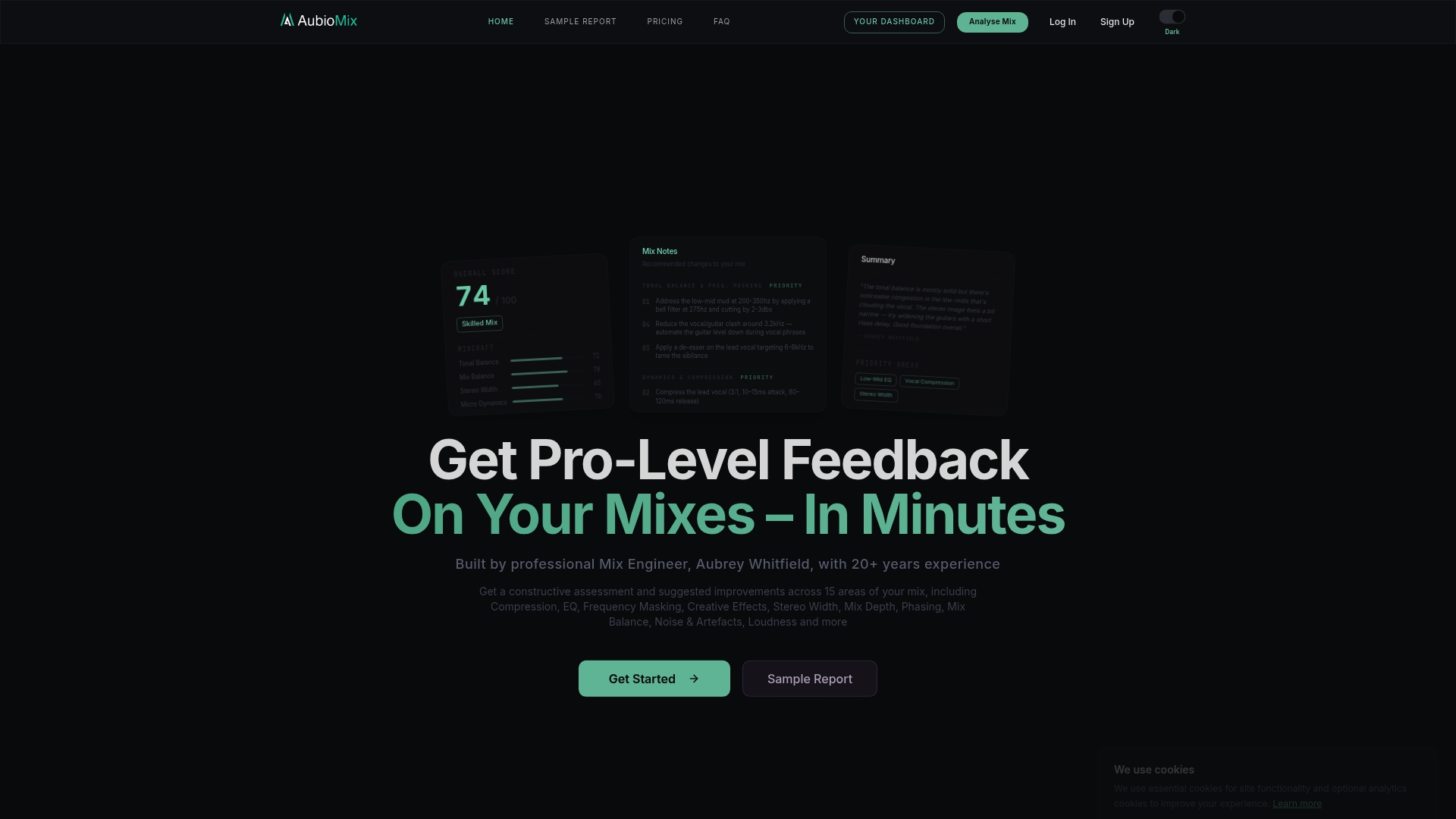
Upload your track to Aubiomix and receive a full diagnostic report covering your Mix Score, LUFS reading, stereo width, and specific flags for the most common mix problems. The analysis takes under 60 seconds and gives you a clear list of what to address next. Check the pricing options to find a plan that fits your workflow, whether you need a one-off check or regular feedback across multiple projects. Pair Aubiomix with the referencing and listening techniques covered here, and you have a complete system for producing mixes that translate.
FAQ
What does it mean to review your mix objectively?
Reviewing your mix objectively means evaluating its technical and artistic balance using unbiased tools and structured listening methods, rather than relying solely on ears fatigued from a long session.
What LUFS target should I aim for when mixing?
Target -14 LUFS integrated for streaming platforms. Mixes louder than this are automatically turned down by services like Spotify and Apple Music, so hitting this target preserves your intended loudness.
How do I know if my mix has mono compatibility issues?
Check your stereo correlation meter. A reading below zero indicates phase cancellation in mono. Run the hallway test and the whisper-level test to confirm whether the problem affects the listener experience.
How often should I use an AI mix analyser during a session?
Run an analysis at the rough balance stage, after your main EQ and compression pass, and before your final export. Three checks per mix is a practical minimum and catches problems at every stage.
What is the hallway test in mixing?
The hallway test involves listening to your mix from an adjacent room with the door slightly open. It removes high-frequency detail and reveals whether the fundamental energy and tonal balance of the mix are correct.