

If you need detailed, actionable mix feedback and aubreywhitfield.com isn't delivering, here is where to go instead. Aubiomix is the recommended first stop for UK producers: it covers 15+ analysis areas including LUFS, frequency masking, stereo field, and phase, delivers a downloadable PDF report, and handles your data under UK GDPR. For a fast automated read with visual diagnostics, MixAnalytic (mixanalytic.com) is a solid second option. If you want a human ear on top of the numbers, hybrid services like mix-checker.com or audiomixr.com add a reviewer layer, though turnaround slows to a few days.
tl;dr: Aubiomix gives UK producers the deepest automated analysis with the fastest turnaround, clear LUFS and translation checks, and GDPR-compliant data handling. The others trade speed or depth for a human touch.
Table of Contents
- How do these alternatives compare to aubreywhitfield.com in practice?
- How to pick the right mix-feedback service
- What should you expect to pay, and how long will it take?
- Key takeaways
- What I actually look for when testing a mix-feedback service
- Aubiomix: the recommended choice for UK producers
- Useful sources and where to find sample reports
How do these alternatives compare to aubreywhitfield.com in practice?
The core difference between aubreywhitfield.com and most of the alternatives above comes down to one trade-off: human judgement versus analytical breadth and speed.
aubreywhitfield.com gives you a real person's ears. That matters for subjective calls: whether a vocal sits right emotionally, whether the arrangement breathes. What it cannot give you is a precise LUFS reading, a phase correlation score, or a frequency masking map with specific EQ suggestions. Those require measurement, and measurement is where automated platforms genuinely outperform a human reviewer working from memory and a pair of headphones.
Aubiomix sits at the intersection of both worlds. It runs DSP-level analysis across compression, EQ, stereo width, phase, and loudness, then translates those numbers into written, specific guidance. The LUFS, true peak, and LRA glossary on the Aubiomix site is worth bookmarking: understanding what integrated loudness versus short-term loudness means will help you interpret any report you receive, from any service.
MixAnalytic takes a developer-led approach, using open DSP algorithms to produce interactive visualisations. It's genuinely useful for a quick spectral read, but the feedback layer is thinner than Aubiomix's written analysis. Audialyze covers similar ground with a cleaner interface. mix-checker.com is almost a different category entirely: its strength is translation simulation, not deep diagnostic feedback.
For frequency masking specifically, an automated tool wins every time. A human reviewer might tell you the low-mids feel muddy; an automated platform will show you the 250–400 Hz build-up between your kick and bass and suggest a specific cut. That's the difference between a feeling and a fix.
Pro Tip: Use a fast automated service like Aubiomix for your technical pass (LUFS, phase, masking), then, if budget allows, follow up with a human reviewer for arrangement and emotional notes. The two approaches are complementary, not competing.
How to pick the right mix-feedback service
Run through this before you hand over your mix or your card details.
- Check the analysis metrics listed. Any credible service should explicitly state it measures LUFS (integrated and short-term), true peak, and stereo correlation. If those aren't named, the analysis is probably surface-level.
- Ask for a sample report. Not a screenshot of a dashboard: a real, complete report from a real mix. If they don't publish one, that's a red flag.
- Confirm the file formats accepted. WAV and AIFF at 24-bit/44.1 kHz minimum. Services that only accept MP3 are working with compressed data and their loudness readings will be less accurate.
- Read the data retention and privacy policy. For UK producers, this means checking whether the service stores your audio files, for how long, and under which jurisdiction. UK GDPR applies to any service processing data belonging to UK residents.
- Look for a stated turnaround SLA. "Fast" is not an SLA. "Reports delivered within 60 seconds of upload" is.
- Check whether the feedback is revisable. Some services offer a second pass if you re-upload after making changes. That revision loop is where real improvement happens.
Red flags to watch for:
- No methodology page or explanation of what the analysis actually measures
- No sample reports published anywhere on the site
- Vague data retention language ("we may store your files for operational purposes")
- Pricing that only unlocks after you've uploaded a file
- No stated file size or format limits
Quick 3-step live test: Upload one stem you know has a problem (a bass-heavy mix with low-end masking, for example). Check whether the report identifies the specific frequency range causing the issue. Time how long it takes from upload to a report you can act on. If you can't find a specific EQ suggestion within that report, the feedback depth isn't there. The mix engineer workflow guide covers how to structure this kind of diagnostic pass in your broader session.
What should you expect to pay, and how long will it take?
Pricing across the mix-feedback market follows three broad shapes.
| Model | Typical cost range (UK) | Per-review cost | Turnaround |
|---|---|---|---|
| Pay-per-review (human) | Moderate per-review cost | Moderate per-review cost | Several days |
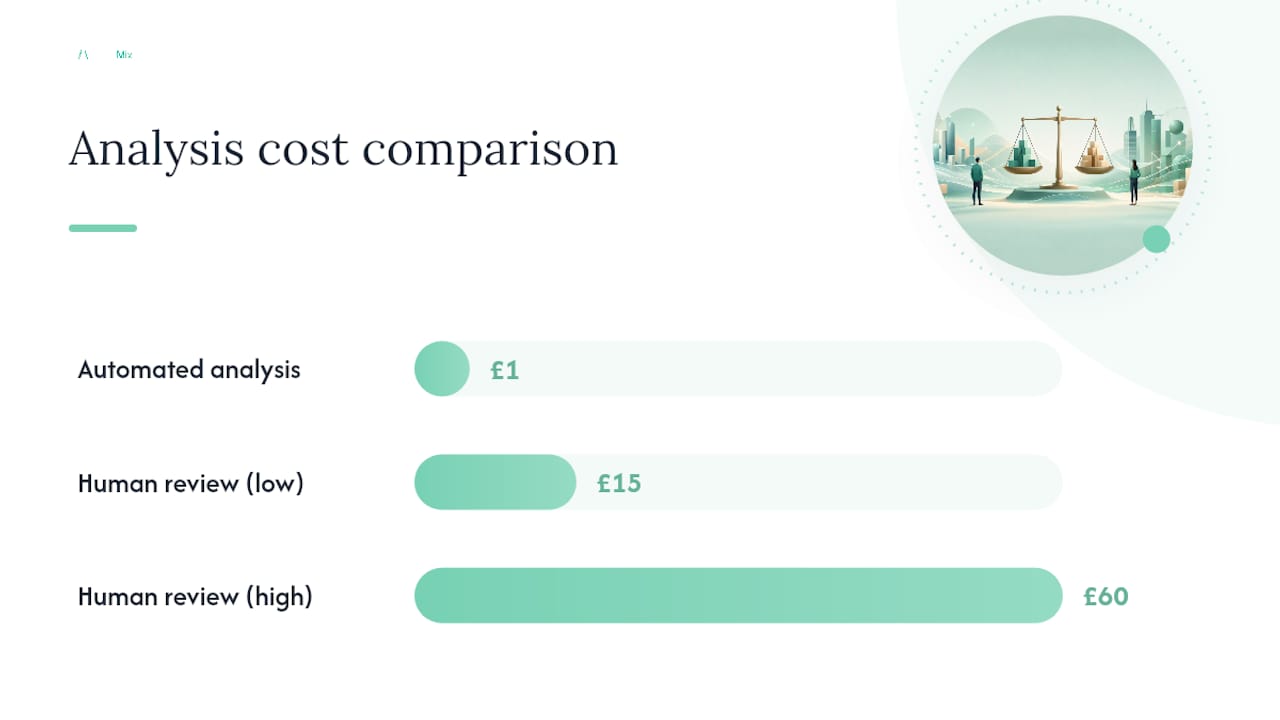
| Credit pack (automated) | £5 for a pack of credits | £1 per analysis | Instant to a few minutes |
| Monthly subscription (automated) | — | Included in plan | Instant |
| Add-on: video critique | Additional cost on top of base | Per video | A few days |
| Add-on: revision pass | Additional cost | Per re-upload | Instant (automated) |
Human-only services like aubreywhitfield.com sit at the top of that cost range and the bottom of the speed range. A 3–7 day wait is standard when a real person is writing a detailed critique. Automated platforms deliver instantly, and credit packs make it easy to run multiple passes across a project without committing to a monthly fee.
Add-ons change the maths quickly. A short video critique from a human reviewer can double the cost of a review. If you're running multiple mixes a month, a subscription model almost always works out cheaper than pay-per-review credits. For mixdownapp.com alternatives and similar subscription-based tools, Aubiomix's subscription tiers are worth comparing directly.
Key takeaways
Aubiomix is the strongest automated alternative to aubreywhitfield.com for UK producers who need deep, LUFS-accurate, GDPR-compliant mix analysis with fast turnaround and a downloadable PDF report.
| Point | Details |
|---|---|
| Start with a sample report | Any service worth using publishes a complete sample report; use it to judge feedback depth before paying. |
| Check LUFS and phase coverage | Confirm the service measures integrated LUFS, true peak, and stereo phase correlation before uploading. |
| Match the model to your workflow | Instant automated analysis suits technical passes; human review suits arrangement and emotional feedback. |
| Budget realistically | Credit packs cost £1 per automated analysis; human reviews typically run £15–£60 with a 3–7 day wait. |
| Aubiomix for UK producers | Aubiomix covers 15+ analysis areas, delivers a downloadable PDF, and processes data under UK GDPR. |
What I actually look for when testing a mix-feedback service
When I'm evaluating a new mix-feedback platform, the first thing I upload is a mix I already know well: something with a low-end masking issue between the kick and the bass, and a stereo width that's been pushed a touch too wide on the overheads. I know exactly what the problems are. What I'm testing is whether the service finds them without me pointing at them.
A good automated report will flag the 200–350 Hz build-up, suggest a narrow cut on the bass, and show the stereo correlation dipping below 0.5 on the high end. A weak report will tell me the mix is "slightly bass-heavy" and leave it there. That's the difference between a tool that accelerates your revision and one that just confirms what you already suspected.
The other thing I look for is how the report handles LUFS. Integrated loudness and short-term loudness tell different stories: a mix can hit a healthy integrated target while still having short-term peaks that will trigger streaming platform normalisation in the wrong direction. A service that only reports one figure is giving you half the picture. The Aubiomix audio metrics glossary explains this distinction clearly if you want to go deeper.
Pro Tip: Run the same mix through two services and compare their frequency masking findings. If they agree on the problem area, you can act with confidence. If they disagree, your ears are the tiebreaker.
Aubiomix: the recommended choice for UK producers
If you've been searching for aubreywhitfield.com alternatives and want something that goes further than a surface-level loudness check, Aubiomix delivers the depth you're after without the 3–7 day wait. You get analysis across compression, EQ, frequency masking, stereo width, phase, loudness (LUFS and true peak), noise, clipping, mastering prep, and device translation, all in a single report you can download as a PDF and revisit across your revision sessions.
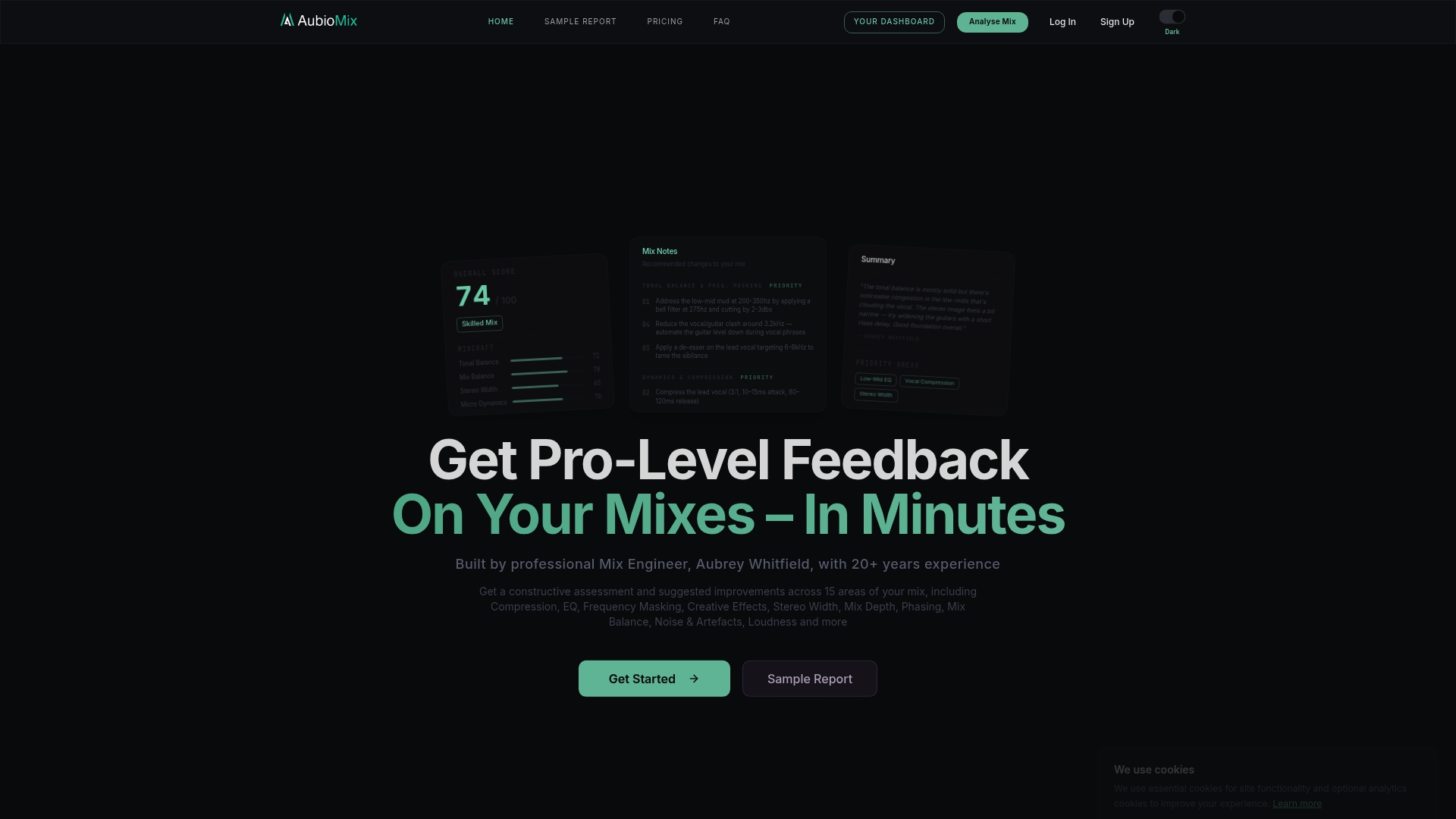
Progress tracking and a leaderboard comparison let you see how your mixes improve over time, which is genuinely useful if you're working through a back catalogue or developing your ear. Data is handled in line with UK GDPR, so your audio files aren't disappearing into an opaque third-party pipeline.
You can start with a credit pack to test the service on one or two mixes before committing to a subscription. Sample reports are available on the site so you know exactly what you're getting before you upload. Head to Aubiomix to run your first analysis and see the report format for yourself.
Useful sources and where to find sample reports
- AubioMix – Get Pro-Level Feedback on Your Mixes in Minutes
- Audio Metrics Glossary — LUFS, True Peak, Crest Factor, LRA | AubioMix
- Best mixdownapp.com alternatives for UK music producers
- The best CheckMyMix.com alternatives for producers in 2026
- Top 4 audiomixr.com alternatives 2026
- Imogen Heap
- Cathy Dennis - Bio/About — CATHY DENNIS
- ABOUT — ANNA MEREDITH
| Sample report location | What it shows |
|---|---|
| Aubiomix product page | Full report format: written analysis, visual charts, PDF download, progress tracking |
| Aubiomix alternatives blog posts | Side-by-side report comparisons across multiple services |
| mix-checker.com free tier | Device translation visualisation: how your mix sounds on phones, earbuds, and speakers |
| MixAnalytic free tier | Spectral and stereo visualisation dashboard with AI-generated notes |
When you're using a sample report to judge a service, look for three things: whether specific frequency ranges are named (not just "muddy low-mids"), whether the LUFS reading distinguishes integrated from short-term loudness, and whether the stereo analysis includes a phase correlation score. Those three details separate a diagnostic report from a decorative one.