

Paid mix and master feedback typically runs from around £5 for a single quick check to several tens of pounds or more for a premium multi-review package with video walkthroughs. For most producers, a pay-as-you-go review is the smart starting point, and a subscription only pays off once you're submitting more than two or three tracks a month. Some services cover both pay-as-you-go and subscription models, allowing you to test the waters before committing to a plan.
TL;DR:
- Pay-as-you-go reviews typically cost between £5 and £15 per track, offering quick, straightforward feedback focused on obvious issues like clipping and loudness.
- Mid-tier packages provide detailed technical analysis, measured values, and prioritized fixes, usually costing from £15 to £40, with some services including reference comparisons.
- Premium packages with video walkthroughs and multiple review rounds start at around £40, but are most beneficial for complex mixes requiring detailed critique and revision.
- Subscriptions are more cost-effective for producers submitting multiple tracks monthly, especially when feedback is iterative, reducing overall review costs and improving learning speed.
- Providing a clear brief, target loudness, reference tracks, and proper file formats significantly enhances feedback value and reduces unnecessary repeat reviews.
Table of Contents
- Mastering feedback cost by tier: what you actually get for your money
- Why prices vary: 6 things that push the cost up or down
- Per-track review or subscription: which actually costs less?
- Getting real value: submission habits that stop you wasting money
- How to tell if a feedback report is actually worth what you paid
- Turning feedback into a better mix without paying twice for the same lesson
- Where feedback spending quietly goes to waste
- What good feedback investment actually looks like in practice
- Why the cheapest and priciest options both miss the point
- Cut the cost of getting release-ready with AubioMix
- Sources
- FAQ
Mastering feedback cost by tier: what you actually get for your money
Let's get one thing straight before we talk numbers: price and value aren't the same thing. A £10 report that tells you exactly what's wrong with your high-end beats a £40 report full of vague compliments every single time. But you still need benchmarks, so here's how the market actually breaks down.
Entry-level (roughly £5 to £15 per track): You're paying for a fast, focused check, usually written feedback covering the obvious issues. Think clipping, glaring frequency clashes, loudness that's wildly off from commercial references. Some services in this bracket advertise from around €25 per song for a simple analysis, while others sit lower, closer to $29.97 for standard written feedback. Turnaround is usually quick, often within a day or two, because the engineer or system isn't digging deep.

Mid-tier (roughly £15 to £40 per track): This is where things get genuinely useful. Expect extended written reports with measured technical readings (LUFS, spectral balance, stereo width), a prioritised list of fixes rather than a loose collection of comments, and sometimes a comparison against a reference track you supply. Studios structuring pricing around depth of report, labelled tiers like Basic, Comprehensive, and Premium, typically sit here for their middle option.
Premium (£40 upwards): Here you're paying for the full package: video walkthroughs where the engineer talks you through the mix in real time, multiple review rounds, and the option to resubmit a revised version for a follow-up check. Video critique and re-evaluation options cost more precisely because they remove ambiguity, you're not left guessing what "tighten the low end" actually means when someone shows you on a spectrum analyser.
Quick benchmark: across the services reviewed, entry-level written feedback prices typically range from around €25 to about $30 per track, while premium bundles with video and re-checks climb well beyond that, reflecting the added engineer time and reduced back-and-forth.
Whichever tier you're eyeing, the report should always include measured values you can act on, not just adjectives.
Why prices vary: 6 things that push the cost up or down
Not all £20 reviews are created equal, and not all £50 ones are worth the premium. Here's what actually moves the needle on price:
- Engineer seniority and reputation. A mix engineer with two decades of chart credits will charge more than a junior reviewer, and usually for good reason. They've heard thousands of mixes and spot problems faster.
- Analysis depth. A one-paragraph note costs less to produce than a step-by-step breakdown with numbered fixes and measured readings.
- Turnaround speed. Rush jobs cost more. If you need feedback in two hours instead of two days, expect a premium.
- Revision policy. Some packages include a free re-check after you implement changes; studios offering this as standard in extended tiers price it into the mid or premium bracket rather than charging separately.
- Extras. Reference track comparison, a dedicated mastering readiness check, and stem-level analysis (versus a single stereo file) all add cost because they add engineer or processing time.
- Scope. A single-pass review is cheaper than an iterative process where you submit, fix, resubmit, and get checked again.
Pro Tip: Before you pay for a premium package, ask what the revision policy actually covers. A "re-evaluation" that only checks whether you fixed the exact three points listed is worth far less than one that gives your revised mix a fresh, full pass.
Per-track review or subscription: which actually costs less?
This comes down to volume, not vibes. Here's the simple decision framework:
- Choose per-track if: you release infrequently, need a last-minute sanity check before mastering, or you're testing whether paid feedback is even worth it for your workflow.
- Choose a subscription if: you're producing regularly, revising tracks multiple times before release, or working across several projects a month where the learning compounds.
- Do the maths before deciding. Three single reviews at several pounds each costing around a dozen pounds. AubioMix's Professional plan runs around twenty pounds a month; if that plan's monthly allowance covers more than three or four reviews, the subscription wins on pure cost per review, and you gain the compounding benefit of consistent feedback across a whole project cycle rather than isolated snapshots.
The hidden value in subscriptions isn't just the per-unit discount. It's that iterative feedback accelerates how fast you learn to spot your own recurring mistakes, which quietly reduces how many paid reviews you need over time.
Getting real value: submission habits that stop you wasting money
The single biggest reason producers feel short-changed by paid feedback isn't the price, it's submitting the wrong thing and asking the wrong question. Fix that, and even a budget review becomes genuinely useful.
Before you upload anything, check you've got:
- The correct file format and sample rate the service asks for, and stems if the tier supports them rather than a single stereo bounce.
- Your target loudness (LUFS) if you have one in mind, so the engineer knows whether you're aiming for streaming or club playback.
- One or two reference tracks that capture the sound you're chasing.
- A short brief, two sentences is plenty, stating what the track is for and what's bothering you most about the current mix.
A short, priority-driven brief paired with reference tracks measurably improves the odds of getting actionable steps instead of generic commentary you could've written yourself. When the report lands, scan it for measured numbers and a ranked list of fixes. If it reads like a list of adjectives with no specifics, that's a red flag worth remembering the next time you're choosing a provider.
How to tell if a feedback report is actually worth what you paid
Judging value isn't about counting words in the report. It's about counting things you can do with it. A genuinely useful review gives you a ranked list, fix this first, then this, then this, rather than a scatter gun of observations with no order of priority.
Look for measured numbers alongside the commentary. "Your low end feels muddy" is an opinion. "You've got a build-up around 250Hz that's masking your vocal fundamentals" is something you can open a spectrum analyser and verify yourself. Reports that pair objective metrics with numbered action items cut down on implementation time, because you're not guessing what "muddy" means in EQ terms.
The other test: does the feedback change if you resubmit a revised version? If a provider's "re-evaluation" just rubber-stamps whatever you did without fresh ears on the full mix, you're not getting a second opinion, you're getting a formality. Genuine value means the second look catches things the first pass didn't, because you've now fixed the obvious problems and new, subtler ones are visible underneath.
Finally, compare the report against your own ears before and after. If you can't hear the difference the fixes describe once you've applied them, either the fix wasn't specific enough or it wasn't the right priority for your track.
Turning feedback into a better mix without paying twice for the same lesson
The costliest mistake in this whole process isn't overpaying for a review, it's paying for good feedback and then not acting on it properly. Here's how to make sure that £20 or £30 actually improves the track.
Work through the report in the order it's prioritised, not the order that's easiest. Engineers rank issues because some problems mask others, fixing a boomy low-mid before you touch your reverb tails often resolves half the "muddiness" complaints on its own.
Keep a running note of feedback themes across multiple tracks. If three separate reviews mention your vocals sitting too far back, that's not a one-off note, it's a mixing habit worth addressing at the source rather than patching per song. This is where tracking feedback patterns across your work genuinely pays for itself, because you stop paying to hear the same critique twice.
Resist the urge to implement every single suggestion at maximum intensity. Good feedback gives you direction and rough magnitude, not an exact dB value carved in stone. Apply a change, then re-listen against your reference track before deciding whether to push further.
Where feedback spending quietly goes to waste
The most expensive mistake in this whole category isn't picking the wrong price tier, it's misunderstanding what you're actually buying. Here are the traps that inflate cost without improving your mix.
Buying premium tiers for problems entry-level would catch. If your kick and bass are fighting for the same frequency space, you don't need a £50 video walkthrough to hear that, a £10 written check will flag it just as well. Save the premium spend for genuinely nuanced decisions, like stereo imaging on a complex arrangement.
Submitting a rough bounce and expecting mastering-level notes. Feedback on an unfinished mix will focus on balance and levels; it can't meaningfully assess mastering readiness until the mix itself is settled. Paying for a premium review before you're at that stage wastes the deeper analysis you paid extra for.
Vague briefs. "Let me know what you think" invites generic commentary. A specific ask, "is my vocal sitting right against these two references?", gets you a specific, usable answer instead.
Repeat reviews on unchanged sections. If a re-evaluation just checks the three notes from round one, you're paying full price for a fraction of the original analysis. Ask what a re-check actually covers before assuming it's equivalent value.
Chasing the cheapest possible price regardless of provider. A rock-bottom rate sometimes means automated or templated notes rather than a genuine listen. Price should track effort and expertise, not just be the lowest number on the page.
What good feedback investment actually looks like in practice
Consider a producer releasing four singles a year, each going through two rounds of revision before mastering. At roughly £15 per mid-tier review, that's eight reviews annually, around £120, a modest cost against the alternative of releasing a flawed mix and quietly under-performing on playlists or getting inconsistent listener feedback after the fact.
Now compare a more prolific producer submitting six or seven tracks a month for a client-facing studio. Paying per track at even the entry-level £5 to £10 rate adds up fast, easily outpacing a £19.99 monthly subscription that bundles a set number of reviews. The subscription model doesn't just save money here, it also builds a consistent feedback relationship where the engineer's notes get more specific over time because they're seeing your recurring habits.

The real cost-benefit case, though, isn't just about avoiding a bad mix. It's about time. A vague, unstructured review that leaves you guessing costs you hours of trial-and-error EQ tweaks trying to interpret it. A structured report with measured values and ranked priorities gets you to a finished, release-ready mix in a fraction of the revision cycles. Whether that time is worth more to you than the £10 difference between a basic and mid-tier review is the actual calculation worth making, not just the sticker price on the report.
Why the cheapest and priciest options both miss the point
Most guides on this topic frame the decision as basic versus premium, spend more, get more. That's too simple, and honestly a bit lazy. The real driver of value isn't the price tier, it's whether the report gives you something measurable to act on.
AubioMix runs on both pay-as-you-go credit packs and subscription plans because different producers hit different pain points at different stages. Every report is built around specific, actionable steps across the core technical areas, compression, EQ, frequency masking, stereo width, loudness, mastering prep, rather than a loose narrative of impressions. Combining objective measurement with a structured evaluation framework shortens the loop between "here's what's wrong" and "here's exactly what to change," which is where most producers actually lose money: not on the review itself, but on the extra rounds of guesswork that follow a vague one.
The uncomfortable truth is that plenty of expensive feedback is just cheap feedback with better marketing. Price alone tells you nothing about whether the notes will save you time.
— AubioMix
Cut the cost of getting release-ready with AubioMix
Every extra revision round you pay for is money spent fixing problems a clearer report would have caught the first time. AubioMix is built to shrink that gap: upload your track and get a detailed written and visual report, complete with a prioritised action list you can work through in order, downloadable PDF summaries, and progress tracking so you can see whether your mixes are actually improving release over release.
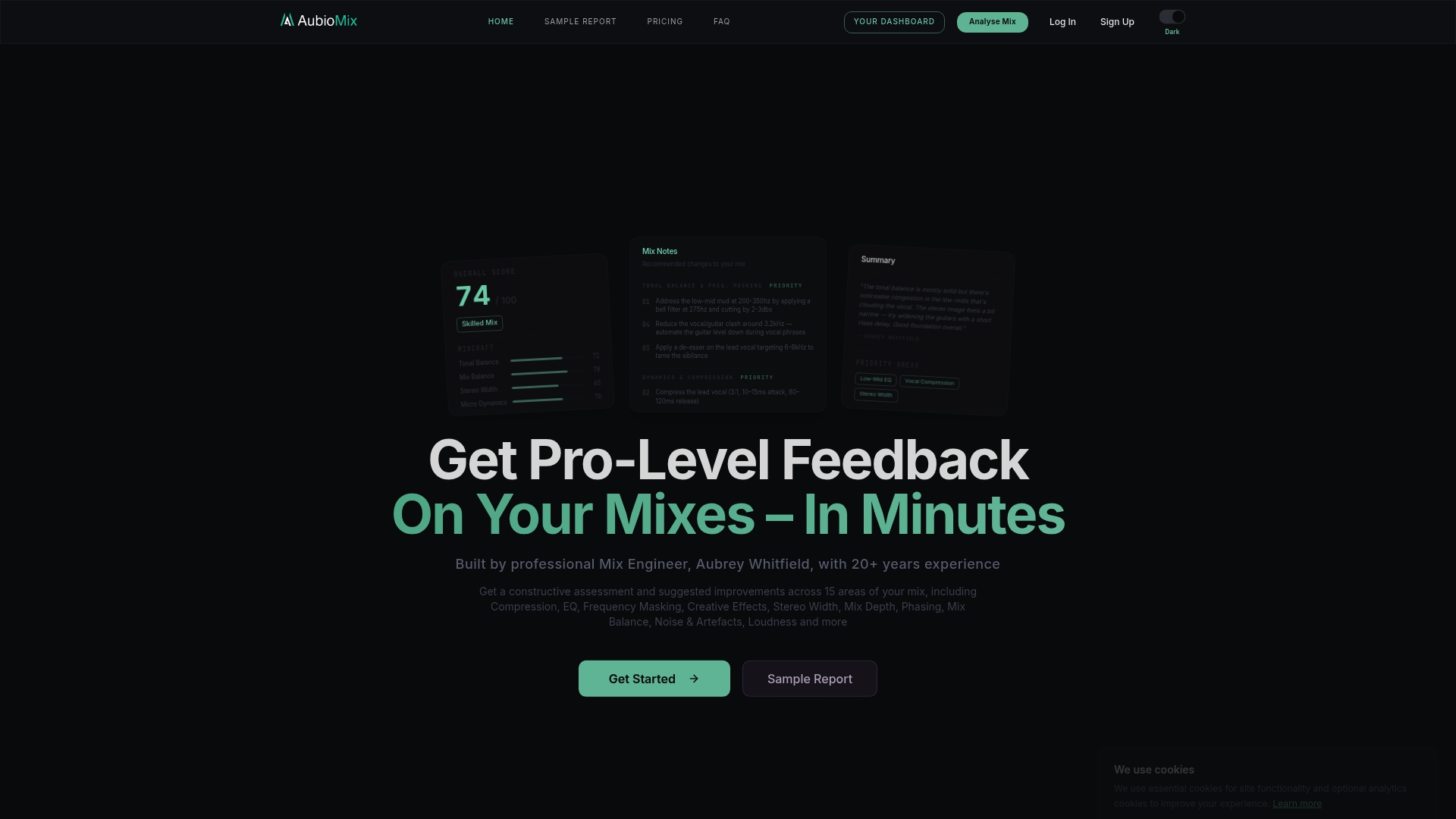
You can buy a single Mix Review for a few pounds when you just need a one-off check, add a Reference Pass for £2.99 if you want your track measured against a specific reference, or step up to a subscription, around twenty pounds a month on Professional or about thirty-five pounds on Professional +, if you're releasing regularly enough that a bundle of reviews works out cheaper than paying per track. Because each report pairs objective measurement with a structured evaluation framework, you spend less time guessing what a comment means and less money on repeat reviews to catch what the last one missed. Head to the pricing page and pick the option that matches how often you release.
Sources
The price ranges in this guide draw on publicly advertised examples, including Peak Studios' tiered mix analysis pricing, Learn Pro Recording's remote mix critique pricing, and Studio KMJ45's Track Notes packages. These are illustrative benchmarks from different markets and currencies, so treat them as a guide to structure and range rather than an exact quote for your situation.
FAQ
How much does a single mix feedback review typically cost?
Entry-level written reviews often start around £5 to £15 per track, while premium packages with video walkthroughs and re-evaluation can run £40 or more. AubioMix's 1 Mix Review costs a few pounds one-off, making it a straightforward entry point for a single track.
Is mix feedback the same as mastering?
No, mix feedback evaluates balance, levels, and technical issues in your mix and offers steps to fix them, while mastering is the final polish applied to a finished mix. Many producers use feedback to get mix-ready before sending a track for mastering.
How many reviews should I get before releasing a track?
Most producers benefit from at least two rounds: one on the working mix to catch major issues, and one closer to final to confirm fixes landed. Iterative packages that include a re-evaluation after implementation, common in mid and premium tiers, are built for exactly this pattern.
What file formats do feedback services usually need?
Most accept a stereo WAV or high-quality MP3 bounce, though some tiers support stems for more granular analysis. Always check the sample rate and format requirements before submitting, since a low-quality bounce can skew loudness and frequency readings.
Is a subscription worth it for occasional producers?
Not usually. Subscriptions make sense once you're submitting more than two or three tracks a month; below that, pay-as-you-go reviews work out cheaper and give you more flexibility.