

Aubiomix is the recommended alternative to mixaudit.com for UK-based music producers and mix engineers. It covers LUFS, true peak, low-mid masking, stereo width, dynamics, phase, and 15+ additional mix areas, delivers a downloadable PDF report, and accepts GBP payment on both pay-as-you-go credit packs and monthly subscriptions. If you need a fast, metric-led verdict on your mix before release, Aubiomix is where to start.
Three quick-use scenarios to orient you:
- Quick loudness check before streaming upload: Aubiomix or an instant automated analyser gives you LUFS and true peak in minutes, no waiting for a human reviewer.
- Deep masking and device-translation analysis: Aubiomix's 15+ area report covers frequency masking, mono compatibility, and how your mix translates across playback devices, making it the strongest automated option for this use case.
- Human-led revision notes: A human-review service suits producers who want a mixing engineer's written commentary rather than metric readouts. Aubiomix's PDF reports and progress tracking sit alongside that workflow rather than replacing it.
The BBC R128 loudness standard and streaming platform LUFS targets are the benchmarks any credible service should reference. If a tool cannot tell you where your mix sits against those targets, it is not giving you the full picture.
Key takeaways
Aubiomix is the recommended pick for UK producers seeking a fast, metric-led alternative to mixaudit.com, covering 15+ mix areas with GBP payment and instant turnaround.
| Point | Details |
|---|---|
| Recommended pick for UK producers | Aubiomix covers LUFS, true peak, masking, and 15+ areas with GBP payment and instant delivery. |
| Best for quick loudness checks | Instant automated analysers work for a fast LUFS and true peak spot-check before streaming upload. |
| Best for deep masking and translation | Aubiomix's masking diagnostics and device-translation analysis make it the strongest automated option for this use case. |
| Best for human-led revision notes | Human-review services suit producers who want a mixing engineer's written commentary; expect 24–72 hours turnaround. |
| Two-mix test and red flags | Run identical WAV exports through two services; avoid any tool with no sample reports, lossy-only upload, or no GBP payment option. |
Table of Contents
- How do the main mixaudit.com alternatives compare at a glance?
- Detailed profiles: which category actually suits your workflow?
- How to choose the right alternative for your workflow
- A two-hour split test to compare services with your own mix
- mixaudit (Elixir tool) versus mixaudit.com: clearing up the confusion
- Why automated mix feedback genuinely speeds up your development
- Aubiomix: get a full mix report in minutes
- Useful links and sample reports
- Sources
How do the main mixaudit.com alternatives compare at a glance?
Sample reports and demos: Aubiomix publishes its evaluation framework so you can see exactly which metrics are scored and how. For DAW plugins such as iZotope Neutron, demo versions are available through the vendor's own site. Human-review services vary widely; always ask for a sample report before paying.
Detailed profiles: which category actually suits your workflow?
Aubiomix
Aubiomix analyses your uploaded audio across numerous mix areas, including compression, EQ balance, frequency masking, stereo width, phase coherence, loudness (LUFS and true peak), noise and clipping, and device translation. You get a visual report, written feedback with specific corrective steps, a downloadable PDF, and access to a leaderboard and progress tracker so you can see improvement over time.
Pricing runs on pay-as-you-go credit packs or monthly/annual subscriptions, both payable in GBP. That flexibility suits producers who upload sporadically as well as those running regular release schedules. For UK producers comparing ABmyMix alternatives or similar tools, Aubiomix's breadth of analysis and UK payment support make it the practical first choice.
Pros: Wide metric coverage, PDF report, progress tracking, GBP payments, instant turnaround. Cons: Automated feedback only; no human mixing engineer commentary included.
Instant automated analysers
These tools focus on loudness metering, basic EQ curve visualisation, and stereo width. They are fast and often free or very cheap, which makes them useful for a quick sanity check before uploading to Spotify or Apple Music. The trade-off is depth: you get numbers, not diagnosis. If your low-mids are masking your kick and your reverb tail is smearing the stereo field, a basic analyser will not flag it.
Pros: Free or low cost, instant, no account needed for some. Cons: Shallow analysis, no corrective guidance, no PDF output.
Human-review services
A mixing engineer listens to your track and writes notes. The feedback can be nuanced and contextual in ways automated tools cannot replicate, particularly for genre-specific decisions. Turnaround typically runs 24–72 hours, and pricing per submission can be significant. UK availability varies by provider, and some accept only PayPal rather than card payments in GBP. For producers exploring this route, our Audiomixr alternatives guide covers the category in more detail.
Pros: Contextual, genre-aware feedback; human ear catches what metrics miss. Cons: Slow turnaround, higher cost, quality varies by reviewer.
DAW-plugin-assisted platforms
iZotope Neutron's Tonal Balance Control and Assist features are the most widely used tools in this category. They work inside your DAW session, giving real-time EQ balance guidance and masking detection as you mix. This is genuinely useful during the mixing process, but it is not a pre-release audit. You cannot upload a finished mix and receive a report; the tool only works while the session is open.
Pros: Real-time, in-session guidance; integrates with your existing DAW. Cons: Not a post-mix audit tool; requires a licence; no PDF report.
Mastering-prep automated services
Services such as LANDR combine automated mastering with basic loudness reporting. They are not mix-analysis tools in the strict sense: the output is a mastered file, not a diagnostic report. If your mix has a masking problem, LANDR will not tell you where it is. Useful as a final step, but not a substitute for proper mix analysis.
Pros: Combines mastering and loudness normalisation in one step. Cons: Not a diagnostic tool; limited corrective guidance; no masking or phase analysis.
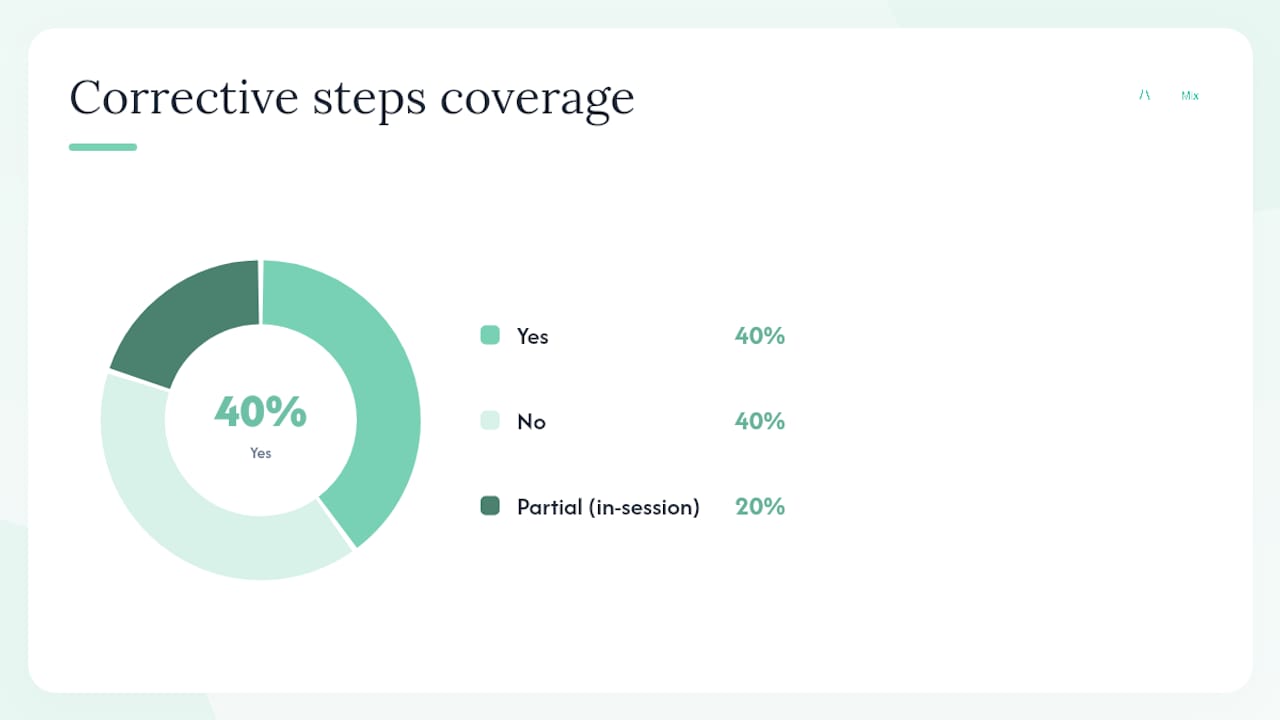
| Category | Output type | Turnaround | Corrective steps included? |
|---|---|---|---|
| Aubiomix | Metrics + visual + PDF | Instant | Yes, written and specific |
| Instant automated analysers | Metrics only | Instant | No |
| Human-review services | Written commentary | 24–72 hours | Yes, subjective |
| DAW-plugin platforms | In-DAW visual | Instant (in-session) | Partial (in-session only) |
| Mastering-prep services | Mastered file + basic report | Minutes | No |
How to choose the right alternative for your workflow
The single criterion that changes the outcome most is output type. A metrics-only report tells you what is wrong; a report with corrective steps tells you what to do about it. That distinction matters at every stage of your release process.
Work through these questions before committing to any service:
LUFS and true peak handling. Does the service report integrated LUFS, short-term LUFS, and true peak separately? Streaming platforms use integrated LUFS for normalisation, but true peak clipping is a separate failure mode. A tool that reports only one of these is giving you half the picture. Check the AubioMix glossary for definitions of LUFS, true peak, crest factor, and LRA if you need a reference.
Masking detail. Low-mid masking between kick, bass, and guitars is one of the most common mix problems, and it is invisible to a basic loudness meter. Ask whether the service identifies specific frequency ranges where masking occurs and whether it suggests corrective actions.
Turnaround. If you are on a release deadline, a 48-hour human review is not practical. Instant automated analysis fits deadline-driven workflows; human review suits producers with longer lead times.
UK payment and support. Some services price in USD only and do not offer GBP invoices. If you are a UK-based producer running a business, GBP invoicing matters for accounting. Ask before you pay.
Red flags to watch for: no sample reports or methodology page, unclear measurement standards, maximum file sizes below 50 MB (which excludes high-resolution WAV files), lossy-only upload (MP3 only), and no GBP payment option.
Pro Tip: When adding mix analysis to your release workflow, separate "fail the build" metrics (true peak above 0 dBTP, integrated LUFS more than 2 LU above your streaming target) from advisory comments (stereo width slightly narrow). Fix the hard failures before release; treat advisory notes as revision priorities for the next mix.
A two-hour split test to compare services with your own mix
Run this once with any two or three services and you will have a clear, objective basis for choosing.
- Prepare identical test files. Export the same mix as WAV at 44.1 kHz or 48 kHz, 24-bit or 32-bit float. Do not use MP3 for the test; lossy encoding introduces artefacts that skew loudness and frequency readings.
- Set a target loudness. Use -14 LUFS integrated for Spotify or your project-specific target. Write it down before you upload anything.
- Upload to each service simultaneously. Keep the upload timestamps close together so you are comparing the same mix state.
- Export all reports and screenshots. Save everything to a single folder labelled by service and date.
- Score each report against this checklist:
- LUFS accuracy (does the reported integrated LUFS match your DAW's reading?)
- Low-mid masking diagnosis (does the report identify the 200–500 Hz region if you know it is a problem?)
- Stereo balance and width (does the report flag mono compatibility issues?)
- Dynamics and headroom (crest factor, LRA, and true peak reported separately?)
- Corrective steps (are the suggested fixes specific and actionable, or generic?)
- Re-listen A/B with a reference track after reading each report. Does the report's diagnosis match what you hear?
When comparing automated metrics against human feedback, weight the human comments higher for genre-specific decisions (e.g. whether a vocal sits correctly in a dense electronic arrangement) and weight the automated metrics higher for technical compliance (LUFS, true peak, clipping). A service that scores well on both is the one worth keeping.
mix_audit (Elixir tool) versus mixaudit.com: clearing up the confusion
If you searched for "mixaudit.com alternatives" and landed on pages about software security tools, you have hit a genuine lexical collision. The two things share a similar name but are completely unrelated.
Hex is an Elixir package that provides a mix deps.audit task for scanning software project dependencies against known security vulnerabilities. It is a developer CI tool, modelled on npm audit and bundler-audit, as the mix_audit README explains. The mirego/mix_audit GitHub repository documents installation and usage for software engineers. Elixir Toolbox lists it among static-analysis and security packages, and RelatedRepos indexes it alongside similar Elixir libraries. According to Daily, teams typically run mix_audit alongside Credo and Dialyxir in CI pipelines.
None of that has anything to do with audio. If you are a music producer, the resource you want is Aubiomix at Aubiomix.
Why automated mix feedback genuinely speeds up your development
The conventional wisdom in mixing circles is that only a human ear can give you feedback worth acting on. We think that framing misses something. Automated, metric-led feedback catches technical compliance failures instantly, before a human reviewer ever listens. A mastering engineer should not be the first person to tell you that your true peak is clipping at +0.3 dBTP or that your integrated LUFS is 4 LU hotter than the streaming target. That is a "fail the build" error, and an automated report catches it in seconds.

Where human review genuinely adds value is in the interpretive layer: whether the vocal sits right for the genre, whether the reverb tail feels too long for the energy of the track, whether the arrangement breathes. Aubiomix covers the technical compliance layer across 15+ mix areas, including LUFS, true peak, masking, phase, stereo width, dynamics, and device translation, and delivers specific corrective steps rather than generic observations. The evaluation framework is published so you can see exactly what is being measured and how. That transparency is what separates a credible analysis tool from a black box.
The producers who improve fastest tend to be the ones who close the feedback loop quickly. Automated analysis on every mix, human review on the ones that matter most: that combination shortens revision cycles more than either approach alone.
Aubiomix: get a full mix report in minutes
If you have been comparing mixaudit.com alternatives and want a service that covers the full technical picture, Aubiomix gives you LUFS, true peak, masking, stereo width, phase, dynamics, device translation, and multiple further mix areas in a single upload. No waiting 48 hours for a human reviewer. No guessing whether your mix will pass streaming normalisation.
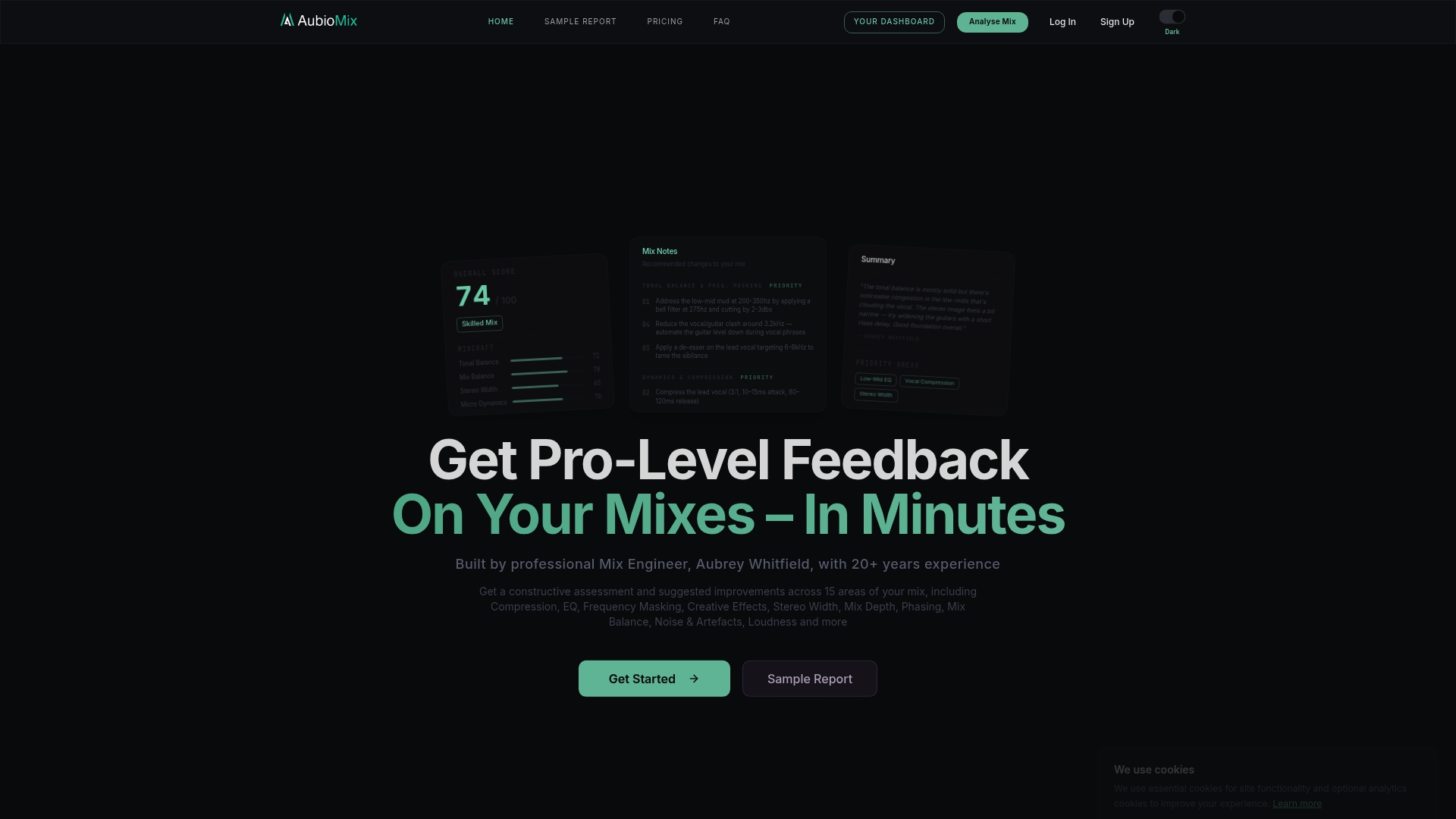
Sign up at Aubiomix, buy a pay-as-you-go credit pack in GBP, upload your WAV, and receive a detailed visual report, written corrective steps, and a downloadable PDF. Subscriptions are available monthly or annually if you are uploading regularly. Before you purchase, the evaluation framework page shows you exactly which metrics are scored and how the analysis is structured. Check it, then upload your first mix.
Useful links and sample reports
- Aubiomix metrics glossary: Aubiomix — definitions for LUFS, true peak, crest factor, and LRA.
- Related comparison guides on the Aubiomix blog:
- mix_audit (Elixir tool) documentation: Hex | README | GitHub repository — for software engineers who arrived here by mistake.
Run the two-mix test, score the reports against the checklist above, and share your findings with other producers in the community. The more data points we all have, the better our mixes get.
Sources
- mix_audit — Hex
- mirego/mix_audit
- Best Elixir Static Security Analysis Packages - Compare 2 Options | Elixir Toolbox
- mirego/mix_audit alternatives and similar packages
- 6 best Elixir static analysis tools 2024