
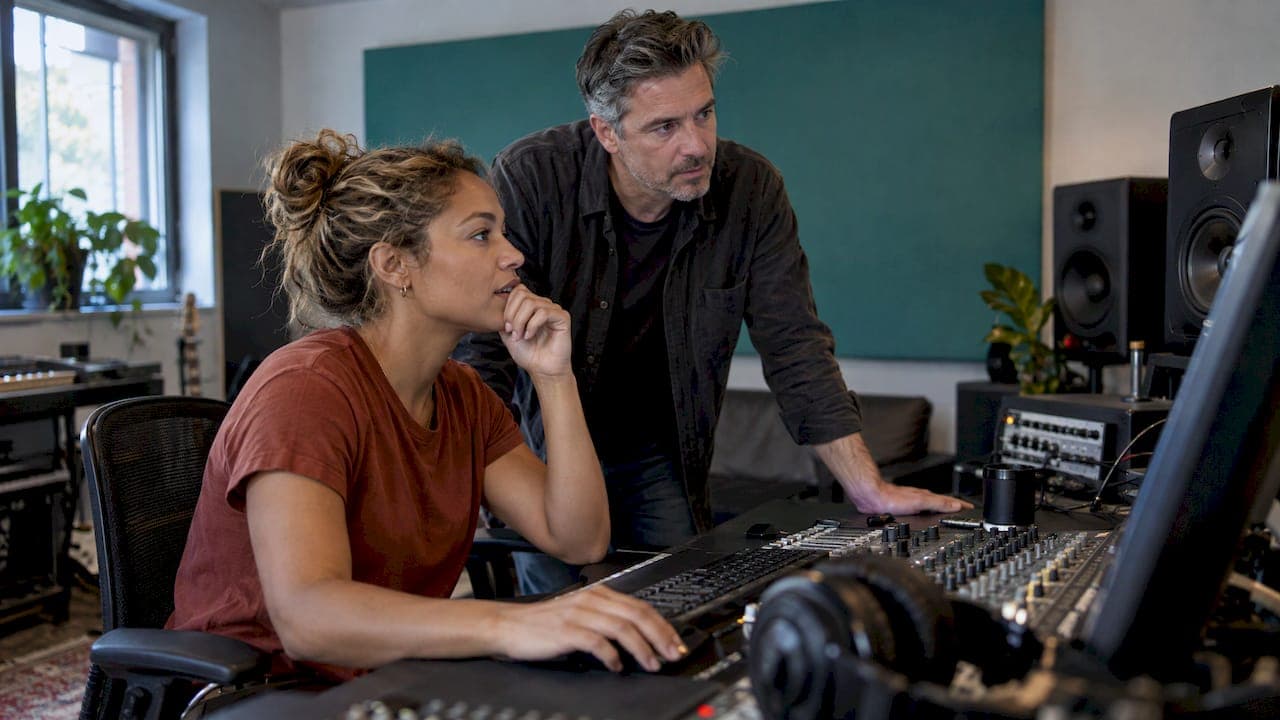
Mix feedback tells you what is going on in a specific song and what to do about it. Coaching is an ongoing relationship that builds your ears, your judgement and your habits over months. Feedback fixes the mix in front of you. Coaching changes the way you make the next hundred mixes. Most producers get the best results by using feedback constantly and coaching selectively, and this guide shows you how to decide.
TL;DR
- Feedback is information about one mix, delivered at a moment in time. Coaching is a conversation that develops you as a mixer.
- Feedback works best when it names the moment, describes what you hear and gives a next step you can act on today.
- Coaching earns its keep when you keep making the same kinds of mistakes and need someone to help you spot the pattern.
- For most release-bound tracks, fast detailed feedback is the practical first step, and coaching is a layer you add when your goals call for it.
- You can combine them: let feedback give you the data, and let coaching teach you how to read it.
Table of Contents
- The core difference in plain words
- Side-by-side comparison
- What good mix feedback actually looks like
- What coaching adds that a report can't
- How feedback and coaching work together
- When to choose feedback, coaching or both
- A worked example: one vocal, two approaches
- Making any feedback easier to use
- Why we built reports around actions
- Try the feedback side of the loop
- A simple plan for the next 30 days
- FAQ
- Sources
The core difference in plain words
The wider research on workplace development draws the same line that applies to mixing. A 2025 guide from Harvey Mudd College describes feedback as information about past performance that is meant to shape future behaviour, and coaching as a conversation that uses questions and guidance so the learner can solve problems and grow. Another summary puts it this way: feedback is specific and tied to particular moments, while coaching is collaborative and ongoing.
Translate that to the studio and it gets very familiar:
- Feedback: "Your lead vocal gets buried when the guitars double in the second chorus, and the low end is clashing around 80 to 120 Hz." It is about this song, this version, right now.
- Coaching: "You tend to fix vocal clarity with EQ boosts. Let's talk about why the arrangement and the compression are doing more of the damage, and how you'd test that yourself." It is about you and your process.
Neither is better in the abstract. They answer different questions. Feedback asks "what's wrong with this mix?" Coaching asks "why do I keep ending up here, and how do I stop?"
Side-by-side comparison
| Question | Mix feedback | Coaching |
|---|---|---|
| Focus | One specific mix | You as a mixer, across many songs |
| Timing | On demand, per upload | Ongoing, over weeks or months |
| Format | Report with findings and steps | Conversation, questions, exercises |
| Best for | Finishing a track, checking readiness, spotting blind spots | Building ears, workflow and long-term consistency |
| Your role | Apply the steps, re-upload, compare | Reflect, practise, explain your decisions |
| Time commitment | Minutes to read, then your mixing time | Regular scheduled sessions plus practice |
| Risk if used alone | You fix symptoms without seeing the pattern | You get insight but no hard data on each new mix |
What good mix feedback actually looks like
Not all feedback is equal. "The vocals need work" is a complaint, not feedback. Useful notes share a few traits that show up again and again in how engineers and educators describe them.
Specific and located
Good feedback points to a time and an element. "At 1:15 the lead vocal is masked by the rhythm guitar" is something you can open the session and fix. Splice's guidance on giving constructive music feedback makes the same point: critiques should focus on particular elements and offer concrete recommendations, because a critique is only helpful if you can act on it.
Describes the problem before the plugin
A note that says "add 3 dB at 8 kHz" assumes a cause. The real culprit might be frequency masking, a clash in the arrangement, vocal level or heavy-handed compression. Feedback that describes what you hear leaves room to find the right fix. If you want to go deeper on this, our guide to mix feedback delivery best practices breaks down how to phrase and organise notes.
Prioritised
A page of 40 equal-weight notes is paralysing. The best reviewers rank issues: things that break the song (clipping, an unintelligible lyric, a vocal swallowed by the track) come first, taste-based tweaks come later. That ordering is what turns a list into a plan.
Actionable
This is where most feedback falls down. Pointing at problems is easy. Saying "here is what to try first, and here is how you will know it worked" is the part that moves your mix forward. We cover that in more depth in mix feedback: actionable steps and examples.
What coaching adds that a report can't
A report, however detailed, cannot ask you a question back. Coaching is built on that exchange. A good coach listens to how you describe a problem and notices the assumptions underneath it. They might ask what you were trying to achieve with that reverb send, or why you reached for a high-pass filter on the whole drum bus. The point is that you reach the conclusion yourself, so you can do it again without help.
Coaching tends to help with things a single mix cannot show:
- Pattern recognition. Three songs in a row with a harsh top end is a habit, not a coincidence. A coach connects the dots across sessions.
- Decision-making. Knowing what to fix first, when to stop, and when a mix is finished.
- Listening skills. Learning to hear a low-mid build-up or an unstable stereo image by training your attention, not just reading a number.
- Confidence and workflow. Session organisation, gain staging habits and reference routines that make every mix cleaner from the start. Our mix session organisation checklist is a good place to start tightening this up.
The flip side is honest too: coaching is about growth over time, so it is a different kind of investment from a quick check on one track. It answers "how do I become a better mixer?", not "is this specific export ready to go out on Friday?"
How feedback and coaching work together
Think of feedback as the data and coaching as the interpretation. When you pair them, each makes the other better.
- Feedback gives you something concrete to talk about. A coaching session built around a real mix with real findings is far more productive than one built around vague worries.
- Coaching helps you understand why the feedback says what it says. If a report flags frequency masking between the kick and bass, a coach can show you three ways to solve it and help you choose between them.
- Feedback then verifies progress. After you apply what you learned, a new analysis shows whether the changes landed.
Even without a coach, you can create a little of this loop yourself. Take each report, pick the top two or three findings, apply them, then re-analyse and compare. Over several songs you will start to see which problems keep returning. That is the self-coaching habit that turns feedback into skill. Harvey Mudd's guide also suggests feedback works best when it is descriptive, specific, tied to behaviour you can change and paired with an alternative, which is a handy test for any note you receive.
When to choose feedback, coaching or both
Here is a practical way to decide.
Choose feedback when
- You have a mix that is nearly done and want to know what is holding it back.
- You are deciding whether it is ready for mastering. Our mix readiness checklist for mastering pairs well with a full analysis.
- You work alone, often late at night, and want a second set of ears that is available whenever you finish a track.
- You are revising and need a clear list of what changed. If revision cycles are your pain point, see what a mix revision is and how to run one.
- You want measurable checks on loudness, phase, stereo width, clipping and translation, not only opinions.
Choose coaching when
- You keep hitting the same wall across different songs.
- You want to develop a signature approach rather than fix individual files.
- You enjoy talking through decisions and learn best through live conversation.
- You are planning a long-term career in mixing and want guidance on workflow and client communication, not only audio.
Choose both when
- You want to build skills quickly and prove the progress with data.
- You are preparing a release schedule and want each mix checked before it goes out, while a coach helps you grow between releases.
If you are unsure, begin with feedback. It is lower commitment, it produces something concrete, and the findings from a few reports will tell you exactly what a coach would need to work on with you.
A worked example: one vocal, two approaches
Imagine a pop-leaning track where the lead vocal feels hidden in the chorus.
With feedback alone, your report points to the chorus section, shows that vocal presence is being masked by the guitars and synth pad in the same range, and suggests specific steps in order. Carve space in the competing instruments first, check the vocal compression, and only then think about presence EQ. You make the changes, re-upload and check that the vocal now sits where you wanted. That fix took an afternoon.
With coaching added, the conversation widens. Why did the arrangement stack three parts around the vocal range? Is this what you do on every chorus? Could you have caught it earlier by checking the mix at low volume? Next time, you leave the guitars out of the vocal pocket before you ever touch an EQ. That is a skill, and it lasts.

If vocals are your recurring headache, our pieces on fixing vocal intelligibility and the role of vocals in a mix go step by step.
Making any feedback easier to use
Whether it comes from a report, a mentor or a friend, feedback only helps if you handle it well. A few habits make a big difference:
- Triage first. Sort notes into must-fix, strong preference and optional idea. Fix the first group before touching the others.
- Change one thing at a time. If you adjust five things and the mix improves, you will not know which move did it.
- Level-match before comparing. A louder version always sounds better. Match levels when you compare before and after, and when you check against a reference.
- Check in mono and on a second system. Mid-side problems often hide until you collapse the image. See our guide to common mid-side mixing mistakes for what to listen for.
- Keep a log. Write down what each report flagged. After five songs, the repeats are your personal coaching curriculum.
If you make electronic music, the same loop applies, with extra attention to low end, sidechain behaviour and stereo width. Our electronic music mixing best practices guide covers that territory.
Why we built reports around actions
We started AubioMix from a simple frustration: most mix feedback tells you what is wrong and then leaves you standing there with a session full of questions.
Our approach combines audio intelligence analysis with the real-world experience of our founder, a multi-award winning mix engineer with more than 20 years in the craft. Every report gives you both objective measurement and subjective guidance, so you see the numbers and the musical context behind them. Our reports cover 15+ areas of mixing and mastering, from compression, EQ and frequency masking to effects, stereo width, phase, loudness, clipping, mastering prep and device translation.
What we care about most is the next step. Each finding comes with specific, actionable steps, because a note you cannot act on is just noise. Our evaluation framework is regularly updated to reflect current genre standards, so you are not measuring your mix against yesterday's idea of what a release sounds like.
We also built in progress tracking, leaderboard comparison and downloadable PDF reports, because we think the real magic happens when you compare mix after mix and watch your own patterns change. In that sense, we see feedback as the engine that makes self-coaching possible. Read the report, apply the steps, re-upload, and learn what your ears and your habits are really doing.
AubioMix
Try the feedback side of the loop
If you have a mix on your drive right now, the quickest way to find out what it needs is to upload it. AubioMix delivers visual and written reports with clear, actionable steps for each area it analyses, so you can start fixing straight away.

Pricing is simple and published on our pricing page:
- 1 Mix Review: £4.99, one-off
- 1 Reference Pass: £2.99, one-off
- Professional: £19.99 per month
- Professional +: £34.99 per month
The monthly plans include a fixed number of mix reviews, which suits anyone finishing several songs a month. Curious what a report looks like on a record you know? Have a look at an example analysis of Mirror by Sigrid, or head to aubiomix.com to get started.
A simple plan for the next 30 days
You do not have to pick a side forever. Here is a lightweight way to combine both ideas, whatever your budget.
- Week 1: Upload your current mix and read the whole report once without touching the session. Highlight the top three findings.
- Week 2: Fix those three, one at a time, level-matching every comparison. Re-upload and note what moved.
- Week 3: Mix a second song with those lessons in mind and run it through the same process. Compare the two reports.
- Week 4: Look at what repeated. If the same issue shows up in both songs, that is your focus area. It may be the moment to bring in a coach, a mentor or a trusted engineer friend to work on that specific habit with you.
By the end of the month, you will have two mixes that are better than they were, and, more valuable still, a clear picture of where your skills need attention.
FAQ
Is mix feedback the same as mix coaching?
No. Feedback evaluates a specific mix and tells you what to change. Coaching is an ongoing, conversational process that builds your skills across many mixes. Feedback answers "what is wrong here?" while coaching answers "how do I get better at this?"
Can feedback replace a coach?
For finishing and checking individual tracks, detailed feedback with clear steps does a great deal of the work, and re-analysing after each revision lets you coach yourself over time. A coach adds live conversation and personal accountability. Many producers use both, and which you lean on depends on your goals and how you like to learn.
How do I know if my mix is ready for mastering?
The arrangement and balance should be settled, nothing should clip, and the mix should hold up in mono and on a second playback system. Fix glaring problems such as clicks, distortion or harshness in the mix, because mastering is not meant to rescue them. Our mix readiness checklist walks through each check.
What makes mix feedback actionable?
It names the element and the moment, describes what you hear instead of guessing at a plugin setting, ranks issues by importance and suggests a first step you can try. Splice's guidance on constructive music feedback says the same: critiques help when they are concrete and actionable.
Should I start with feedback or coaching?
If you have a track to finish, start with feedback. It is quick, it gives you concrete material, and the patterns across a few reports show you what a coach should focus on if you decide to add one.
Sources
- Feedback and Coaching Guide, Harvey Mudd College (2025)
- Coaching vs Feedback: How to Choose the Right Approach
- 5 tips for giving constructive music feedback, Splice